
Deck Builders in Queens, NY
Deck Builders in Queens, NY
Plan a composite, PVC, or wood deck around the way you use your home—then coordinate the framing, permits, railings, stairs, lighting, and finish details that make the space work.
Service Summary
Deck construction and replacement for Queens homes.
BluRock Services plans and builds residential decks using composite, PVC, pressure-treated wood, cedar, and hardwood. The scope can include new structures, resurfacing, framing repairs, railings, stairs, lighting, privacy details, and permit-aware coordination.
- Primary service
- New deck construction, deck replacement, resurfacing, and outdoor living upgrades.
- Location focus
- Queens, New York, with site-specific planning for urban and residential properties.
- Material options
- Capped composite, PVC/capped polymer, pressure-treated wood, cedar, and hardwood.
- Project components
- Footings, framing, ledger work, drainage, decking, fascia, stairs, guards, and lighting.
Deck Contractor Planning
What should Queens homeowners decide before choosing decking?
A backyard dining deck, compact Queens terrace, poolside surface, rooftop layout, and multi-level entertainment deck can all point to different materials and structural details. BluRock Services helps compare first cost, maintenance, color, board temperature, fasteners, railing compatibility, drainage, and framing requirements before the design is finalized.
- ✓Pressure-treated wood for classic projects and budget-conscious builds.
- ✓Composite decking for color consistency, hidden fasteners, and reduced upkeep.
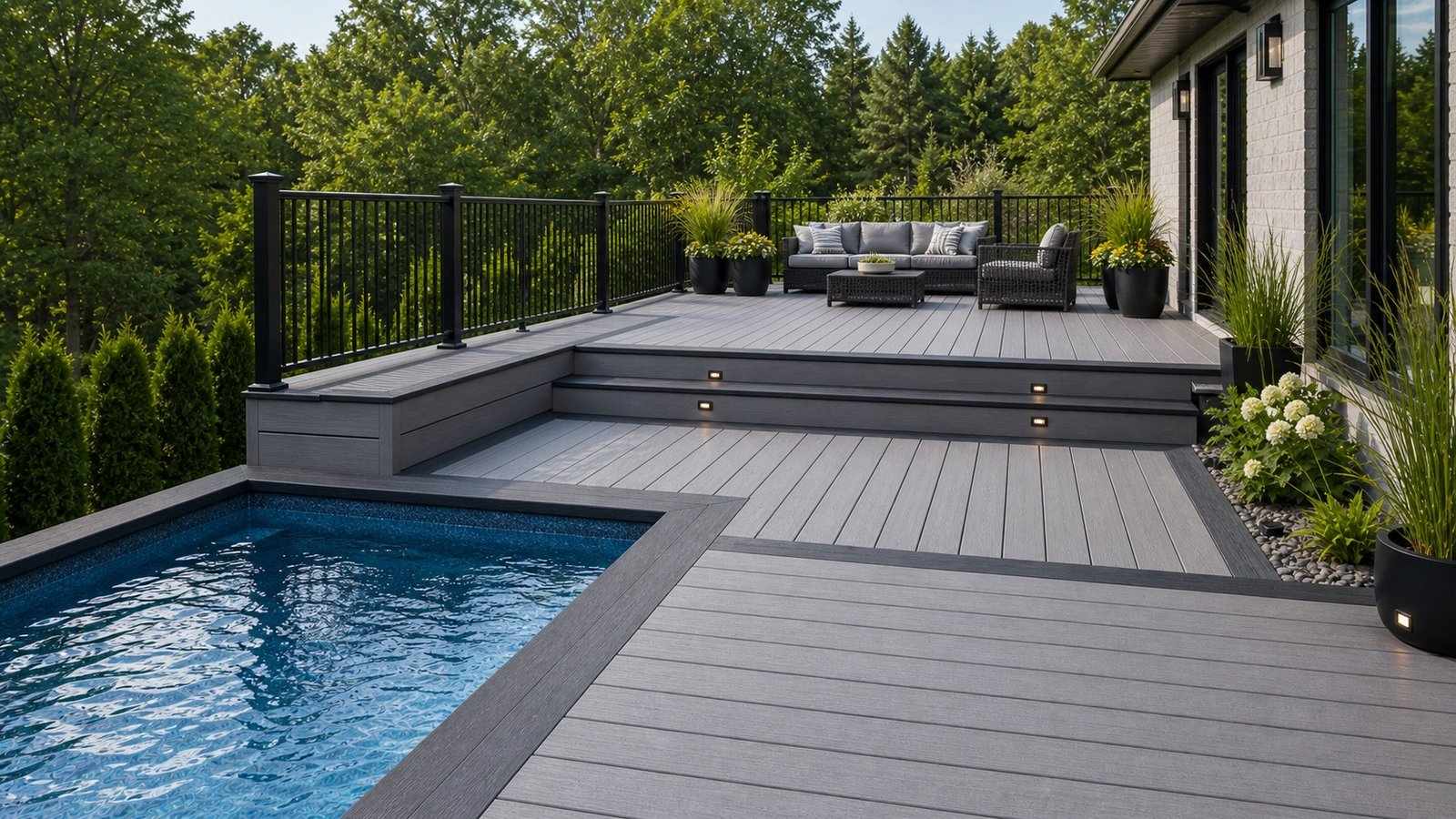
- ✓PVC or capped polymer boards for wet areas, pool edges, and premium low-maintenance finishes.
- ✓Decorative borders, inlays, lighting, and railing details planned with the material from the beginning.
Decking Materials
Which decking material is best for the project?
Each option can work well when it matches the home, budget, exposure, and maintenance expectations. The structure below the boards still matters: footings, framing, flashing, drainage, and joist spacing should be reviewed before any finish material is selected.
Pressure-Treated Wood
Often the most affordable starting point, with a familiar wood look and flexible staining options. It needs regular cleaning, sealing, and board care.
Cedar and Redwood
Natural softwoods with warmer color and character. They can create a refined look but still need maintenance to manage weathering.
Hardwoods
Dense woods such as ipe or similar hardwoods can feel substantial and rich, but material cost, sourcing, cutting, and fastening need planning.
Capped Composite
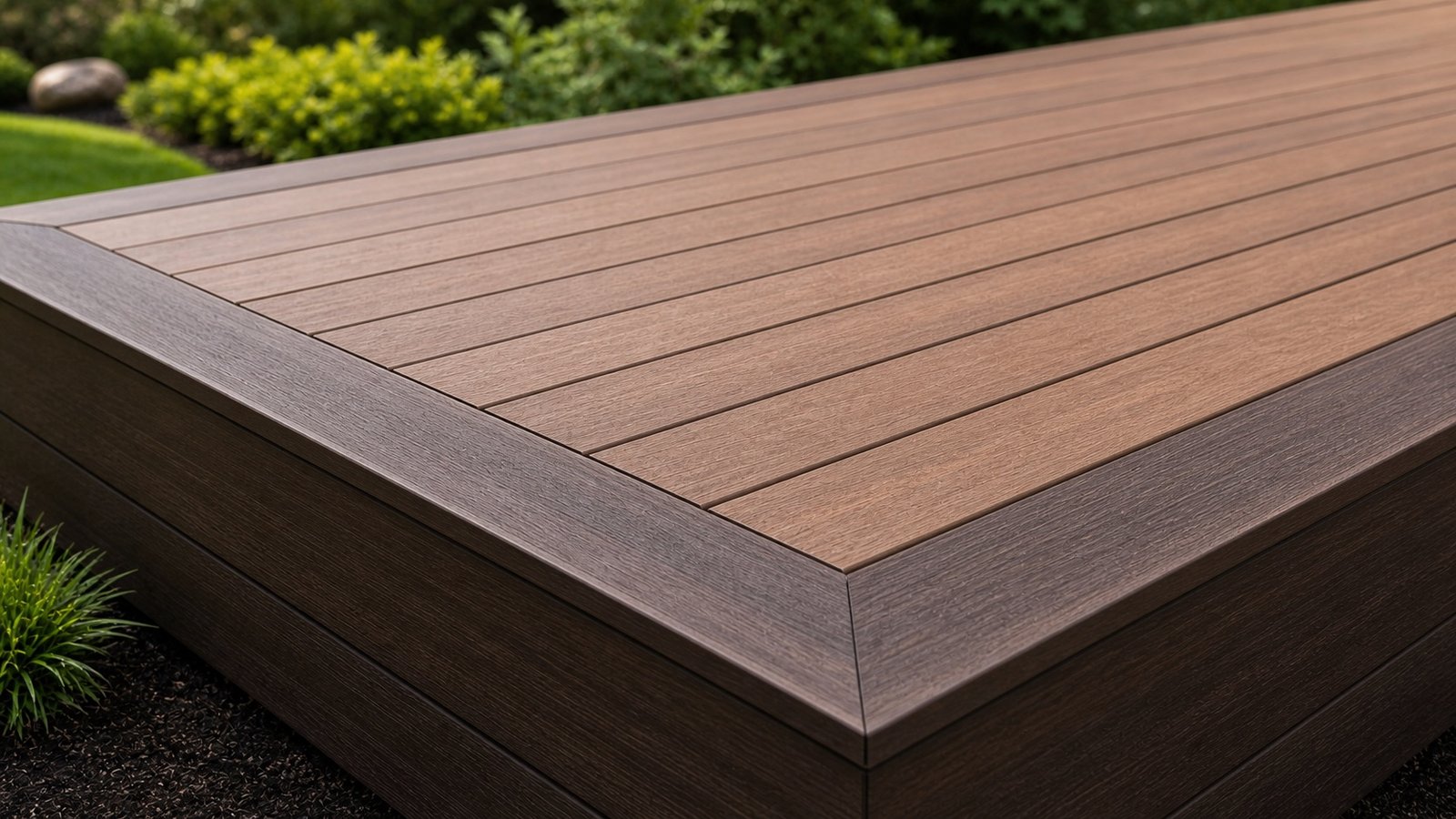
Composite boards blend wood fiber and polymer materials with protective caps. They are popular for low-maintenance color and texture variety.
PVC and Capped Polymer
All-polymer boards are often selected for wet areas, poolside layouts, and higher-performance moisture resistance.
Specialty Systems
Mineral-based composites, aluminum decking, drainage systems, and integrated framing details can solve specific project conditions.
Styles and Layouts
Which deck design details improve function and appearance?
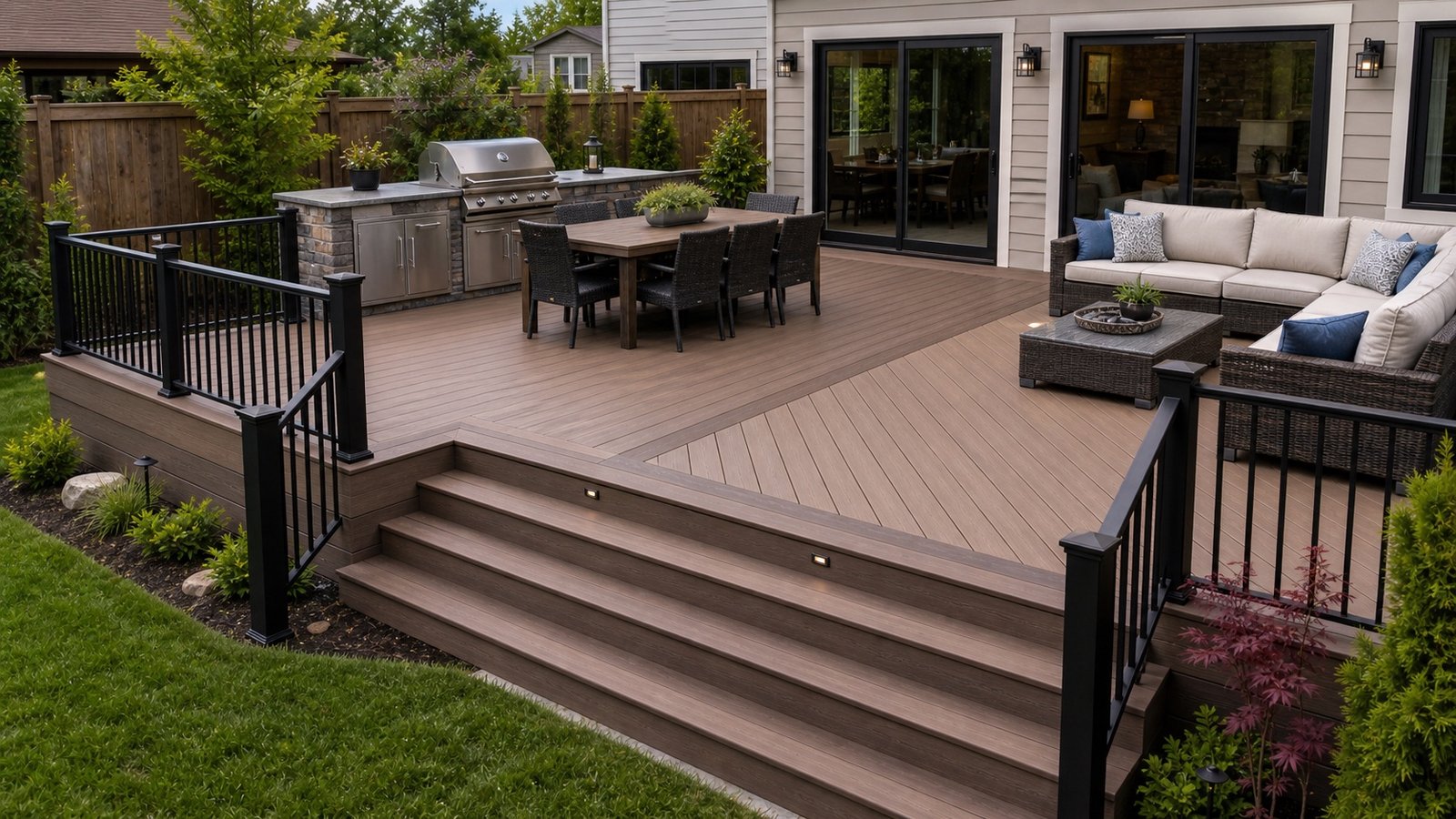
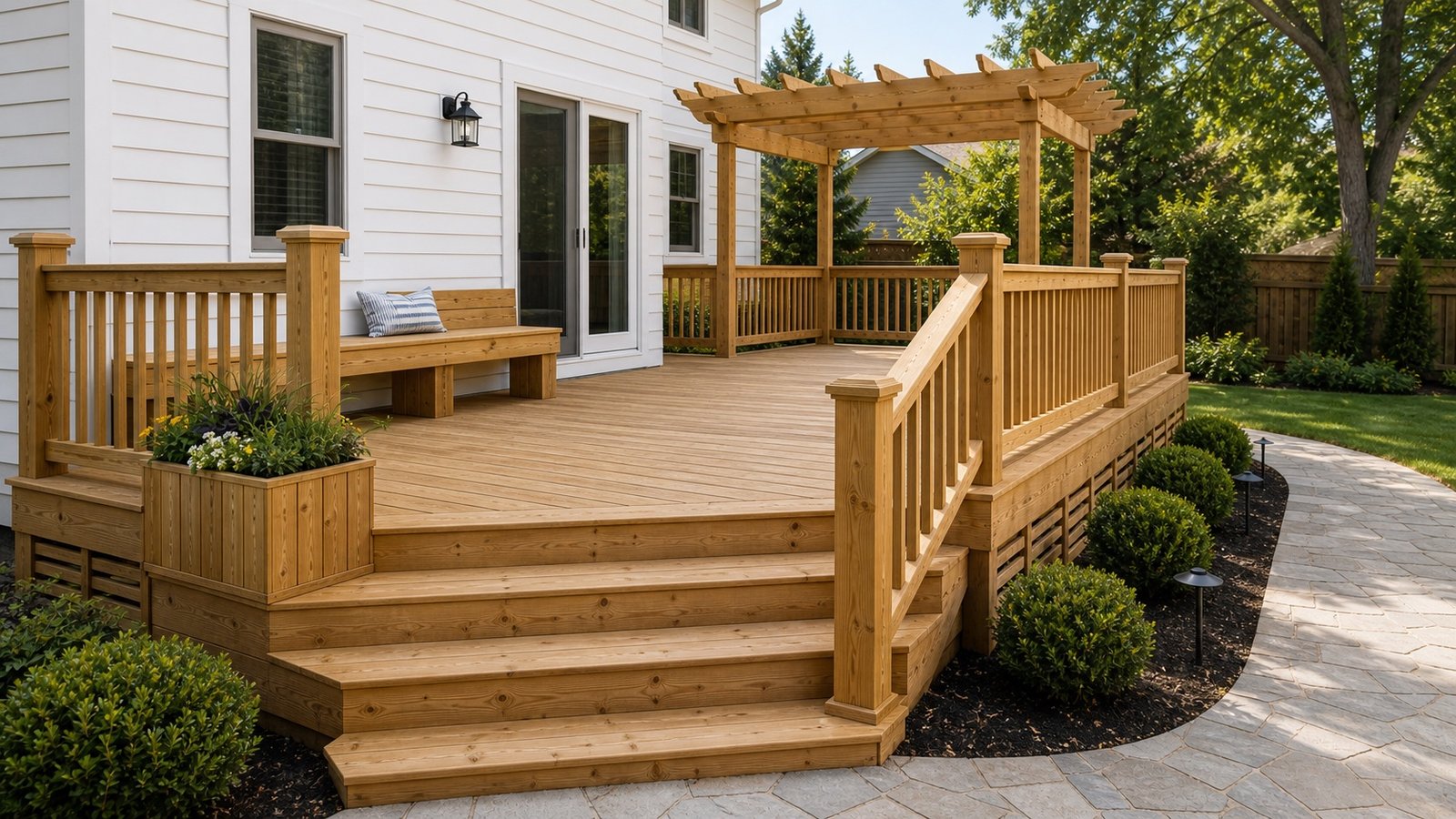
Board direction, borders, rail style, lighting, benches, pergolas, privacy screens, and stair placement can change how the deck looks and functions. Material selection and layout should be designed together.
Queens Deck Budget & Permits
What affects deck cost and permits in Queens?
Material is one part of a deck estimate. Framing condition, footings, ledger work, access, stairs, railings, drainage, lighting, design documents, and permit requirements can all change the scope.
Relative Material Planning
This chart is a relative planning guide, not a quote. Exact pricing depends on the selected collection, dimensions, existing conditions, access, structure, railings, stairs, and approvals.
NYC Deck Permit Planning
New York City identifies deck and porch work as permitted construction. The Department of Buildings states that construction work requires approved documents and permits before work begins, and that a New York State licensed Professional Engineer or Registered Architect submits the required construction documents.
- 01Confirm the property conditions, survey information, deck location, size, and relationship to lot lines.
- 02Coordinate drawings, structural details, and the filing path required for the specific project.
- 03Match footings, framing, ledger attachment, guards, stairs, and electrical work to the approved scope.
- 04Schedule required inspections and closeout steps for the permitted work.
Official reference: NYC Department of Buildings — New Deck & Porch Installation.
Leading Manufacturers
Which decking brands and collections should homeowners compare?
Each manufacturer has multiple board lines, so the final choice should be based on the exact collection, color, warranty, fastening method, and local availability. This comparison is a planning guide, not a substitute for reviewing current product samples.
Low-Maintenance Fit
Relative planning guide for homeowners comparing mainstream composite and PVC manufacturers.
| Manufacturer | Typical Strength | Good Fit |
|---|---|---|
| Trex | Broad composite lines, strong retail recognition, recycled-content positioning. | Homeowners comparing value, midrange, and premium composite looks. |
| TimberTech/AZEK | Composite plus advanced PVC/capped polymer options with many colors and widths. | Premium finishes, wet-area performance, and detailed railing or lighting packages. |
| Fiberon | PVC and composite collections across several price ranges and grain styles. | Projects that need a wide style range with low-maintenance materials. |
| Deckorators | Specialty composite and mineral-based options with distinctive colors and textures. | Design-forward decks, specialty board construction, and statement layouts. |
| MoistureShield | Composite decking focused on moisture resistance and heat-management options in select lines. | Sun-exposed decks, pool adjacency, and moisture-prone conditions. |
| Wolf | Outdoor living lines including PVC-style deck options and coordinated trim products. | Projects balancing synthetic decking with exterior trim and porch details. |
Project Planning
How does deck planning and construction work?
Deck boards are only one part of the project. A reliable plan also accounts for structure, water management, attachment to the home, stairs, railings, and the details that keep the finished deck comfortable to use.
Inspect and Measure
Review the current deck or project area, access, grade, ledger, framing, stairs, railing, and code considerations.
Compare Materials
Choose between wood, cedar, hardwood, composite, PVC, or specialty systems based on look, cost, and care.
Design the Layout
Plan borders, board direction, levels, seating, privacy, lighting, drainage, and connection points before build.
Build and Finish
Install with the right fasteners, spacing, rail details, fascia, stairs, and finish choices for the selected material.
Decking FAQ
Common questions before choosing a decking material.
A thoughtful deck proposal should make the tradeoffs clear before materials are ordered.
Do I need a permit to build or alter a deck in New York City?
Yes. NYC Department of Buildings guidance states that deck and porch construction or alteration requires a work permit. Required construction documents are submitted by a New York State licensed Professional Engineer or Registered Architect, and the exact filing path depends on the project.
Is composite decking always better than wood?
Not always. Composite usually reduces maintenance and offers consistent colors, but wood can be a better fit when upfront budget, natural grain, or future refinishing flexibility is the priority.
What is the lowest-maintenance decking material?
PVC, capped polymer, and capped composite boards are common low-maintenance choices. They still need cleaning, and the exact performance depends on the board line and installation details.
Can old deck framing be reused?
Sometimes, but it should be inspected first. Joist condition, spacing, flashing, ledger attachment, rot, fastener corrosion, and code requirements all affect whether reuse makes sense.
Do decorative borders and inlays add cost?
Yes. Picture-frame borders, herringbone inlays, lighting, built-in seating, and multi-level layouts add labor and material, but they can make the finished deck feel much more intentional.
What should a deck contractor inspect before resurfacing an old deck?
The existing ledger, flashing, footings, posts, beams, joists, fasteners, corrosion, rot, spacing, stairs, guards, and drainage should be reviewed before new boards are ordered. A surface replacement should not conceal structural problems.
Coordinate the Whole Exterior
Related BluRock services for deck and outdoor living projects.
Deck projects often touch doors, siding, masonry, drainage, and permit documentation. These internal service links lead to the current canonical BluRock pages for each part of the work.
Schedule a Deck Consultation
Ready to plan a new deck or replace an aging one in Queens?
Contact BluRock Services to compare composite, PVC, and wood decking, review the existing structure or new layout, and define the railings, stairs, lighting, permit path, and finish details.
Before & After Projects
Decking Before and After Projects
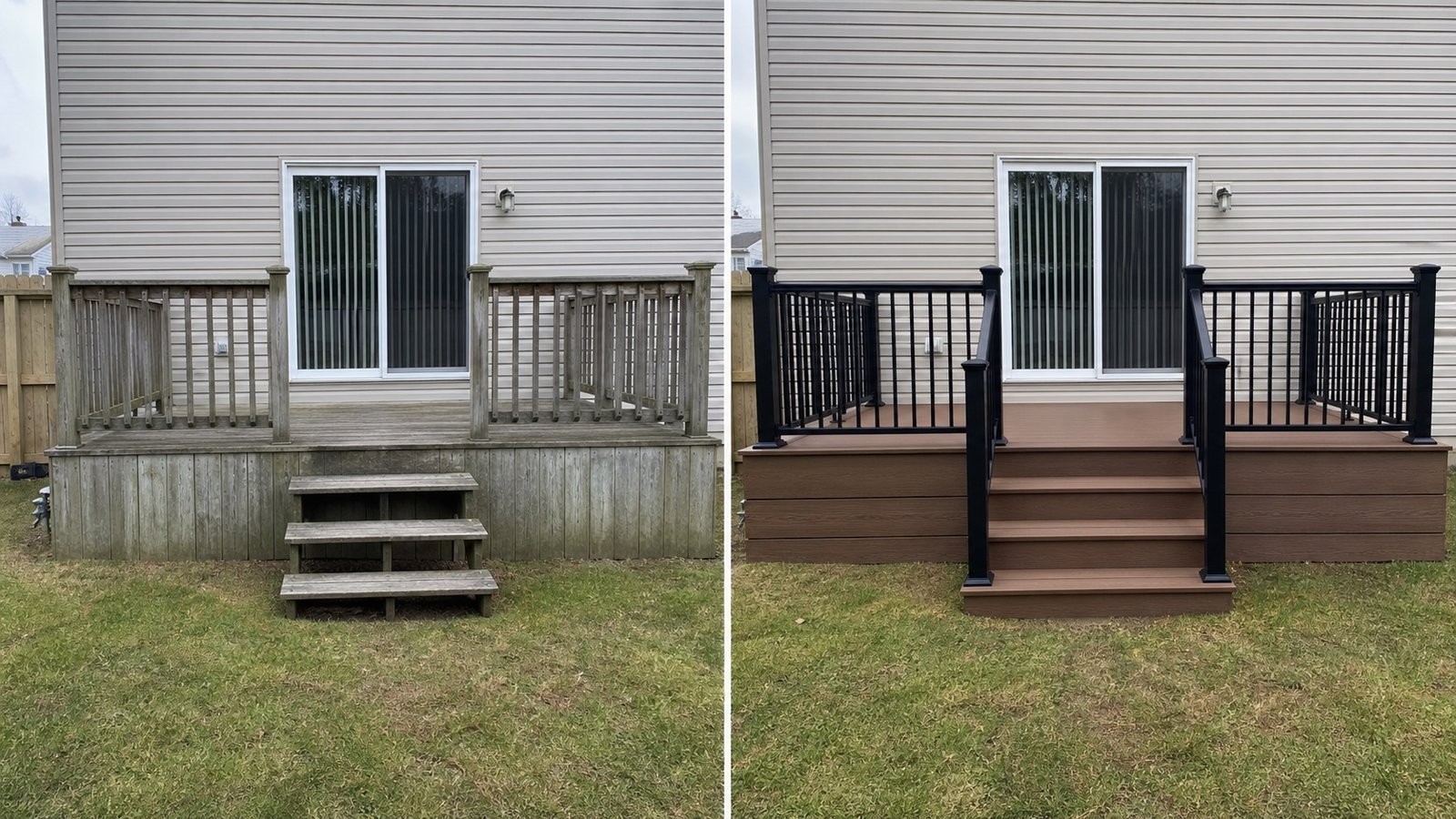
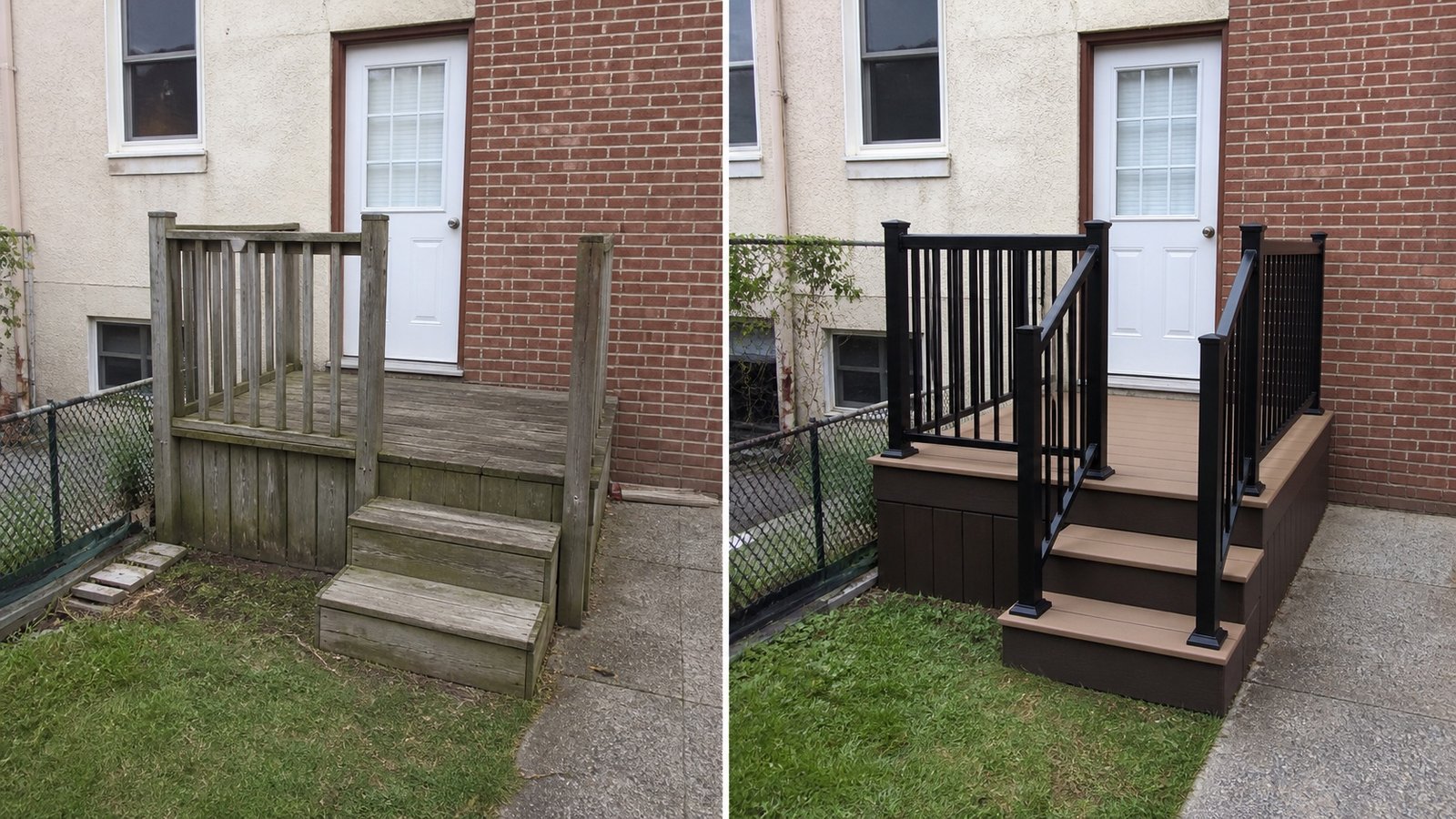
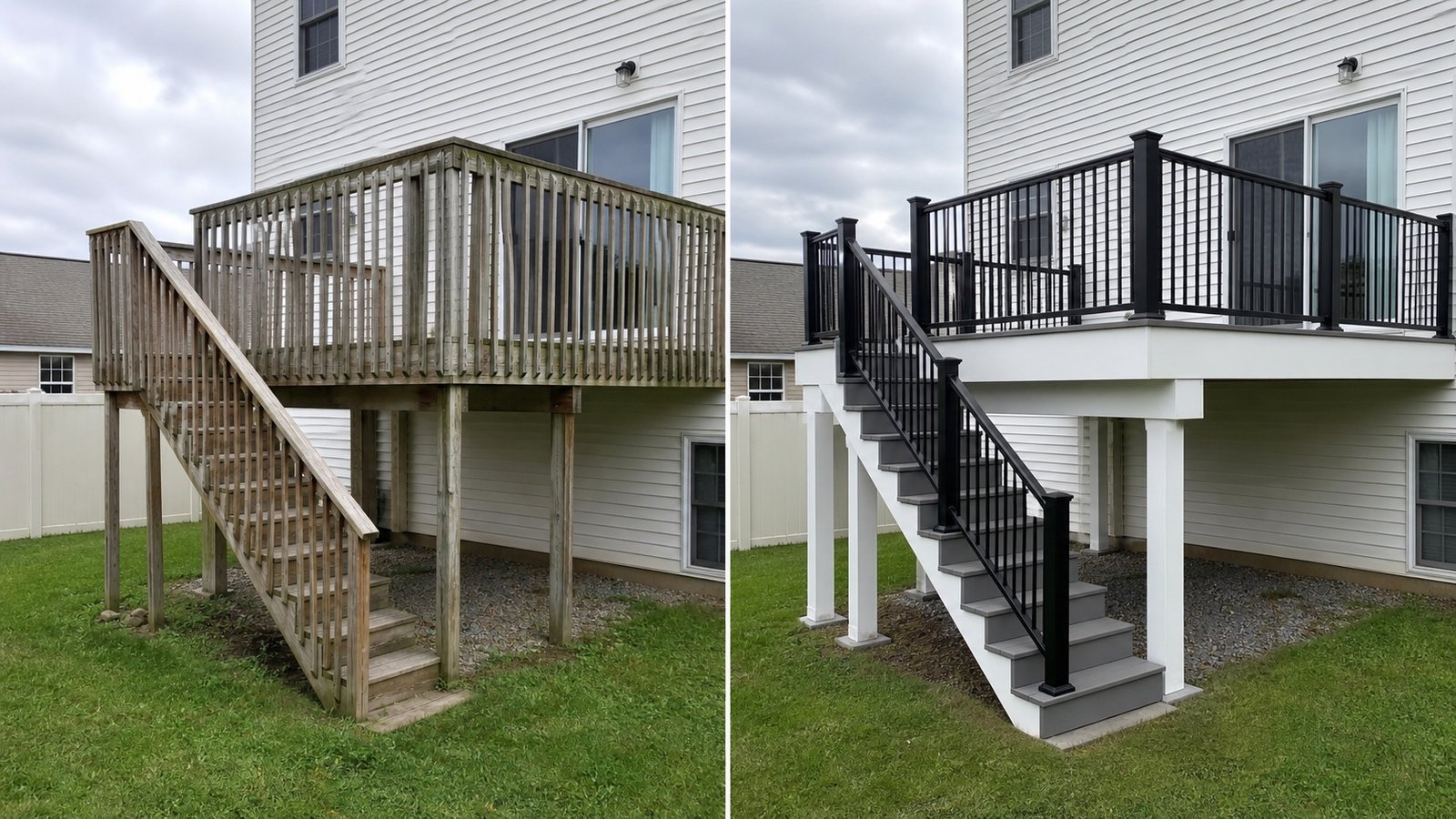
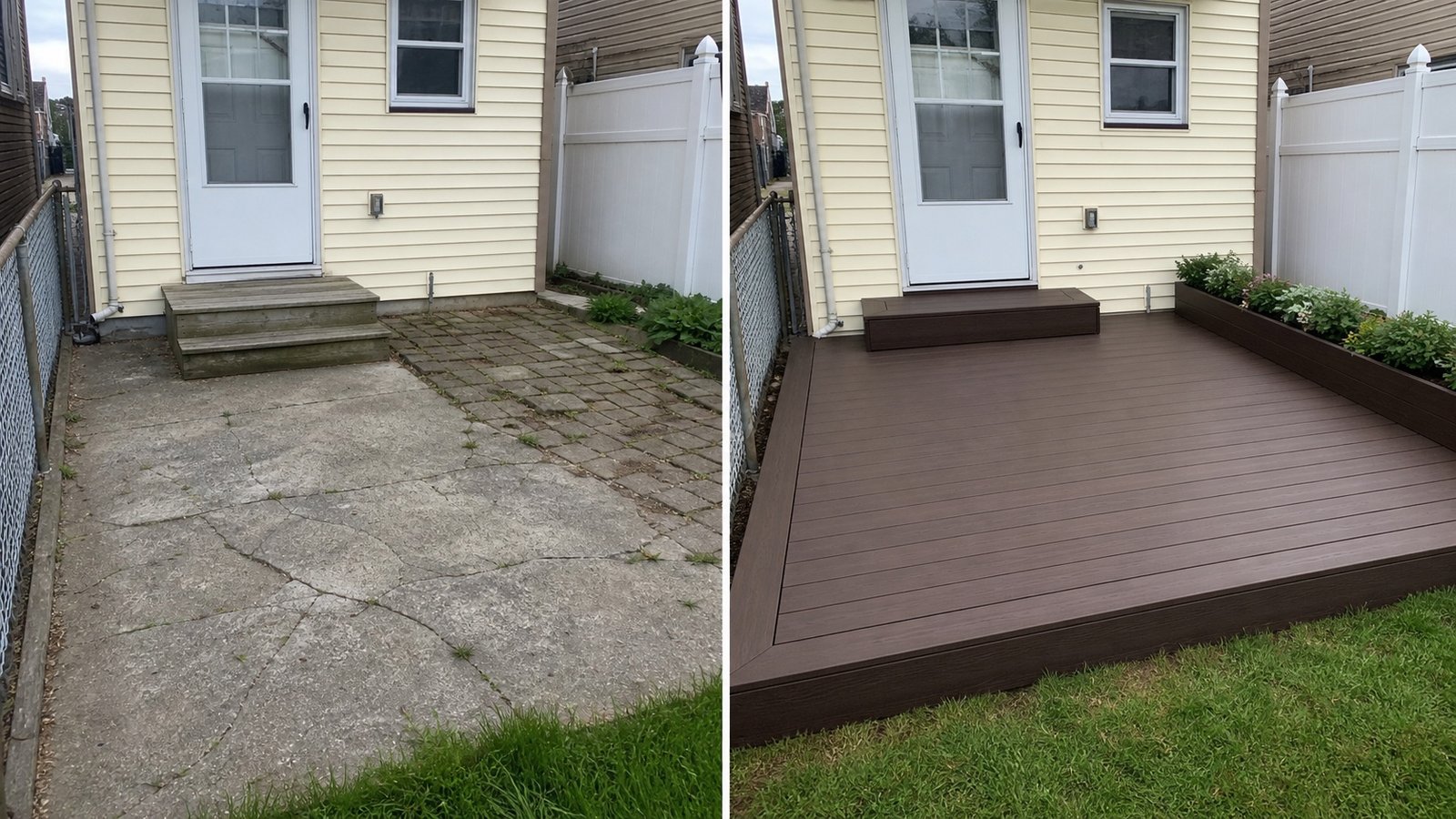
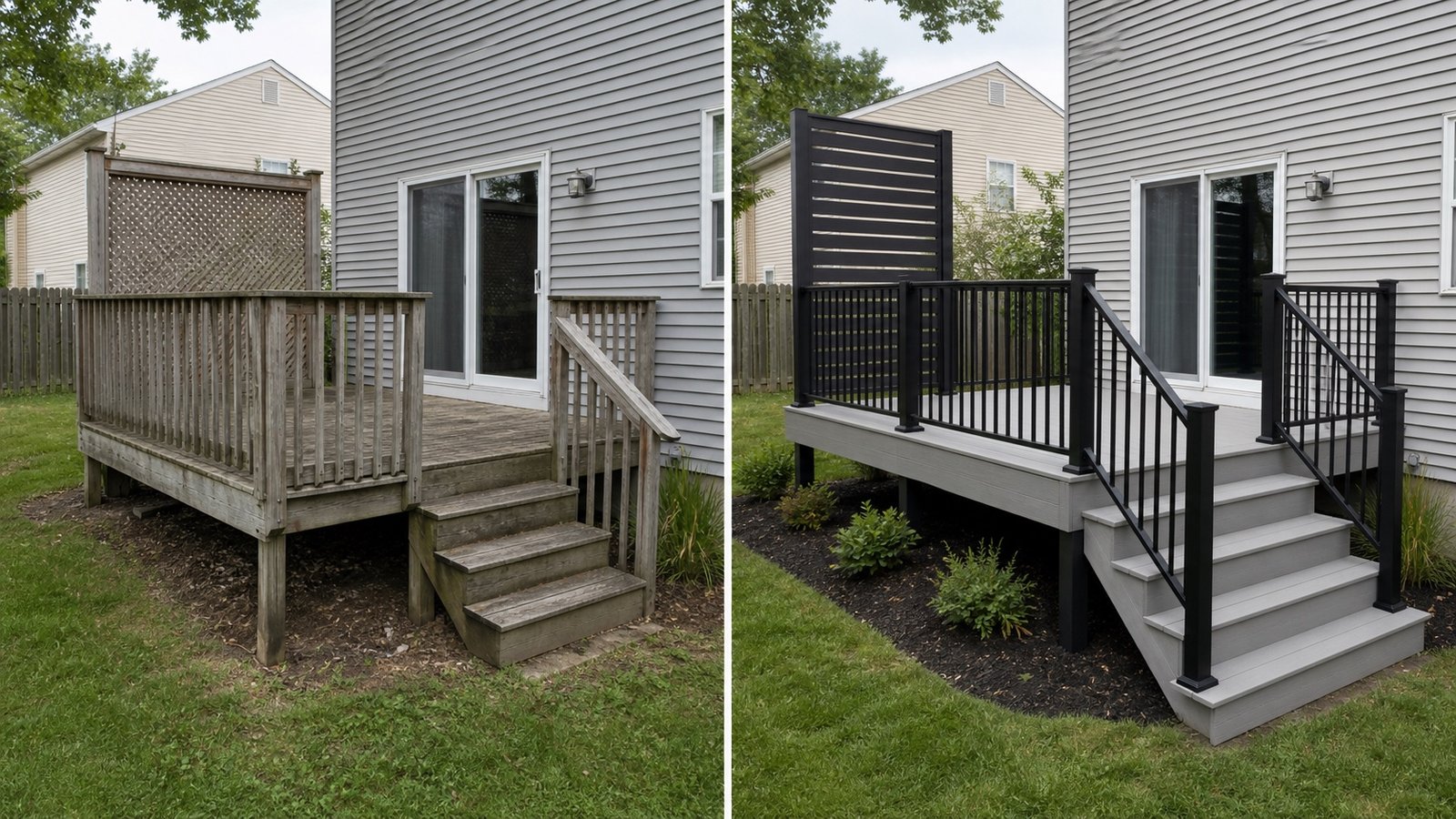
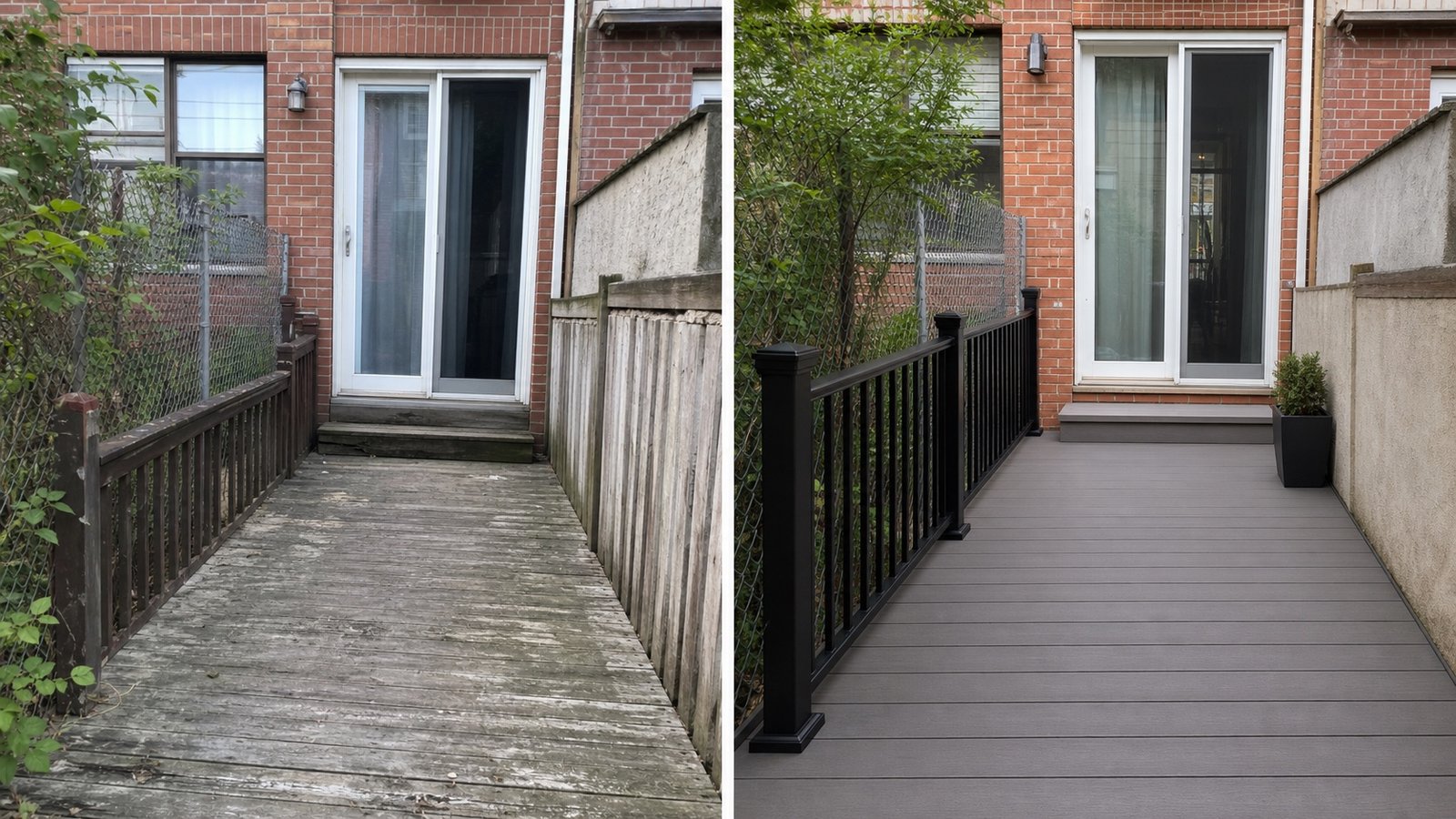
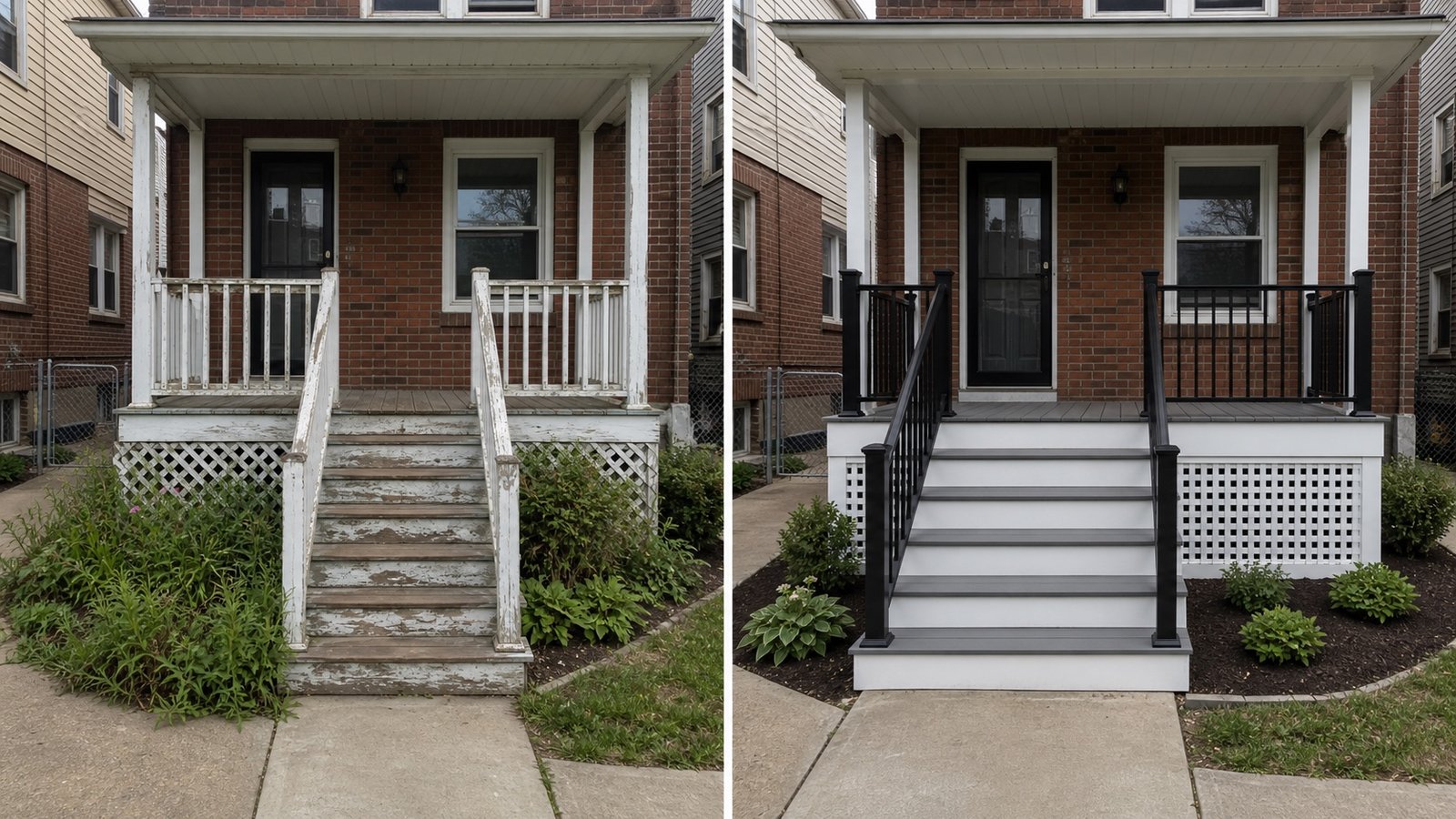
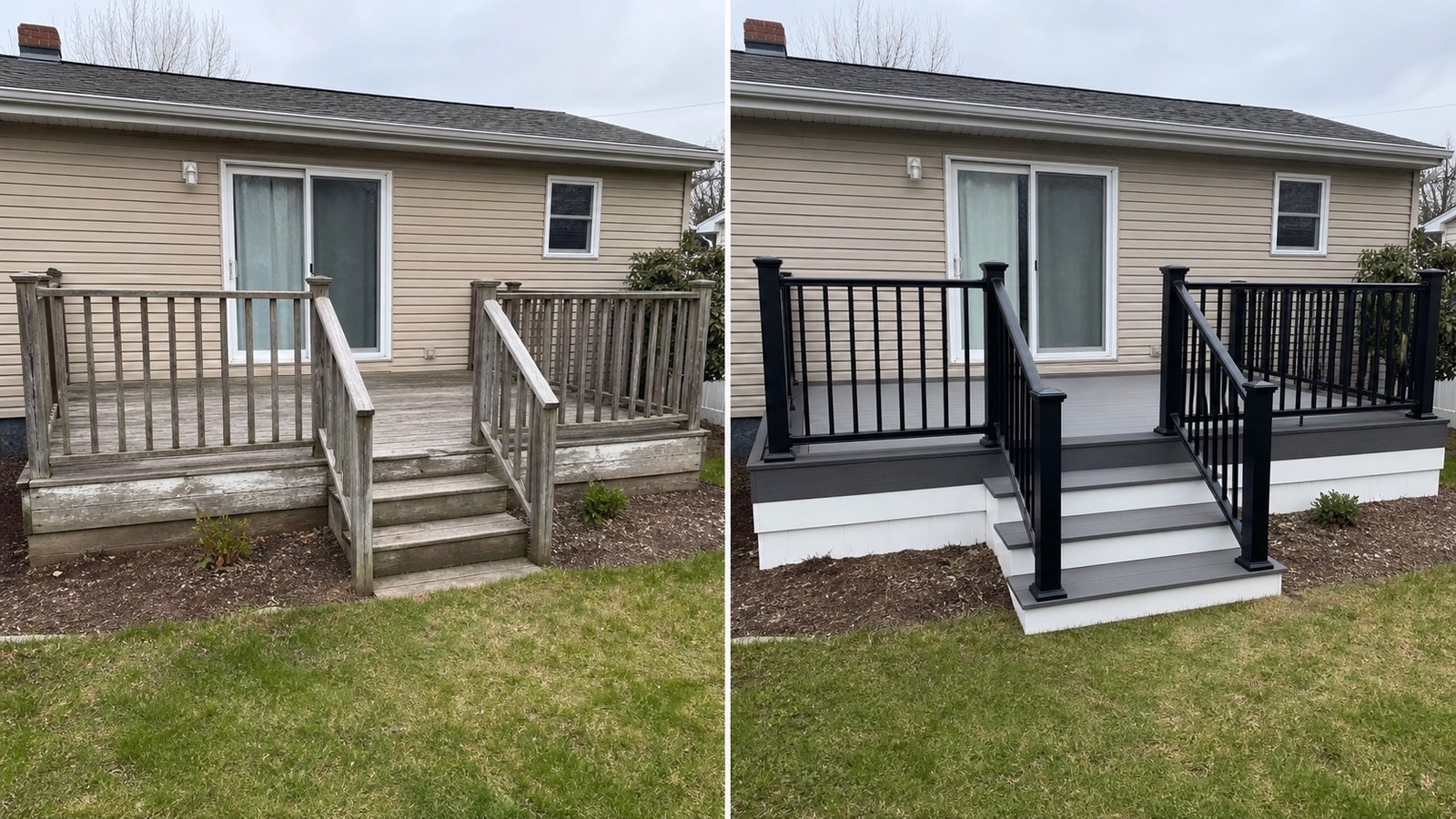
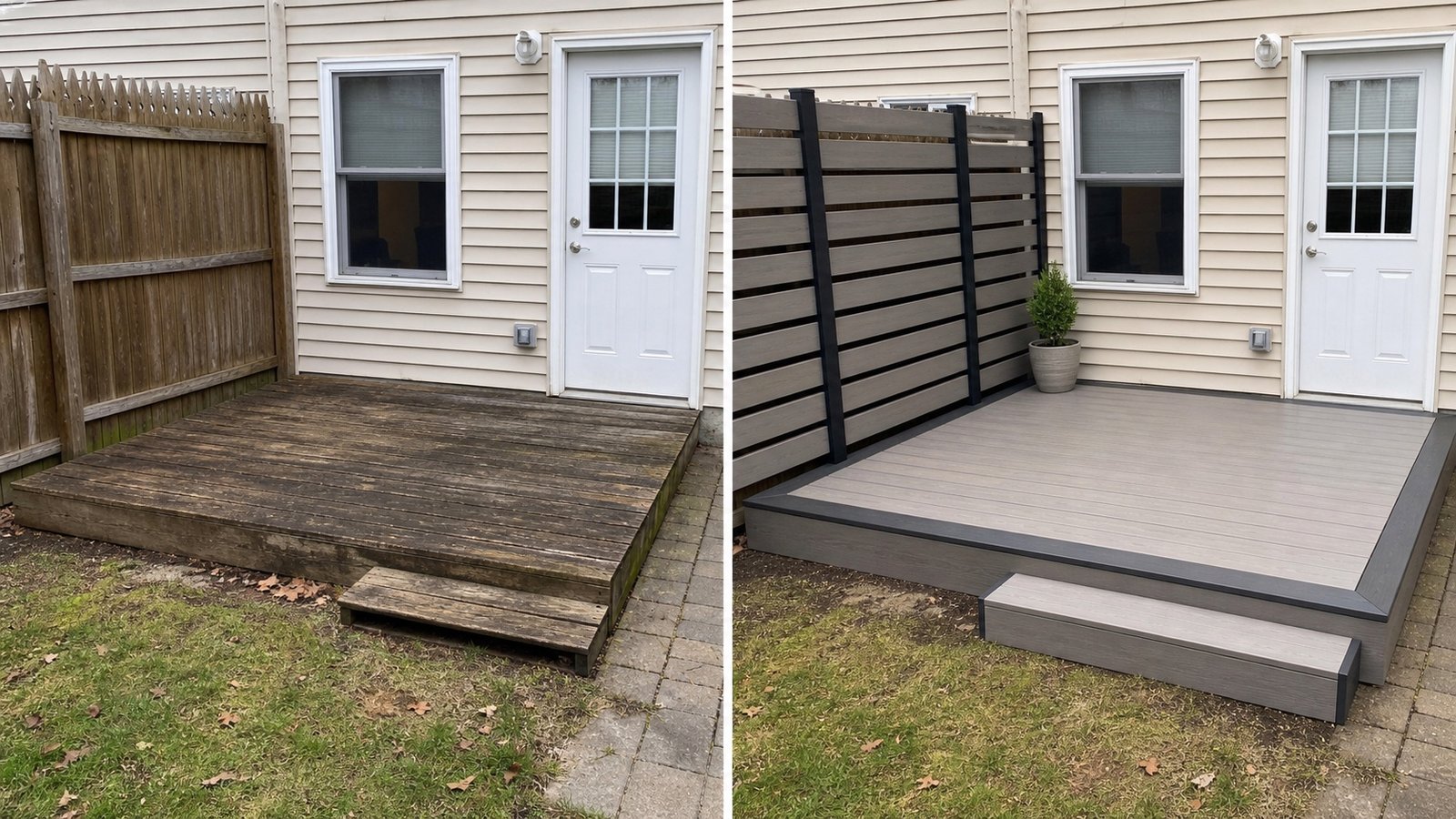
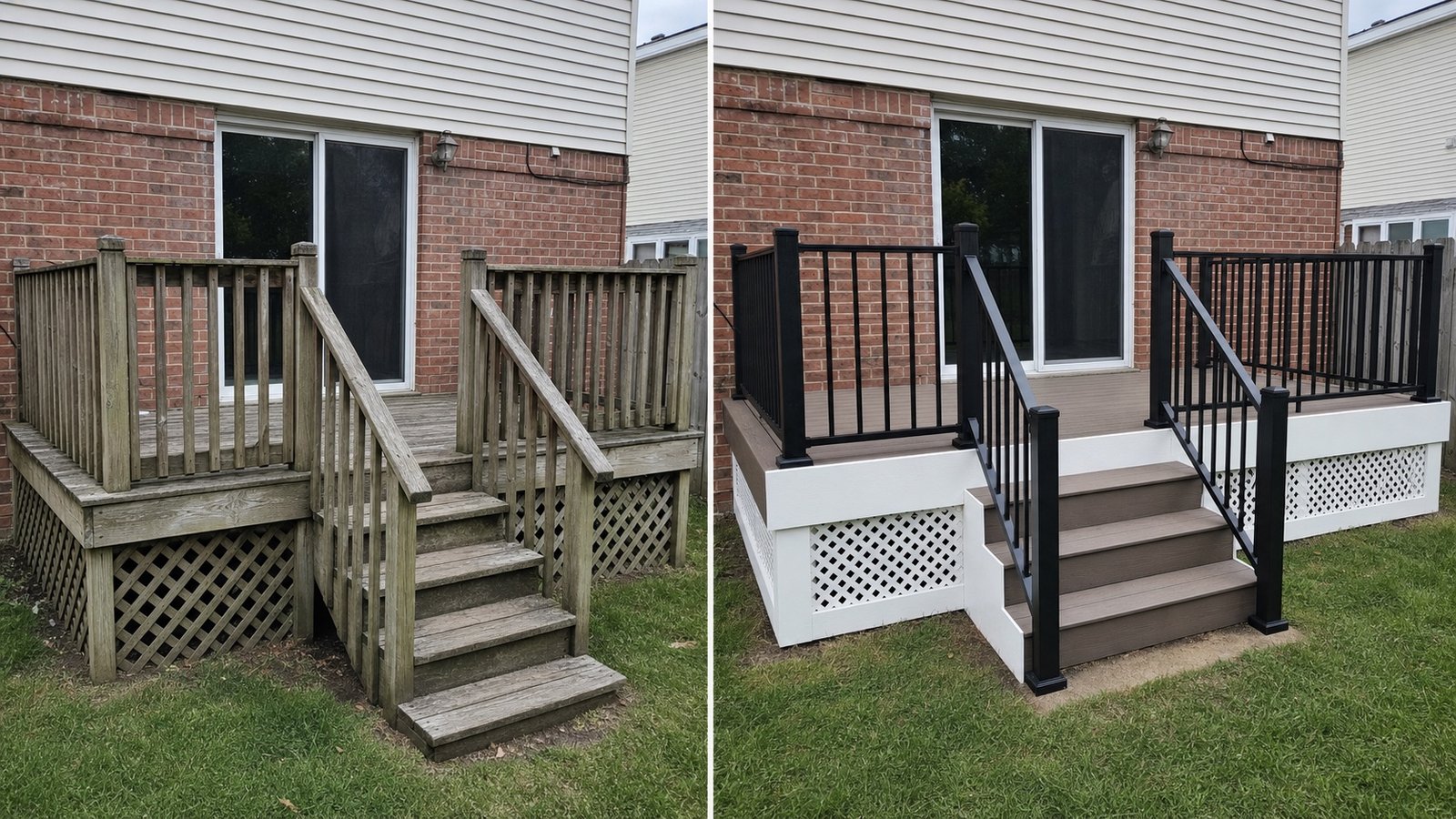
Explore composite deck, railing, stair, platform, privacy screen, and porch deck improvements.