
Basement Remodeling In Queens
Basement Remodeling Contractors in Queens NY
BluRock Services plans basement remodeling in Queens around moisture control, structure, utilities, intended use, approvals, and finishes so homeowners can create practical lower-level family rooms, offices, gyms, bathrooms, laundry areas, storage, and flexible living space.
Water First
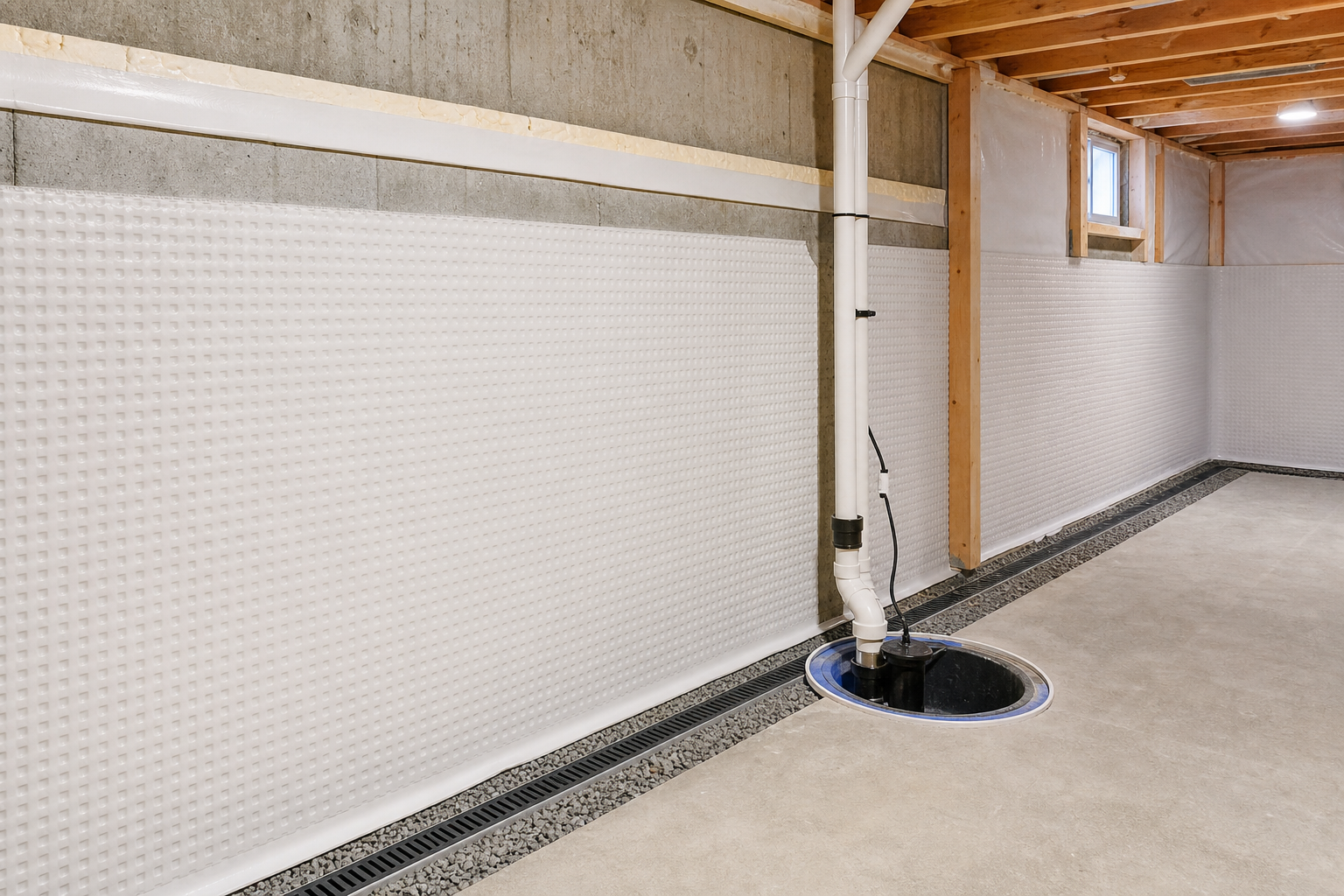
Plan drainage, waterproofing, vapor control, sump systems, and material choices before finish work begins.
Structure Checked
Address foundation cracks, beams, posts, slab conditions, and framing before covering critical details.
Permit-Aware
Separate simple finishing from legal bedrooms, apartments, rentals, and occupancy changes that may need approvals.
Fully Finished
Build out walls, lighting, flooring, bathrooms, laundry zones, storage, and everyday living spaces.
Service Summary
What basement remodeling work does BluRock coordinate in Queens?
BluRock Services provides basement remodeling and renovation coordination for Queens homes. Depending on the property and approved scope, work may include moisture and drainage planning, foundation or slab repairs, framing, insulation, mechanical and electrical coordination, plumbing, bathrooms, laundry areas, drywall, flooring, lighting, trim, storage, and finish carpentry.
Primary service
Basement remodeling, finishing, renovation, and conversion planning for existing Queens residential properties.
Location focus
Queens, New York, with scope shaped by the building type, records, access, conditions, intended use, and current approvals.
Space options
Family rooms, media rooms, offices, gyms, playrooms, bathrooms, laundry zones, storage, utility areas, and flexible-use rooms.
Project components
Water control, structure, envelope details, stairs, egress, building systems, insulation, walls, ceilings, flooring, lighting, and finishes.
Start Below The Finishes
Why should moisture and structure be resolved before finishes?
Basements are different from above-grade rooms. Moisture, lower ceilings, foundation walls, utility lines, heating and cooling, egress, drainage, and fire safety can all shape the design. BluRock plans the renovation from the foundation up so the finished space is more comfortable, practical, and easier to maintain.
- Waterproofing, drainage, sump pump, and vapor control planning
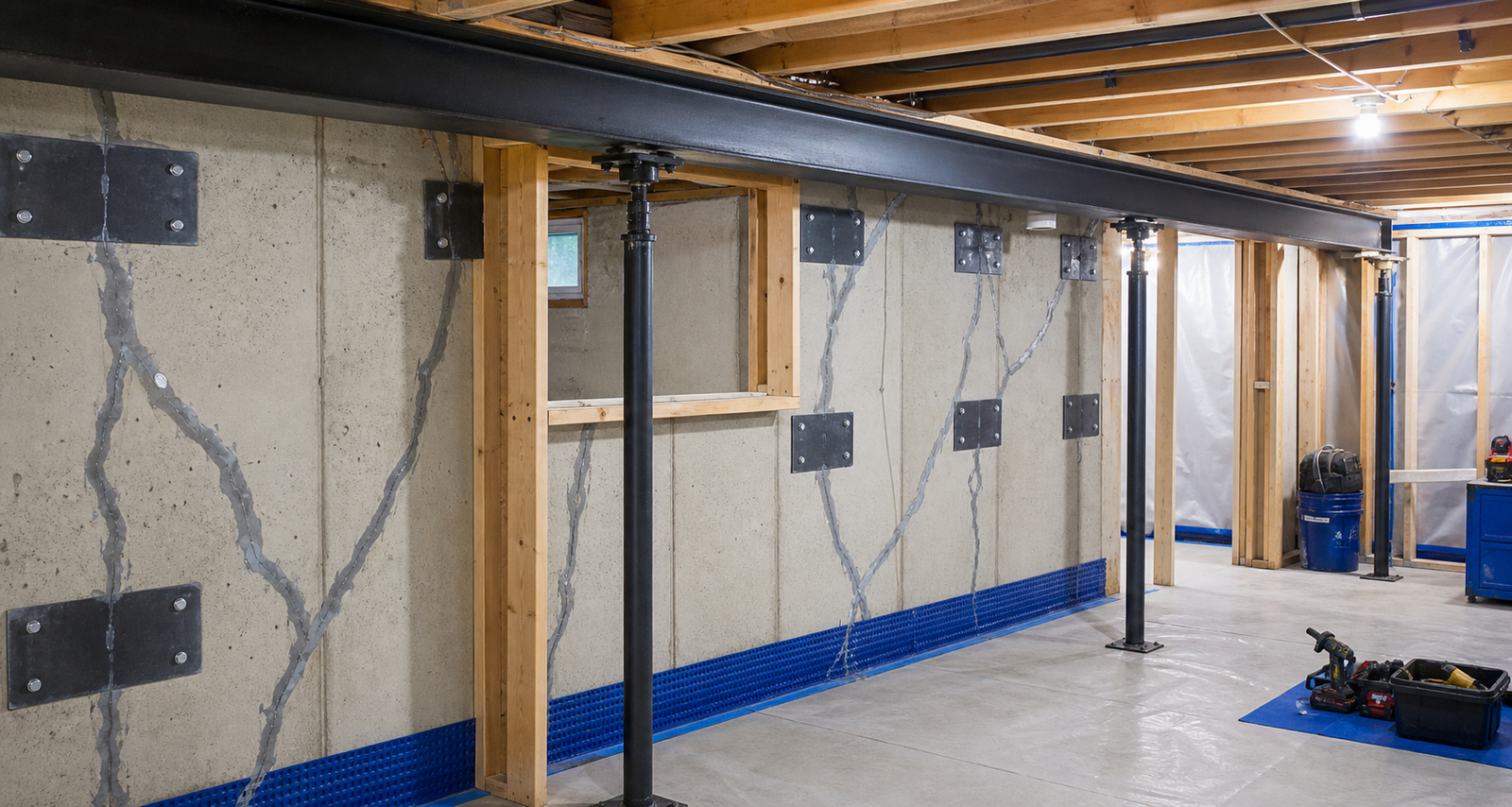
- Foundation crack repair, structural support, framing, and insulation
- Electrical, plumbing, HVAC, bathroom, and laundry coordination
- Ceiling, lighting, storage, flooring, trim, paint, and finish carpentry
- Permit and code planning for bedrooms, rentals, apartments, or occupancy changes
Basement Services
Which basement remodeling services can BluRock coordinate in Queens?
The right scope depends on the existing condition and intended use. BluRock can help plan the practical work that turns a damp or unfinished lower level into usable space.
Waterproofing & Moisture Control
Interior drainage, sump pump planning, vapor barriers, waterproof membranes, crack treatment, grading coordination, and material choices that make sense below grade.
Foundation & Structural Work
Foundation wall repairs, beam and post coordination, framing corrections, slab review, structural reinforcement planning, and access to key utilities.
Complete Basement Finishing
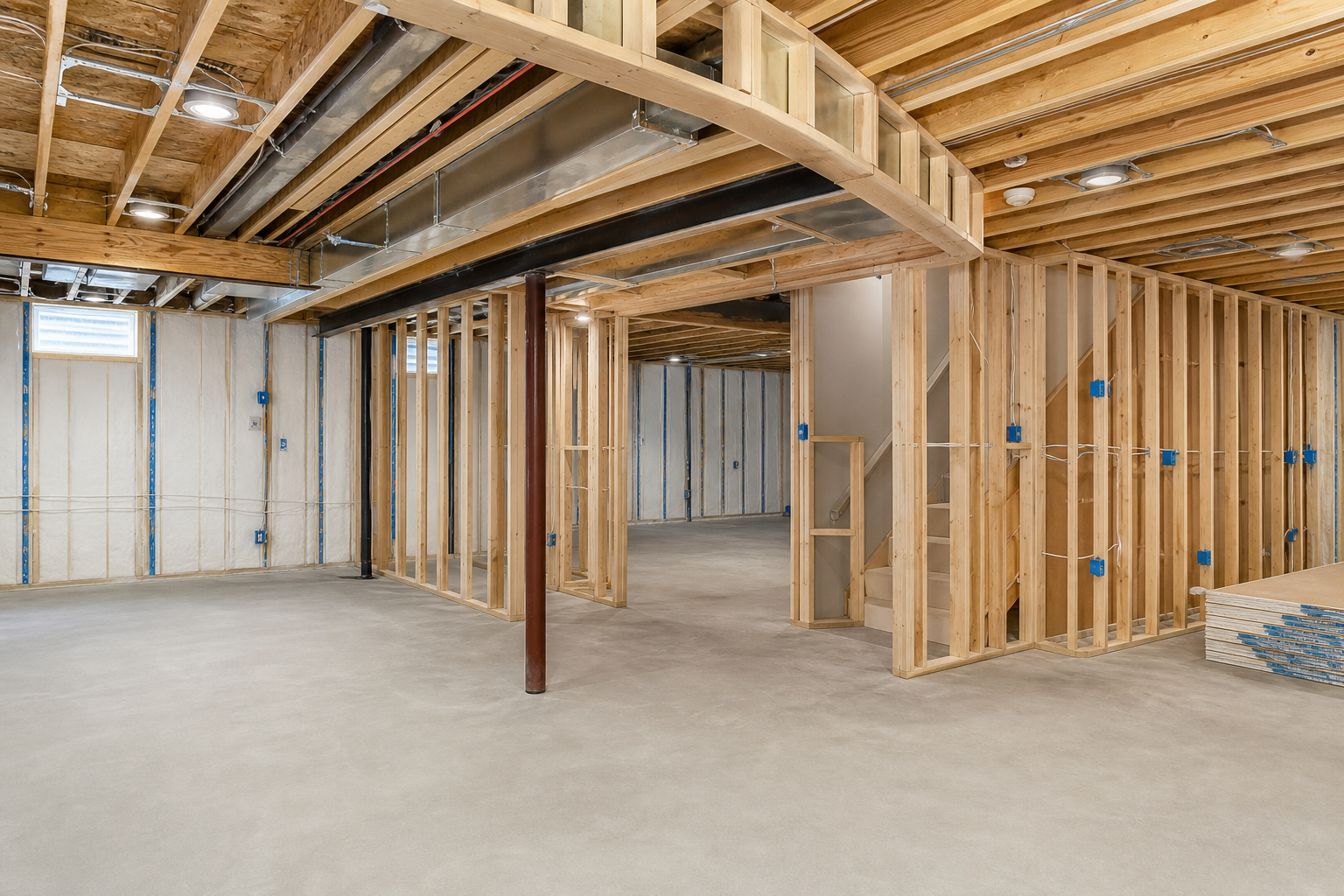
Framing, insulation, drywall, flooring, trim, doors, recessed lighting, paint, storage, built-ins, and finish details that make the space feel connected to the home.
Legal Conversion Planning
Guidance on intended use, permit needs, egress, ceiling height, sanitation, ventilation, and when a bedroom, rental, or dwelling unit may require a deeper code review.
Bathrooms, Laundry & Utilities
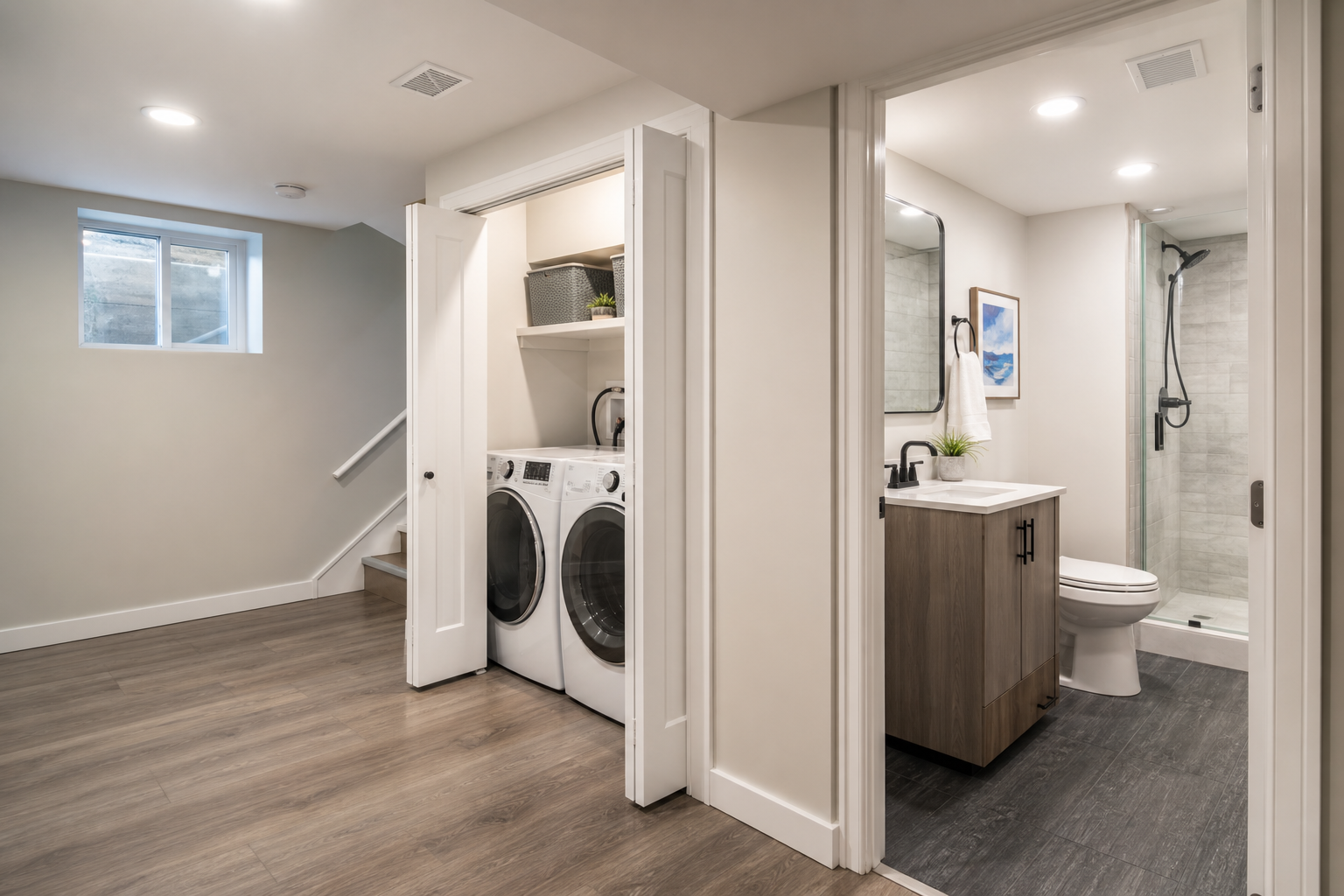
Basement bathrooms, laundry closets, plumbing runs, exhaust, utility access, water-resistant finishes, lighting, and functional layouts for daily use.
Living, Work & Storage Spaces
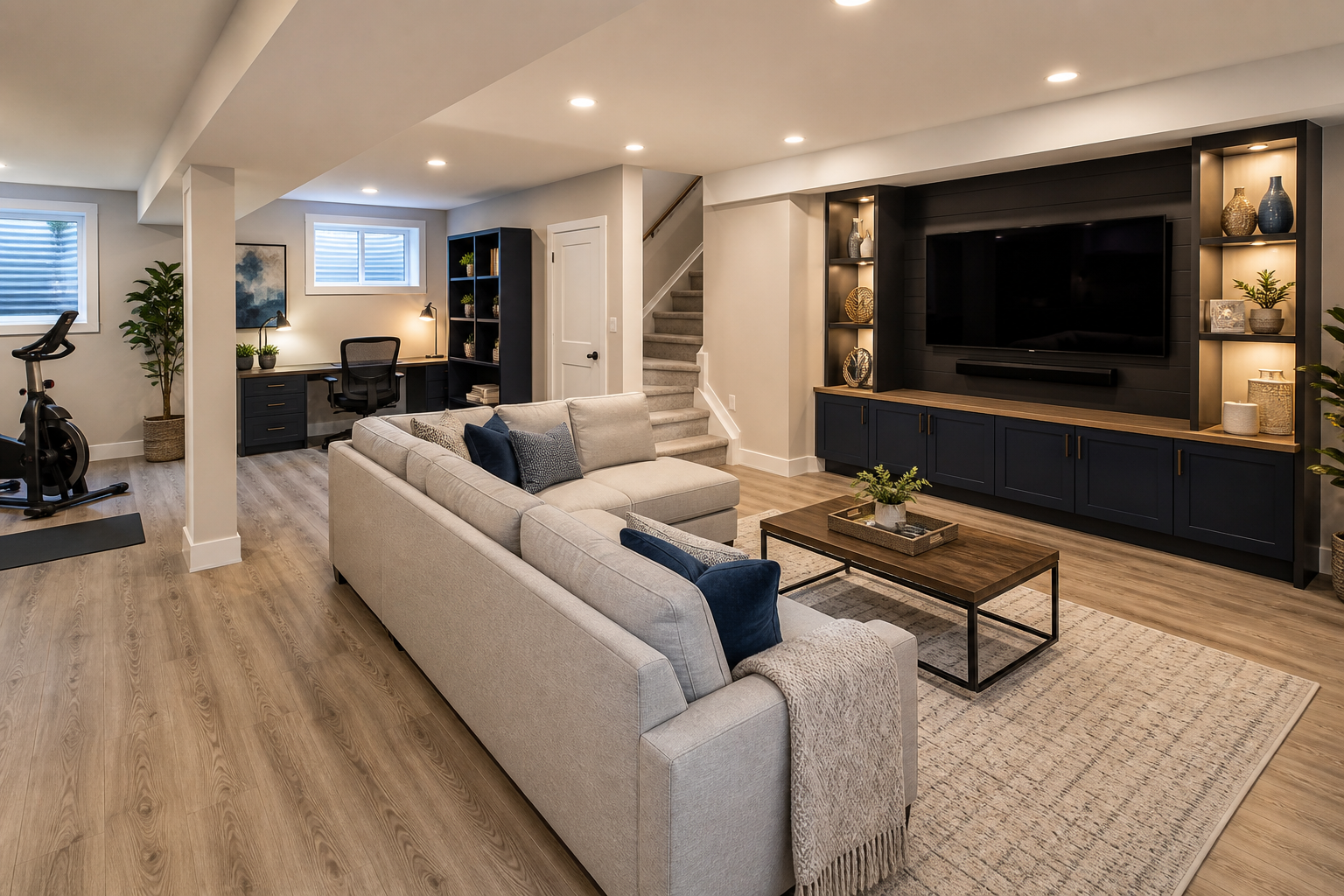
Family rooms, media areas, home offices, gyms, playrooms, guest lounges, hobby rooms, storage walls, and multi-use plans that fit how the home actually works.
Legality & Homeowner Planning
How do legal-use and permit questions affect a Queens basement remodel?
The intended use must be defined before construction. A family recreation room is different from a sleeping room, and both differ from a separate dwelling or rental unit. NYC requirements can involve building records, zoning, permits, egress, fire protection, sanitation, ventilation, light, air, and Certificate of Occupancy questions.
Basement vs. Cellar
NYC guidance distinguishes a basement from a cellar by how much of the space is below curb level. The classification can affect lawful use and must be checked against property-specific records.
Renovation vs. Alteration
Layout, structural, plumbing, mechanical, electrical, egress, occupancy, and legal-use changes can affect the filing and permit path even when some finish work appears cosmetic.
Safety Requirements
Light, air, ceiling height, egress, fire safety, electrical, plumbing, ventilation, damp-proofing, sanitation, and structural conditions can all matter.
Rental Or Apartment Use
A proposed separate dwelling, sleeping area, or rental needs property-specific design and agency review. Do not assume that a finished room is approved for occupancy.
Project Roadmap
How does a basement remodel move from inspection to finish?
Review The Existing Basement
Look at moisture, foundation walls, slab, ceiling height, stairs, utilities, windows, layout, and the homeowner’s intended use.
Protect The Shell
Address waterproofing, drainage, foundation repair, sump systems, structural support, insulation, and vapor control first.
Plan Use And Approvals
Clarify family use, sleeping space, bathrooms, laundry, apartment potential, permit needs, and required code review before buildout.
Build Rough-Ins
Frame walls, route electrical, plan HVAC, coordinate plumbing, prepare lighting, protect utility access, and close walls correctly.
Finish The Space
Install drywall, flooring, trim, doors, paint, bathrooms, storage, built-ins, and the final details that make the basement usable.
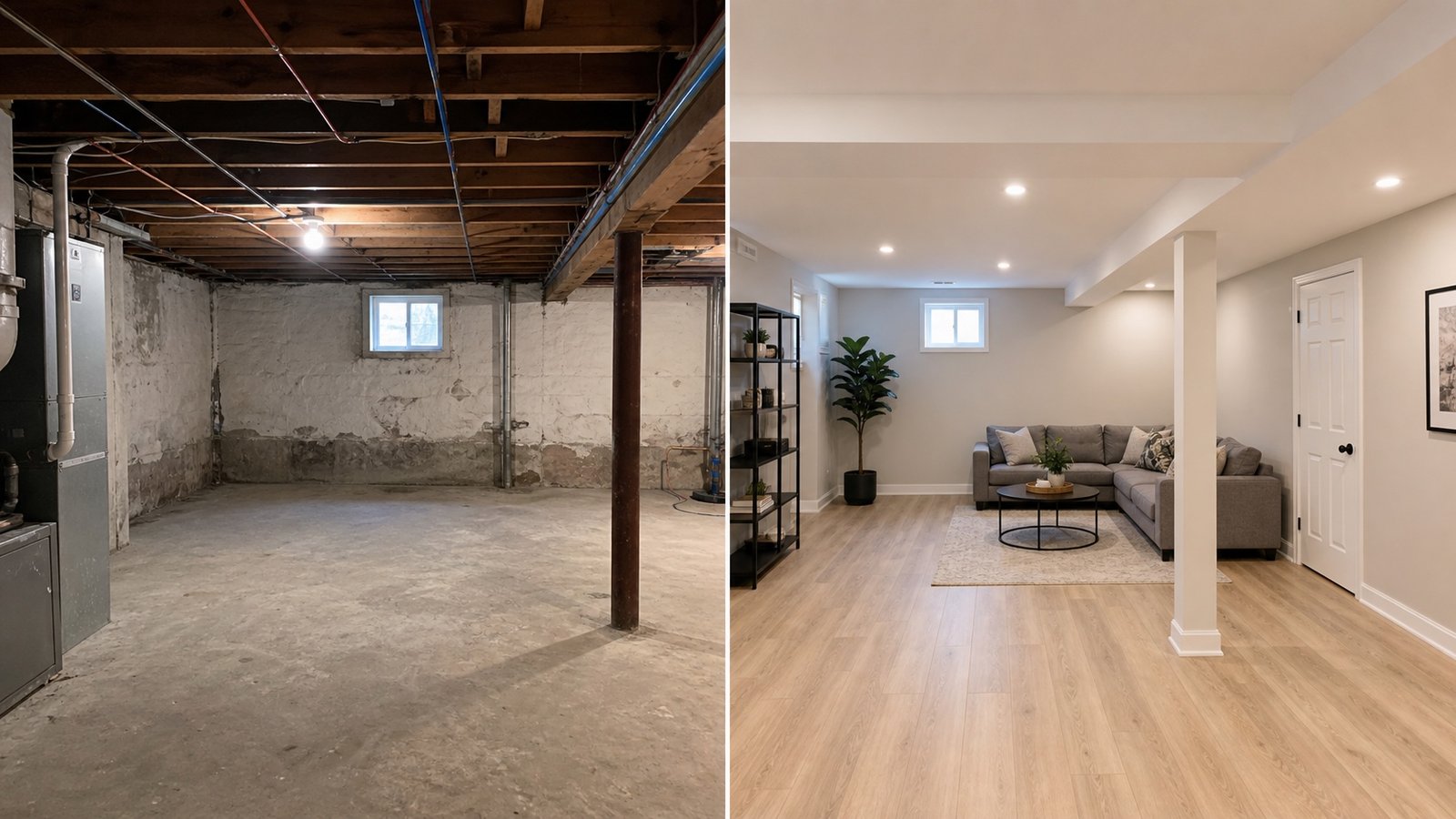
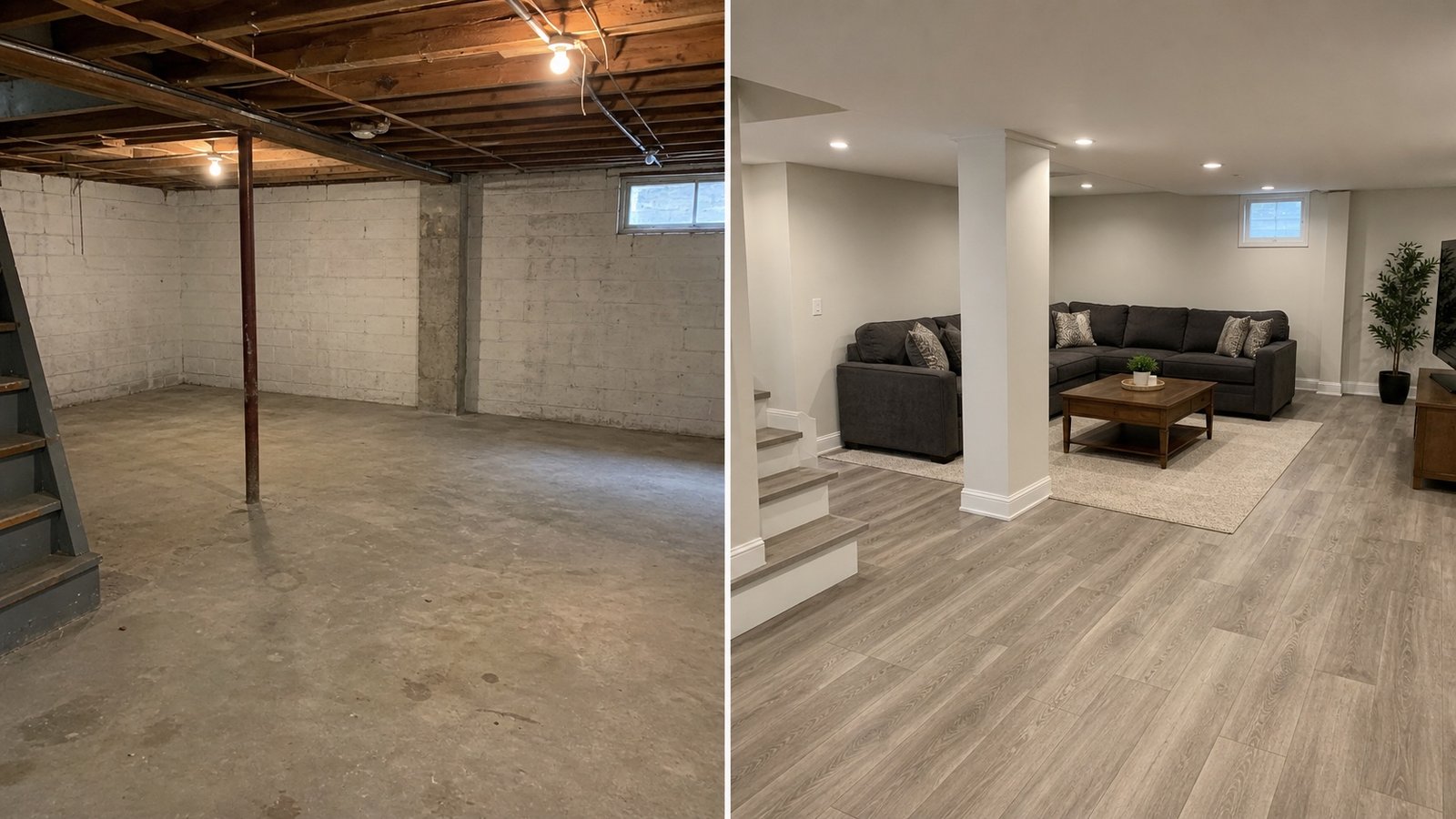
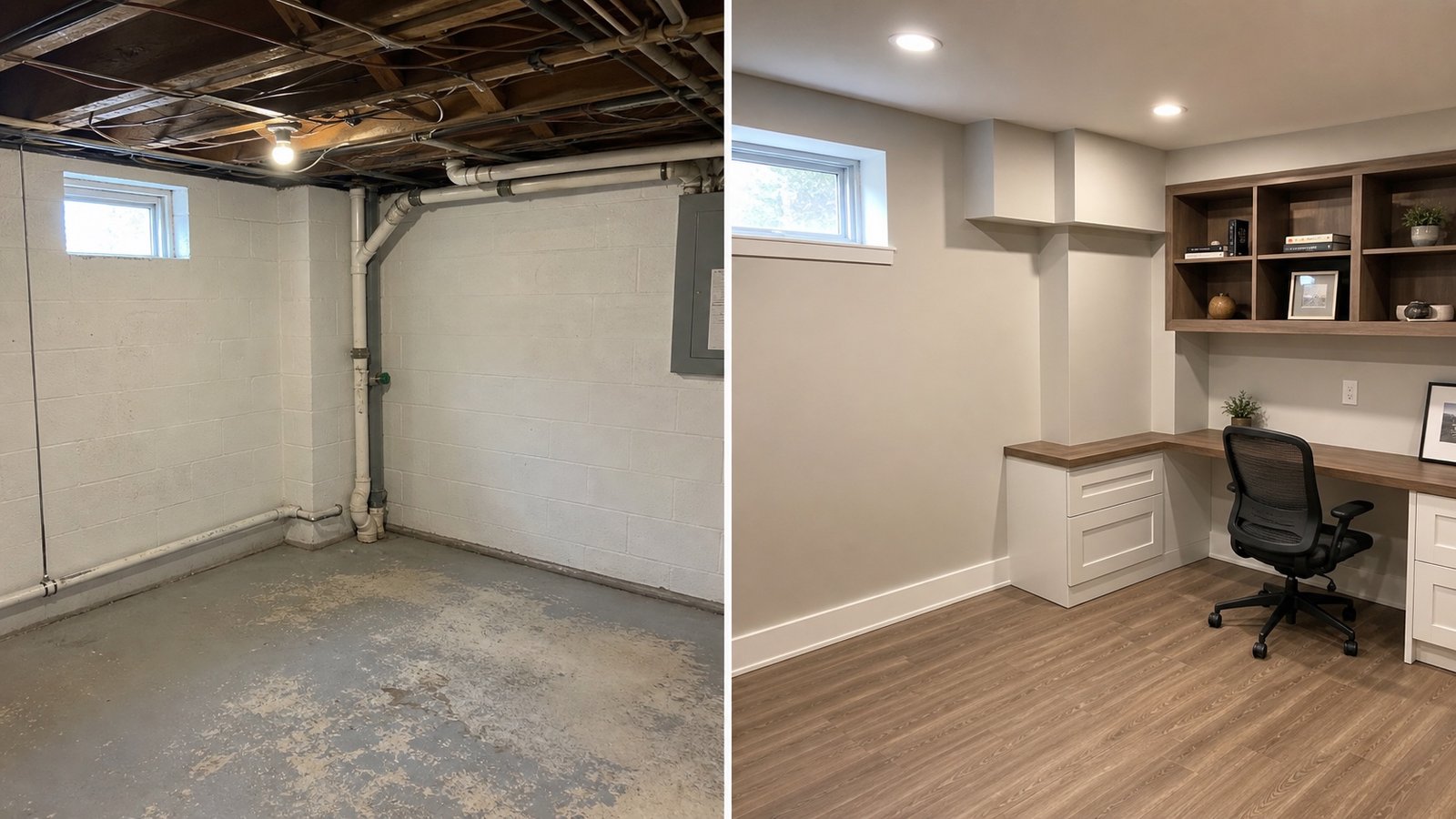
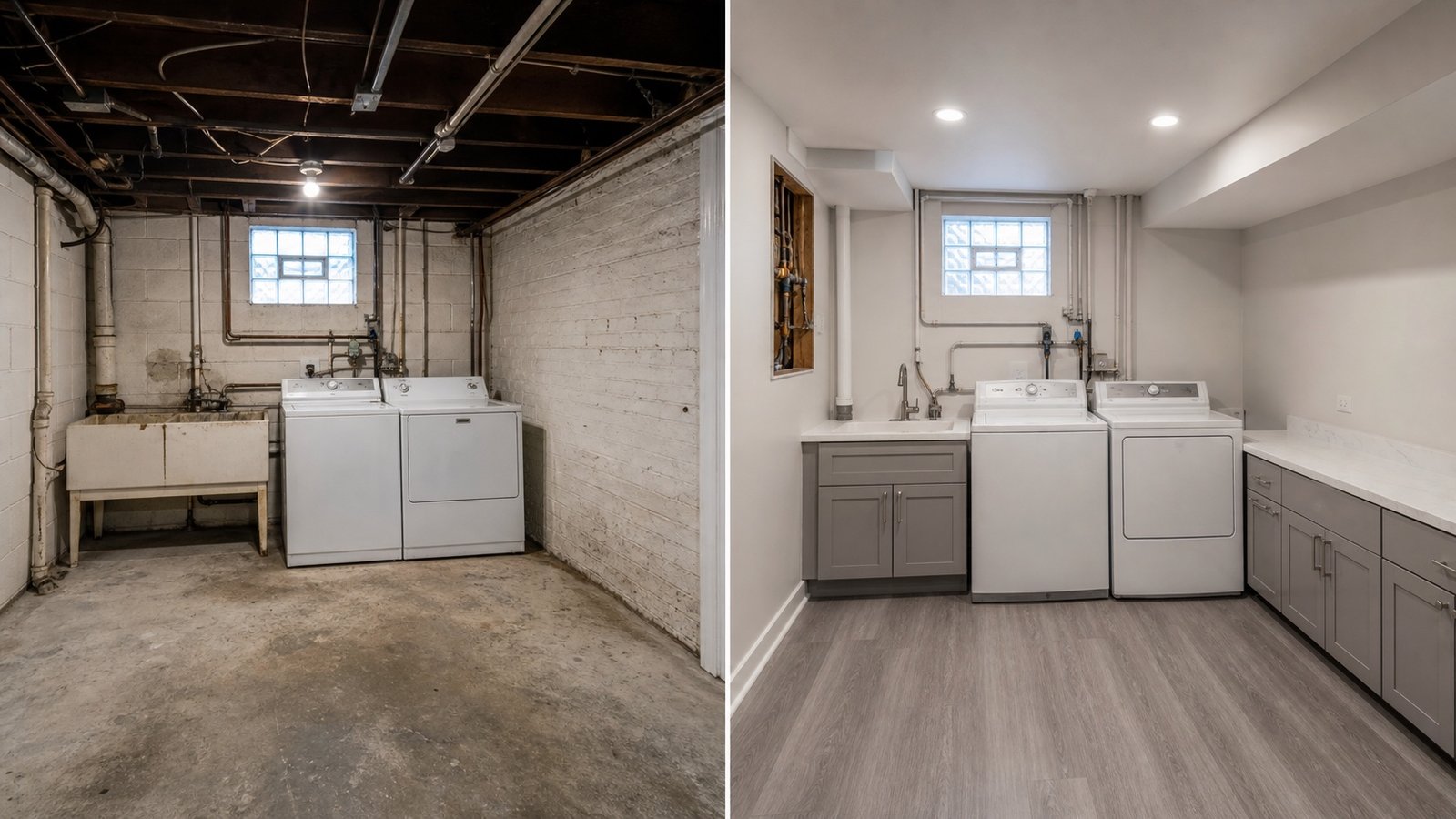
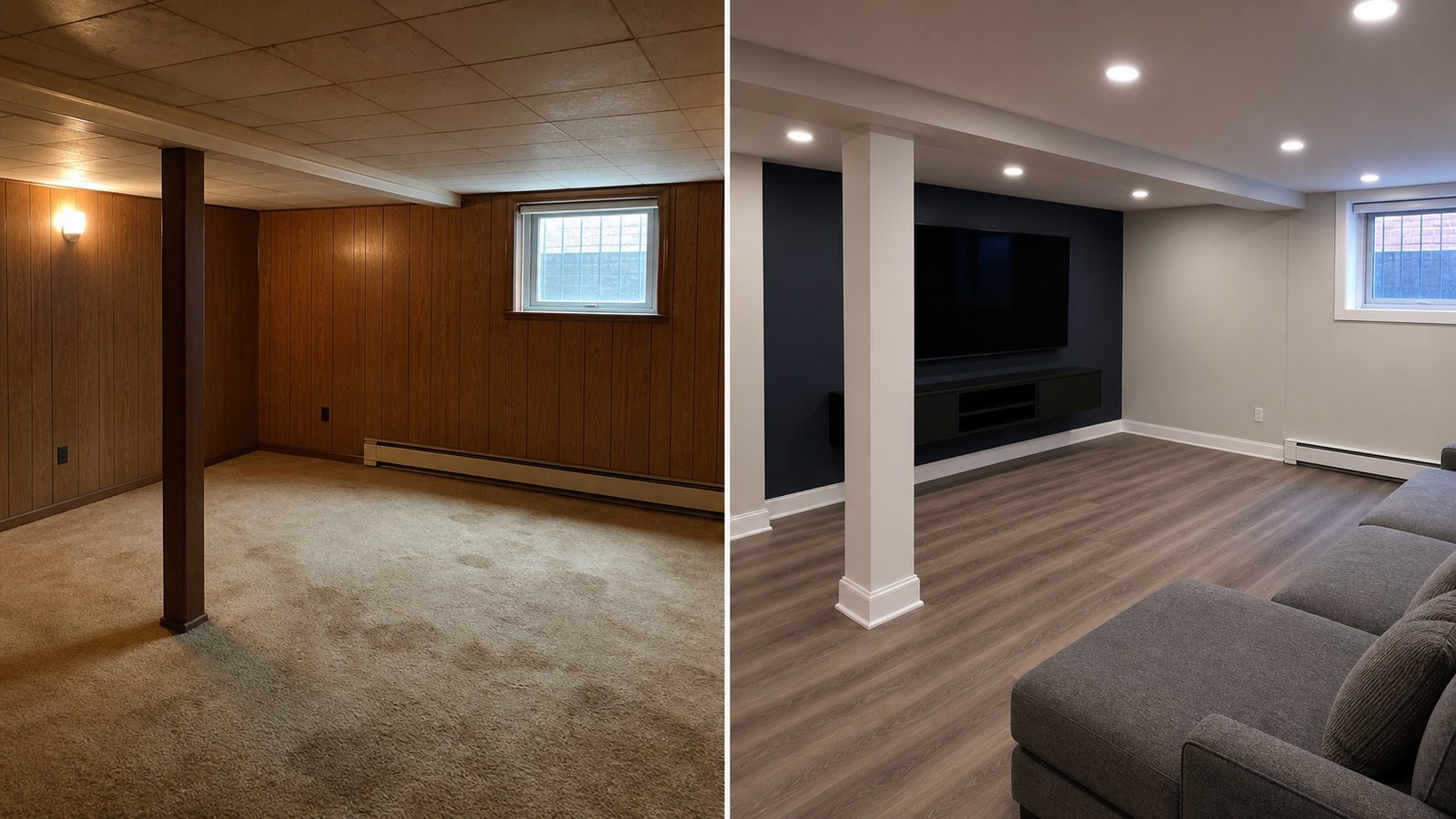
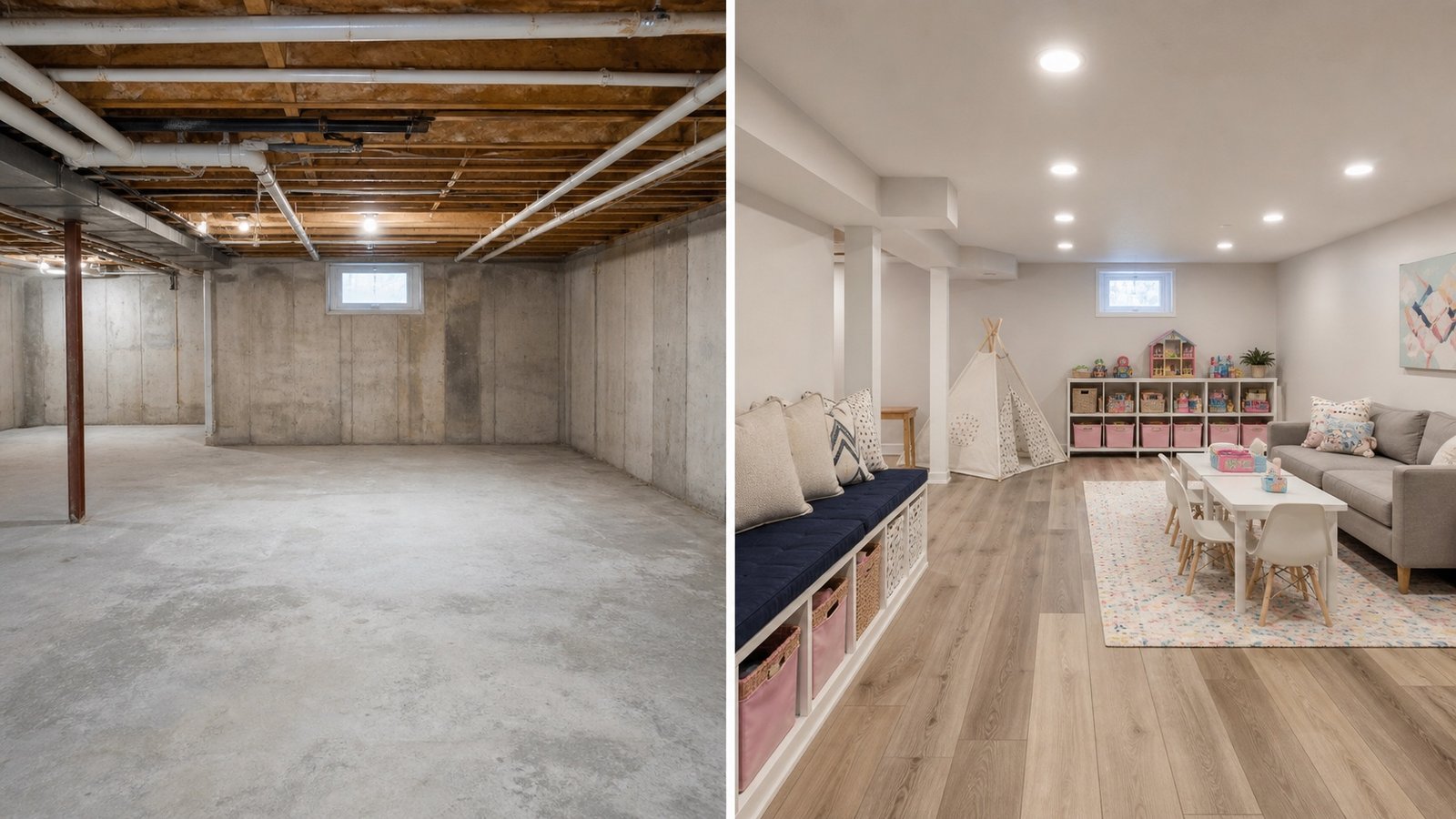
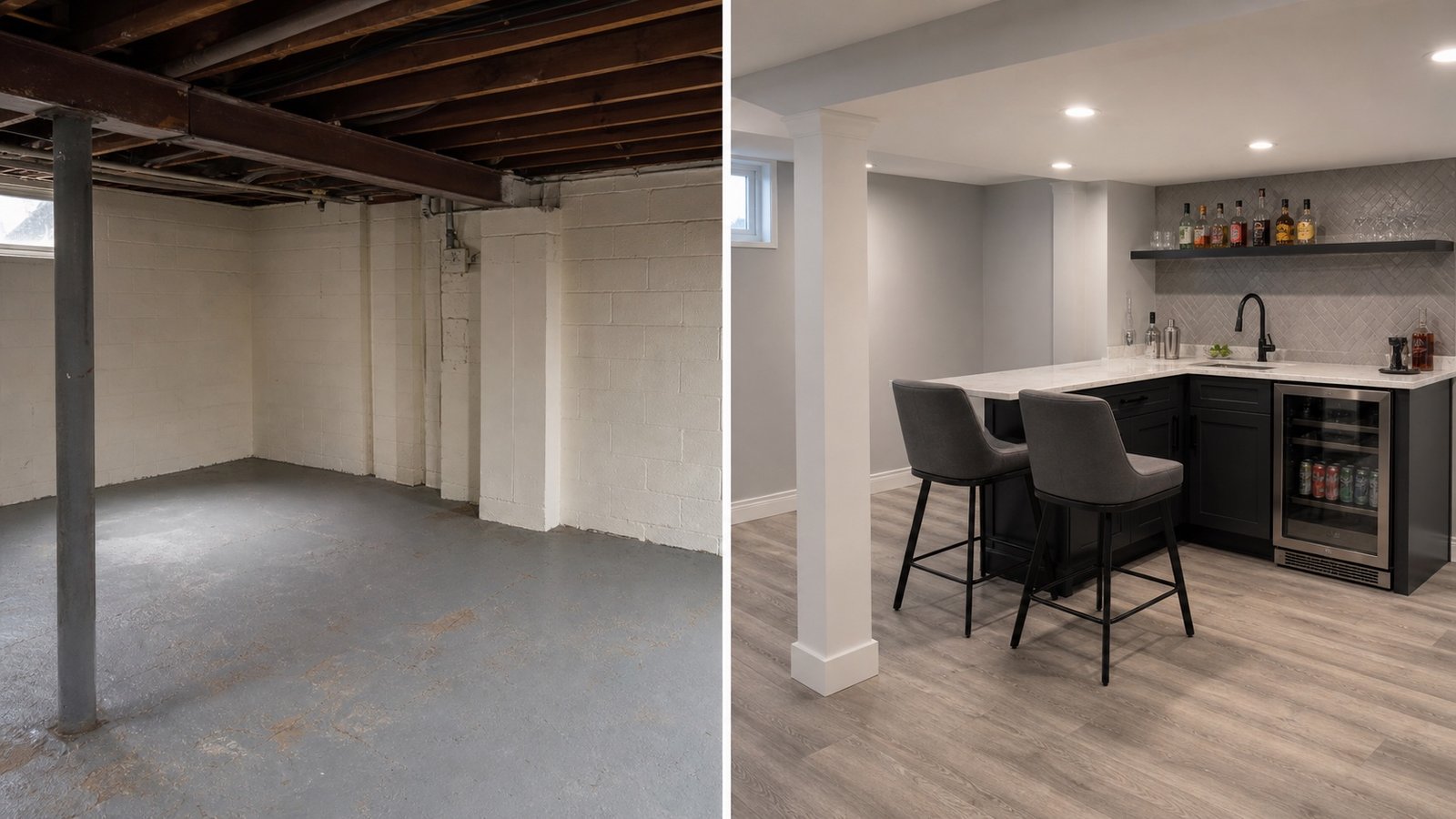
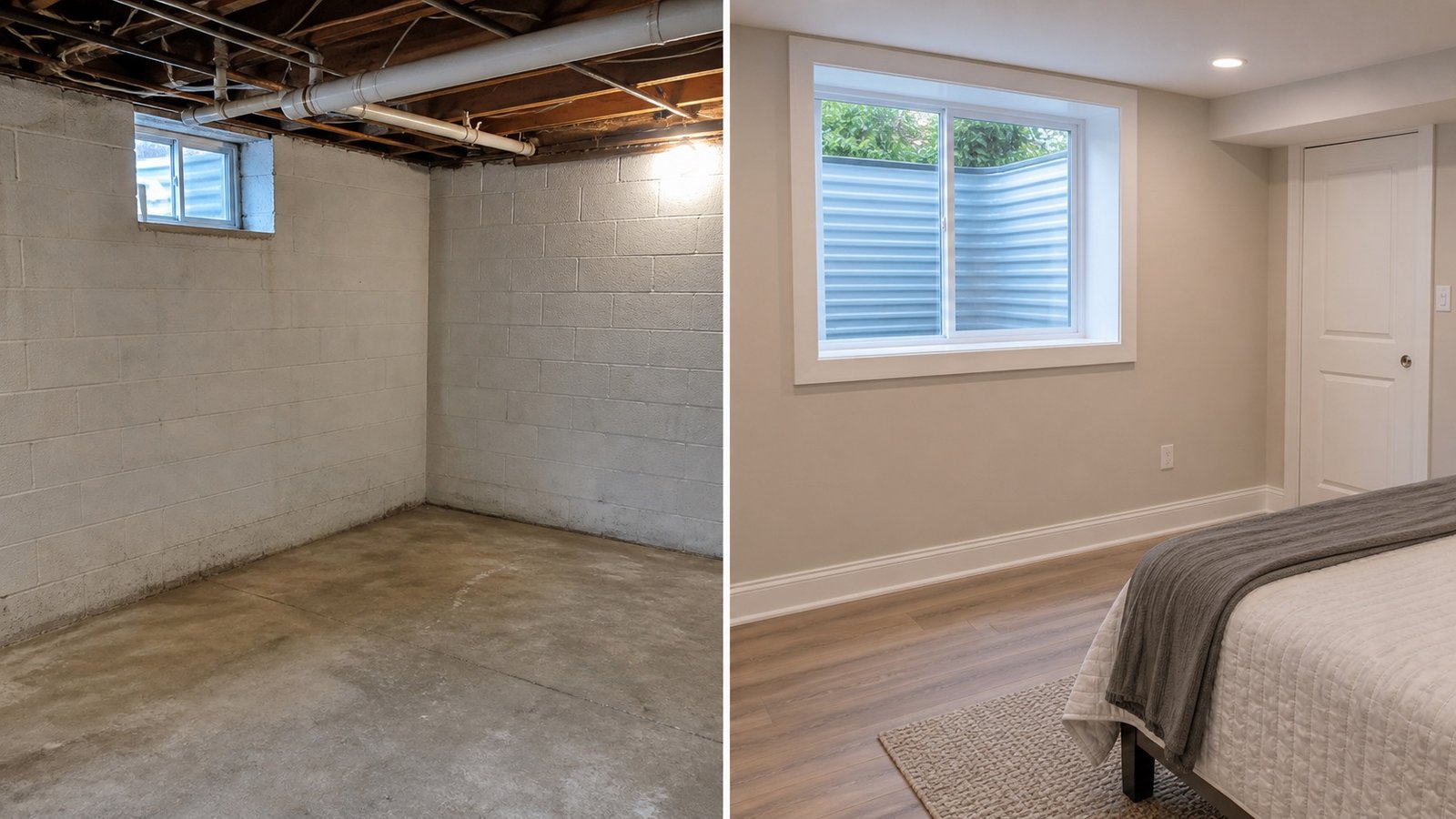
Project Gallery
What basement remodeling work can homeowners compare visually?
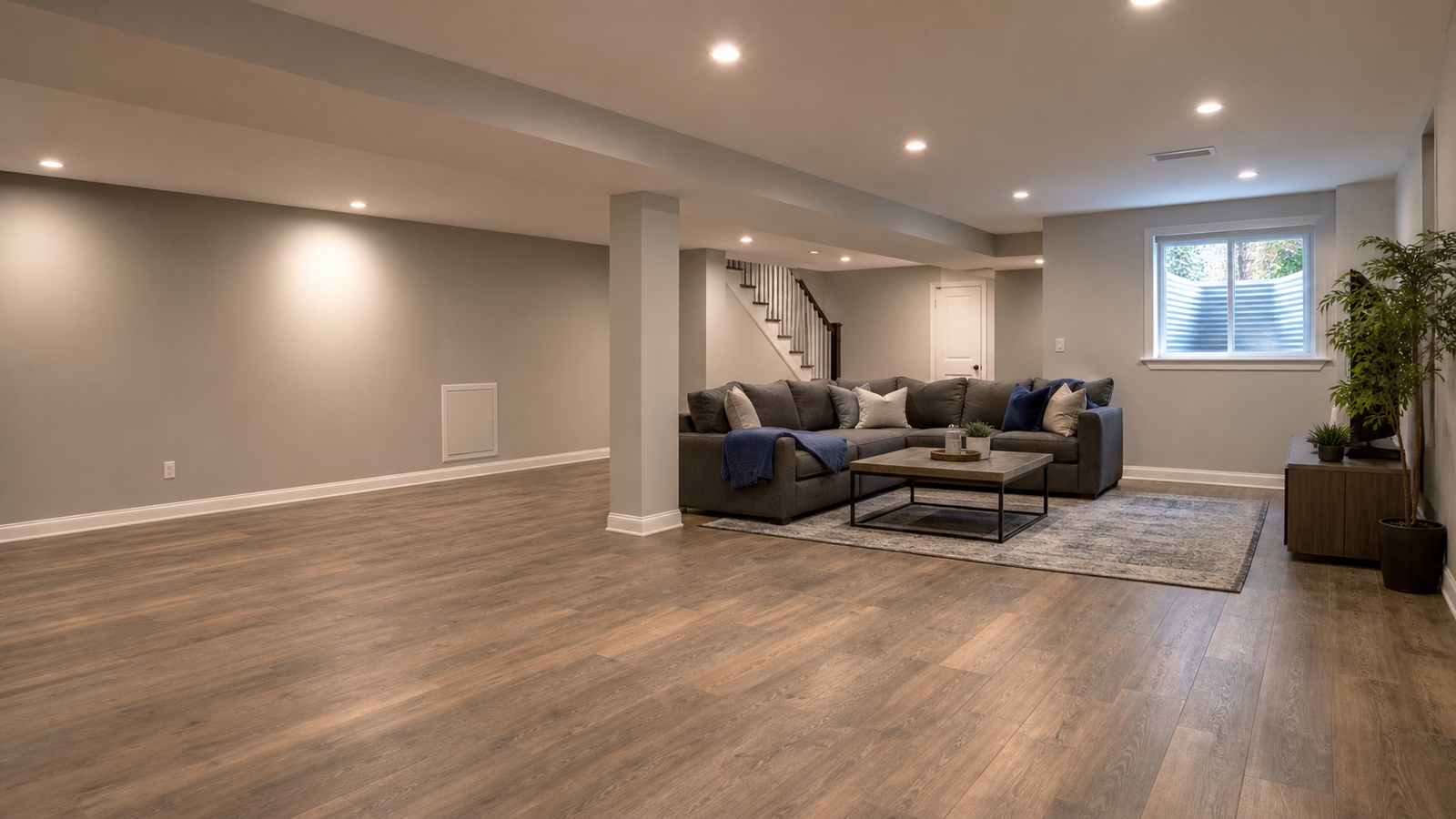
Designed For Real Use
How can a finished basement support everyday use?
A basement renovation is a chance to add usable square footage without losing the practical things a lower level still needs: storage, utility access, moisture control, and safe circulation.
Connected Services
Which BluRock services connect with basement remodeling?
Basement work often intersects with kitchens, bathrooms, masonry, flooring, additions, and permit coordination. These links point to the current canonical BluRock pages.
Coordinate adjacent layouts, plumbing, electrical work, cabinetry, surfaces, lighting, and circulation.
Bathroom remodelingPlan basement bathrooms around drainage, venting, waterproofing, ventilation, fixtures, tile, and approvals.
Concrete and masonryAddress foundations, slabs, cracks, openings, water pathways, retaining conditions, and structural interfaces.
Flooring installationCompare below-grade flooring options after moisture, slab condition, transitions, and room use are defined.
Additions and extensionsCoordinate whole-home space planning when lower-level work connects to stairs, utilities, structure, or expansion.
Permits and filingsOrganize the applicable NYC drawing, filing, approval, inspection, and closeout path for the defined scope.
Basement Renovation FAQ
What should Queens homeowners ask before remodeling a basement?
Can every basement become legal living space?
No. The answer depends on the building, current records, ceiling height, egress, windows, light, ventilation, fire safety, sanitation, structure, moisture conditions, and intended use. Property-specific legal use should be confirmed with the appropriate design professional and NYC agencies.
Do basement renovations require permits?
Permit needs depend on the scope. Electrical, plumbing, mechanical, structural, egress, bathroom, sleeping-room, occupancy, and legal-use changes can trigger drawings, filings, permits, inspections, or closeout requirements.
What is the difference between a finished basement and a legal apartment?
A finished basement may support family recreation, office, laundry, storage, or similar uses. A separate legal dwelling or rental can require additional zoning, building-code, egress, fire-safety, sanitation, and Certificate of Occupancy review.
Should waterproofing happen before finishing?
Yes. Moisture sources, drainage, sump systems, wall treatment, vapor control, crack repair, exterior grading, and below-grade material choices should be evaluated before insulation, drywall, flooring, and trim conceal the conditions.
Can BluRock add a bathroom or laundry room in a basement?
A basement bathroom or laundry area may be feasible depending on drainage, plumbing location, venting, pumping needs, ceiling height, layout, moisture-resistant finishes, electrical work, ventilation, and approvals.
What should homeowners decide before calling?
Define the intended use, whether anyone may sleep there, bathroom or laundry goals, known moisture or structural conditions, utility and storage needs, available property records, access, finish expectations, and target timing.
Talk To BluRock
Ready to plan basement remodeling in Queens?
Contact BluRock Services with the property address, current photos, intended use, known moisture or structural conditions, bathroom or laundry goals, utility constraints, storage needs, and target timing. The first conversation can identify the next practical inspection, design, or scope step.
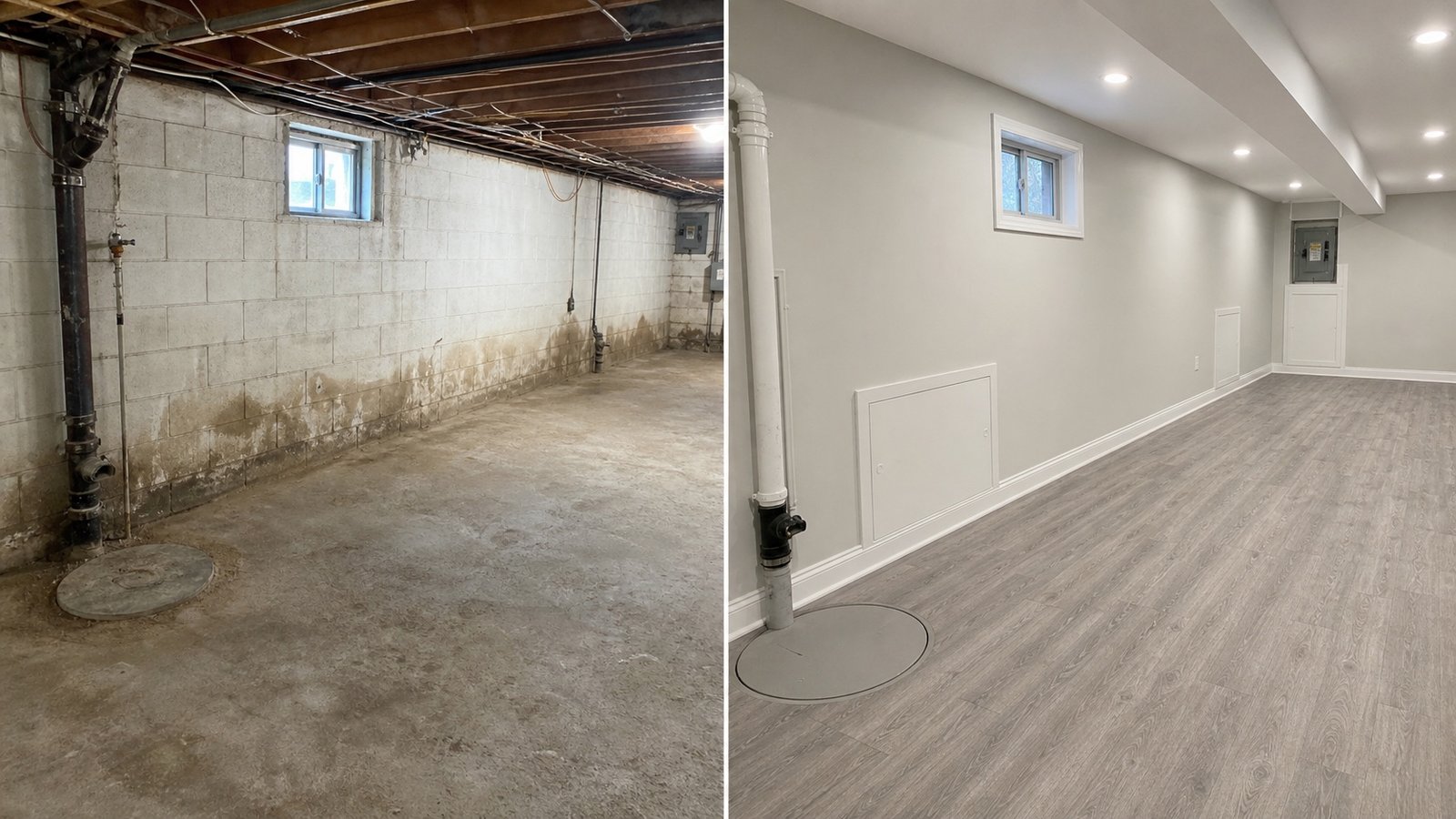
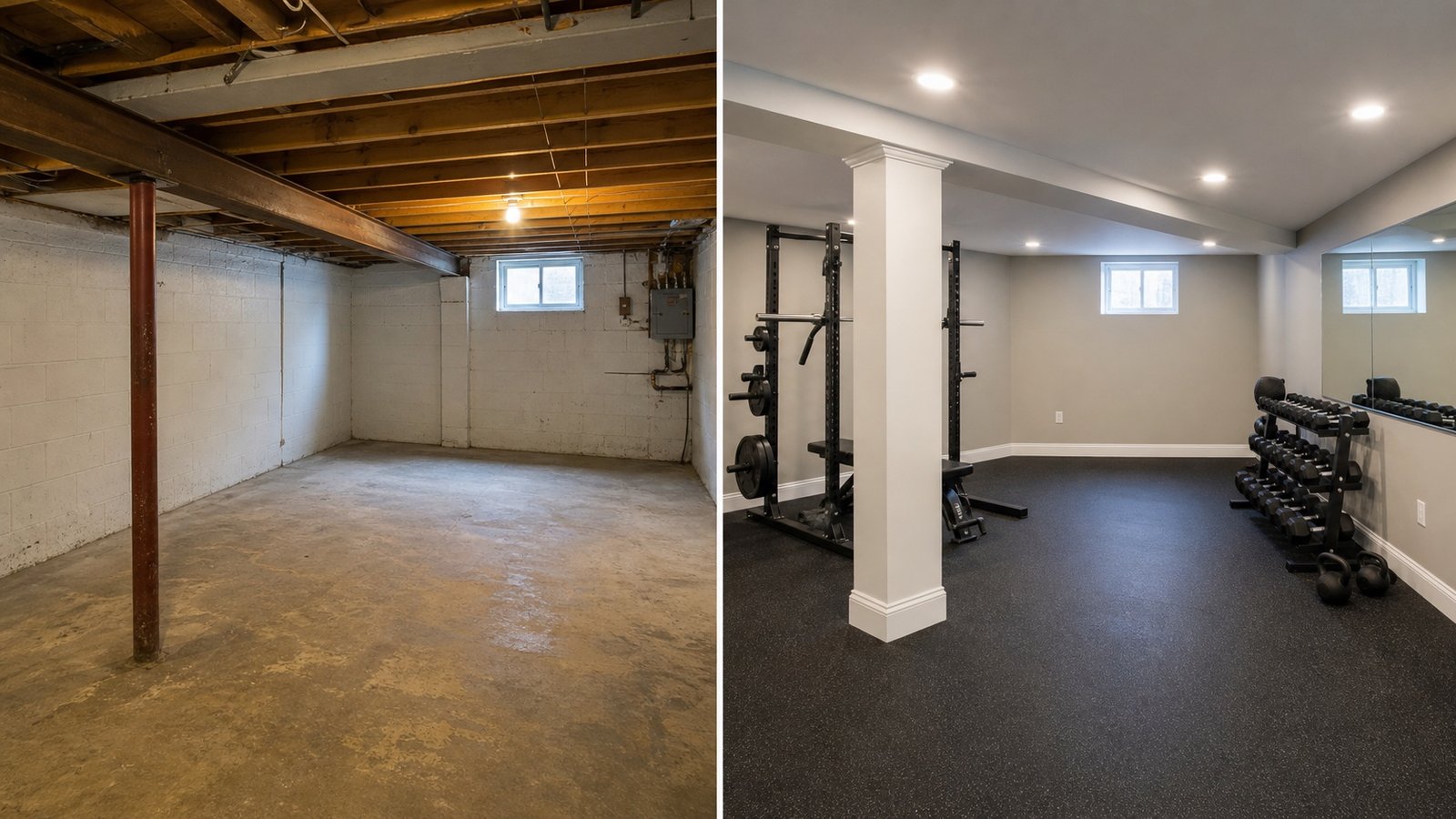
Before & After Projects
Basement Renovation Before and After Projects
Explore finished basement lounges, offices, media rooms, laundry storage, wet bars, guest rooms, and home gyms.