Double-hung
Traditional stacked sashes can support familiar Queens facade proportions and tilt-in cleaning where the selected product allows.


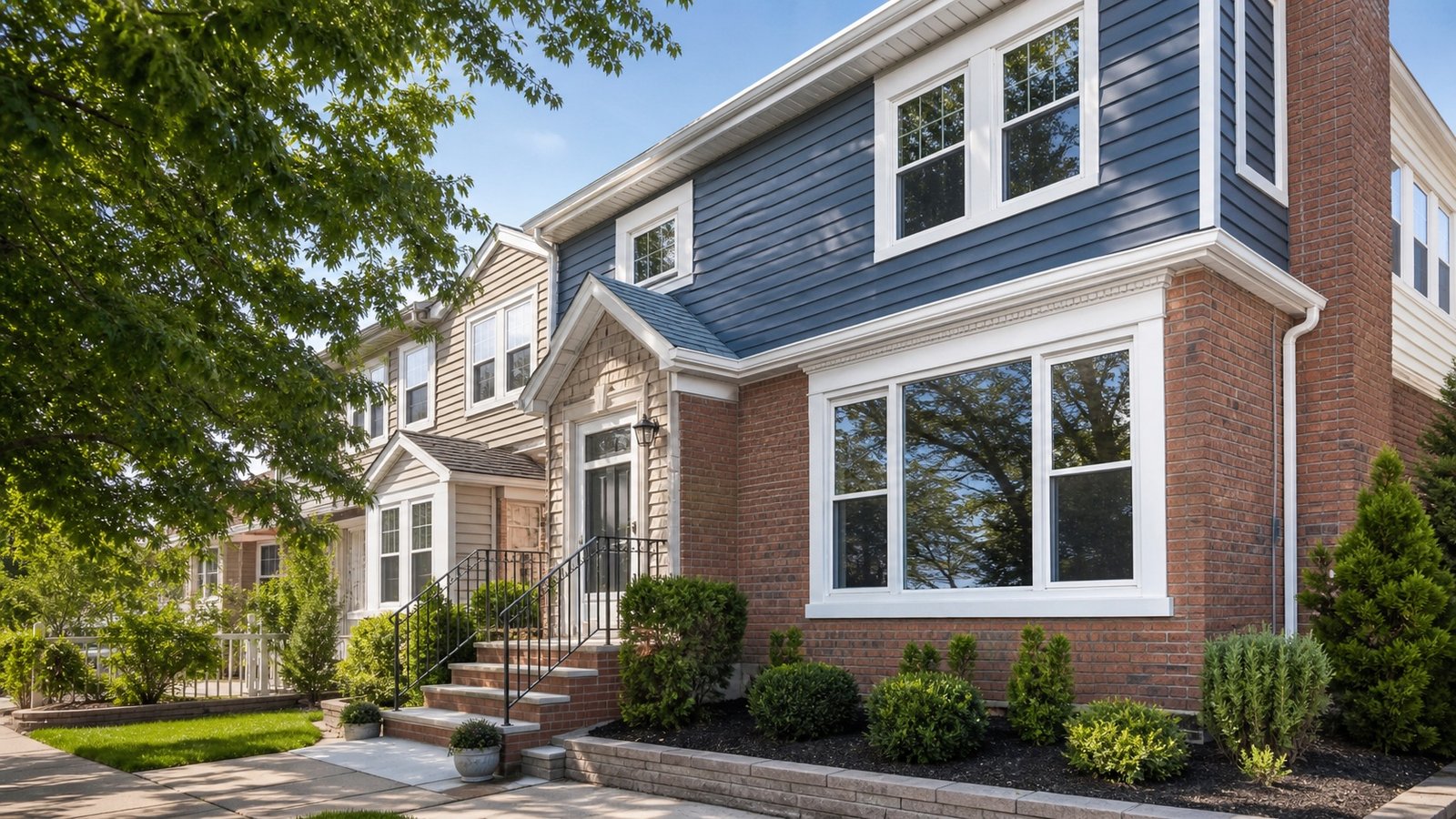

Residential window replacement and installation planning
BluRock Services coordinates replacement windows, full-frame installation, insert replacement, flashing, air sealing, trim, glass selection, and connected exterior repairs for Queens homes, apartments, co-ops, and multifamily properties.
Service summary
A dependable window project connects the selected unit with the existing opening. Product ratings matter, but flashing, shimming, perimeter air sealing, sill drainage, exterior sealant, interior trim, and adjacent masonry or siding determine how the installation performs in the building.
BluRock Services provides residential window replacement and installation services in Queens, New York. Work may include condition assessment, field measurement, insert or full-frame replacement, frame and glass comparison, removal, flashing, air sealing, insulation, trim, sill and masonry coordination, protection, cleanup, and project-specific filing support.
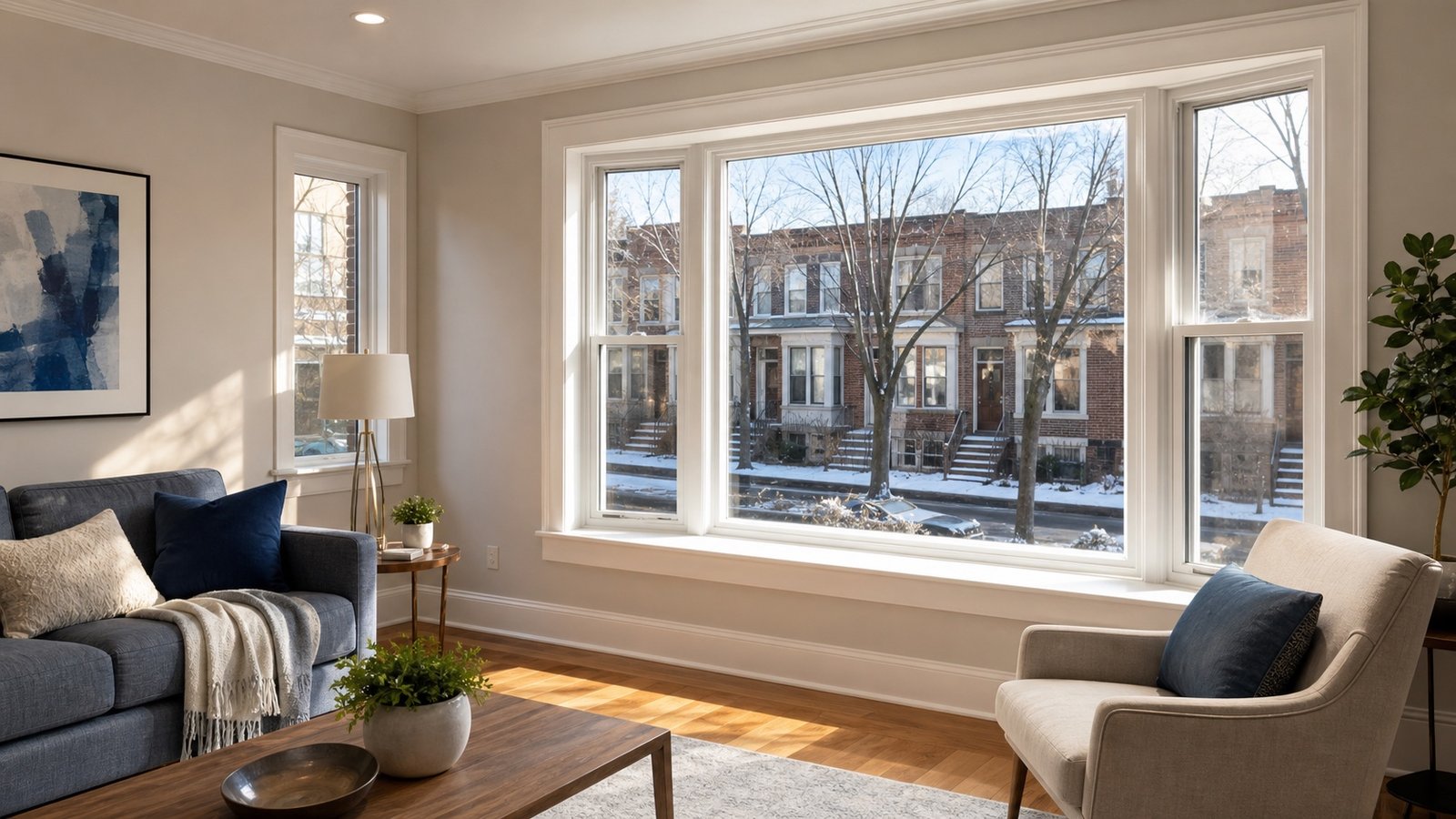
Repair, insert, or full frame
A repair may fit isolated hardware, screen, glazing, balance, or sealant issues when the frame and surrounding opening remain serviceable. Replacement deserves consideration when units are difficult to operate, frames are deteriorated, glass seals have failed, water paths are unreliable, repeated repairs are adding up, or the renovation calls for a different size, style, or finish.
A surface review cannot reveal every concealed condition. Final scope can change after removal exposes framing, flashing, insulation, old sealants, or moisture damage.
Operation and architecture
Room use, ventilation, egress, cleaning access, facade rhythm, existing masonry openings, neighborhood character, and building approvals should guide the configuration. Final sizes and operation must be verified for the property.
Traditional stacked sashes can support familiar Queens facade proportions and tilt-in cleaning where the selected product allows.
Compression seals and outward-opening sash can support ventilation goals, subject to clearances, screens, hardware, and safety requirements.
Horizontal operation can fit wide openings and spaces where projecting sash would conflict with circulation or exterior conditions.
Fixed glass can maximize daylight and views when the room has another compliant source of ventilation or egress where required.
Projecting assemblies can add depth and character but need coordinated support, roofing, flashing, insulation, and interior finish work.
Transoms, mulled groups, mixed fixed-and-operable units, and facade-wide layouts require precise structural and water-management planning.
| Configuration | Common planning fit | Useful strengths | Items to verify |
|---|---|---|---|
| Double-hung | Traditional homes and familiar facade patterns | Two operable sashes; cleaning options vary | Meeting rail, balances, egress, screens, air leakage |
| Casement or awning | Ventilation-focused rooms and tighter seals | Compression seals; directed airflow | Exterior swing, hardware, screens, safety, cleaning |
| Sliding | Wide openings and low-projection operation | Simple horizontal use | Track drainage, sash weight, seals, exterior access |
| Picture or fixed | Daylight, views, and coordinated window groups | Fewer moving components | Ventilation, egress, glass size, solar exposure |
| Bay or bow | Feature rooms and projecting facades | Interior depth and broader view angles | Support, roof, flashing, insulation, approvals |
| Specialty groups | Architectural openings and multifamily elevations | Custom proportions and coordinated sightlines | Engineering, mullions, lead time, installation sequence |
This comparison is a planning aid, not a product specification or compliance determination. Final configuration depends on the opening, current code, approvals, and manufacturer instructions.
Frame and finish
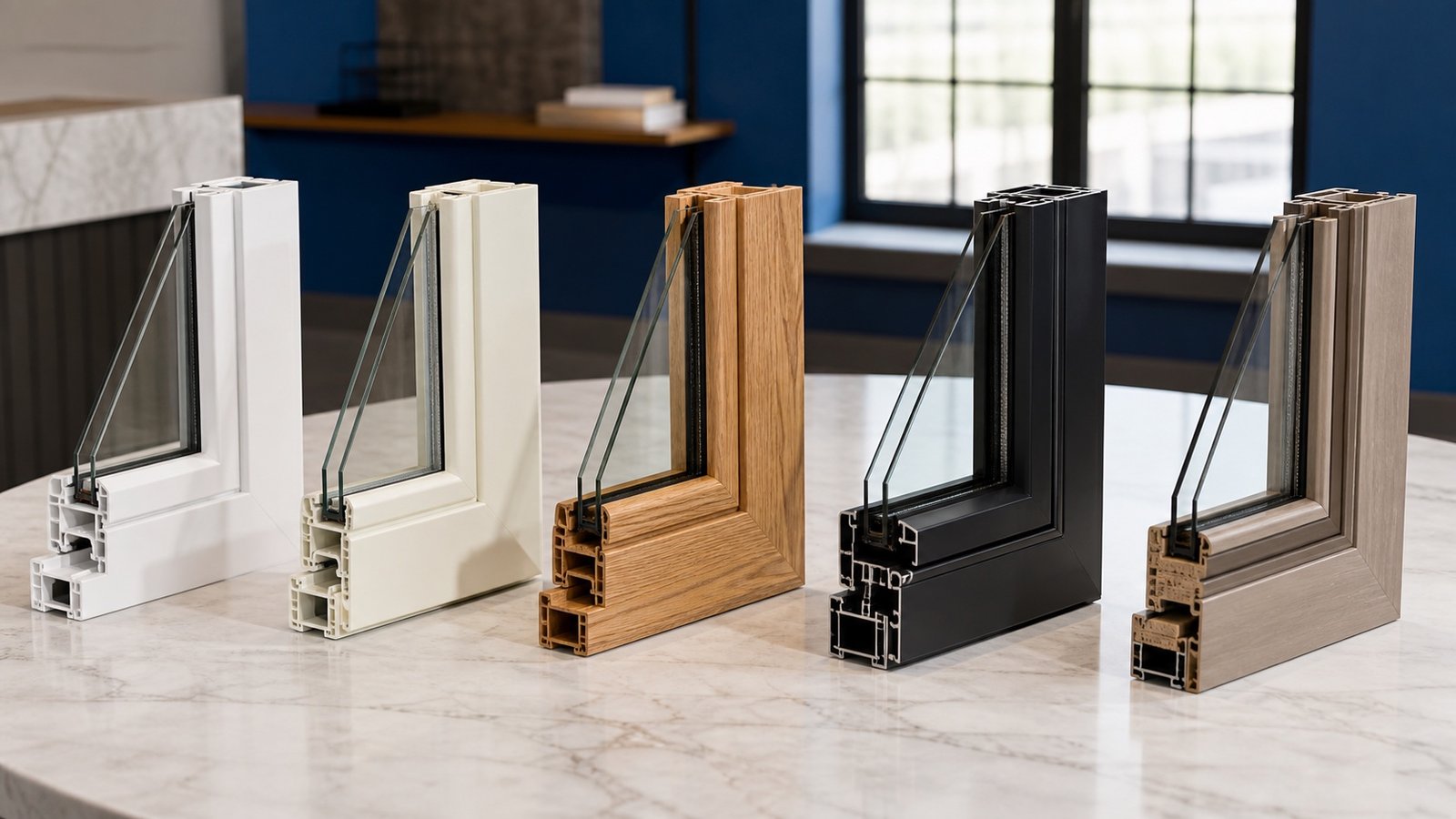
Frame choice affects appearance, maintenance, sightlines, thermal performance, rigidity, finish options, lead time, and how the unit connects to the existing opening. Compare complete, correctly sized products rather than assuming one material is automatically best.
Low-maintenance frames with broad replacement availability. Compare reinforcement, color limitations, profile depth, glass package, and product-specific ratings.
Dimensionally stable frames with slimmer-profile possibilities in some product lines. Review finish, corner construction, availability, and lead time.
Engineered frame systems vary widely by manufacturer. Compare material composition, exterior finish, joinery, accessories, and verified whole-unit ratings.
Warm interior finish and traditional detailing can suit visible rooms and character-driven facades. Plan for maintenance, moisture protection, and finish coordination.
Selected aluminum systems can support narrow sightlines and multifamily applications. Verify thermal breaks, condensation resistance, finish, and project-specific performance.
Insert replacement preserves portions of the old frame. It may reduce disruption, but the retained frame, sill, drainage, dimensions, and surrounding conditions must be serviceable.
Installation strategy
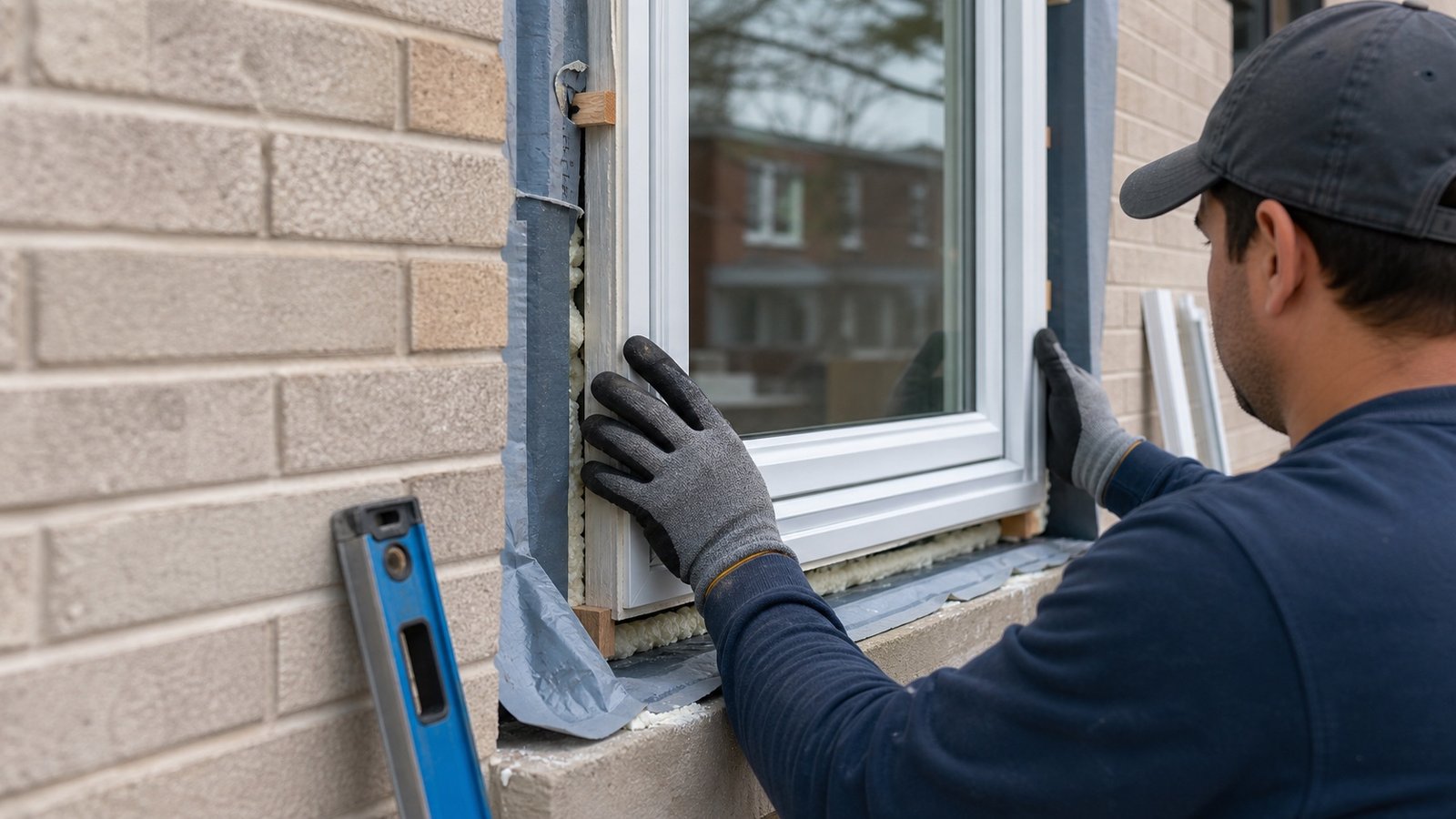
Insert replacement installs a new unit within a serviceable existing frame. It can limit trim disturbance and shorten work at each opening, but it reduces glass area and leaves concealed portions of the old frame in place. Full-frame replacement removes the old frame to expose more of the opening for inspection, flashing, insulation, and alignment, with added interior and exterior finish work.
The correct method is opening-specific. Product instructions, wall construction, water paths, code, and project approvals control the installation details.
Energy and comfort
Use the temporary NFRC label and applicable ENERGY STAR certification to compare the complete window—not only center-of-glass claims. The correct selection depends on climate, orientation, glass area, shading, wall conditions, comfort goals, and current code requirements.
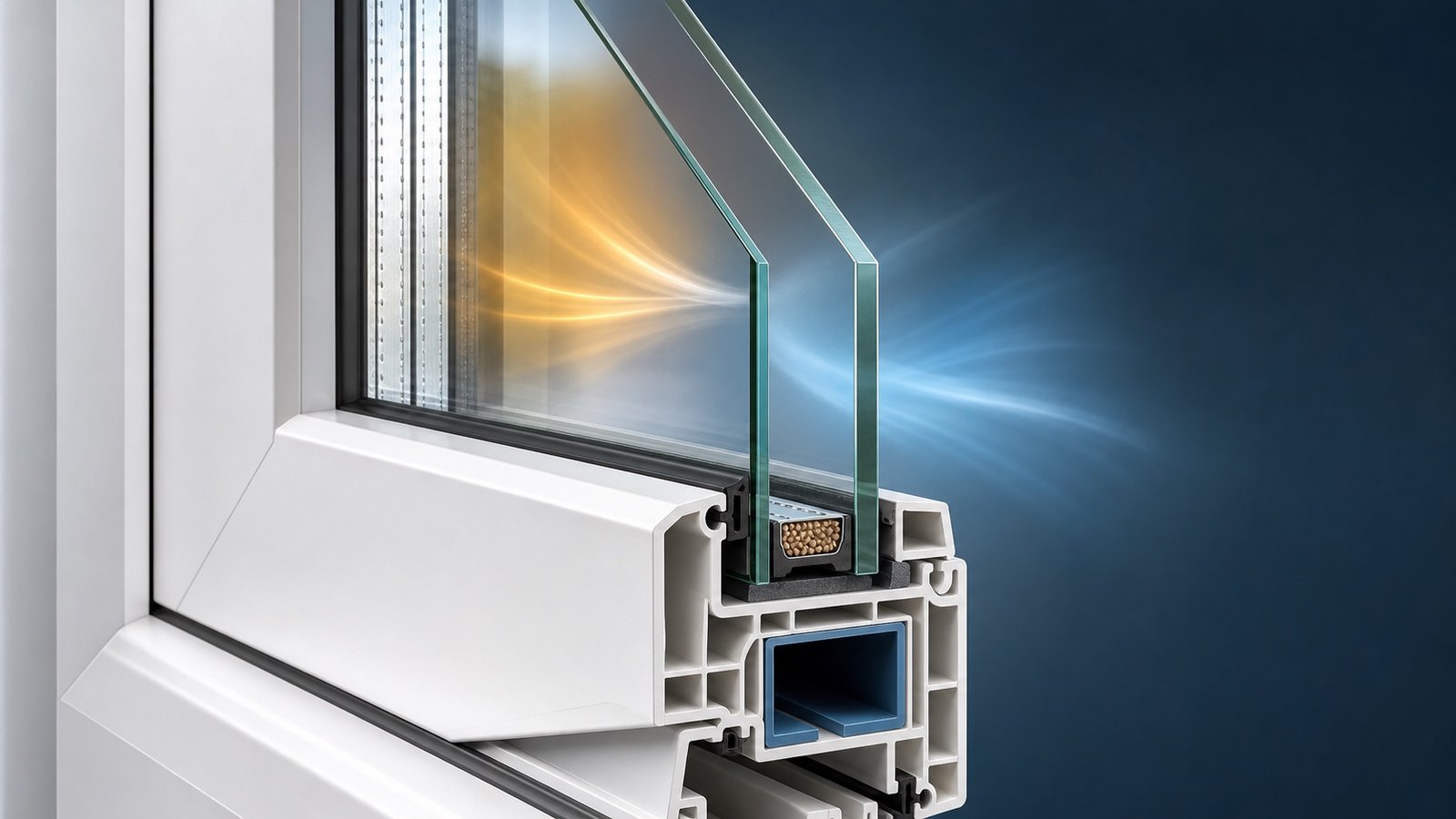
Primary references: ENERGY STAR window criteria, NFRC rating guidance, and 2025 NYC Energy Conservation Code, Residential Provisions. Confirm current product labels and project-specific code requirements before ordering.
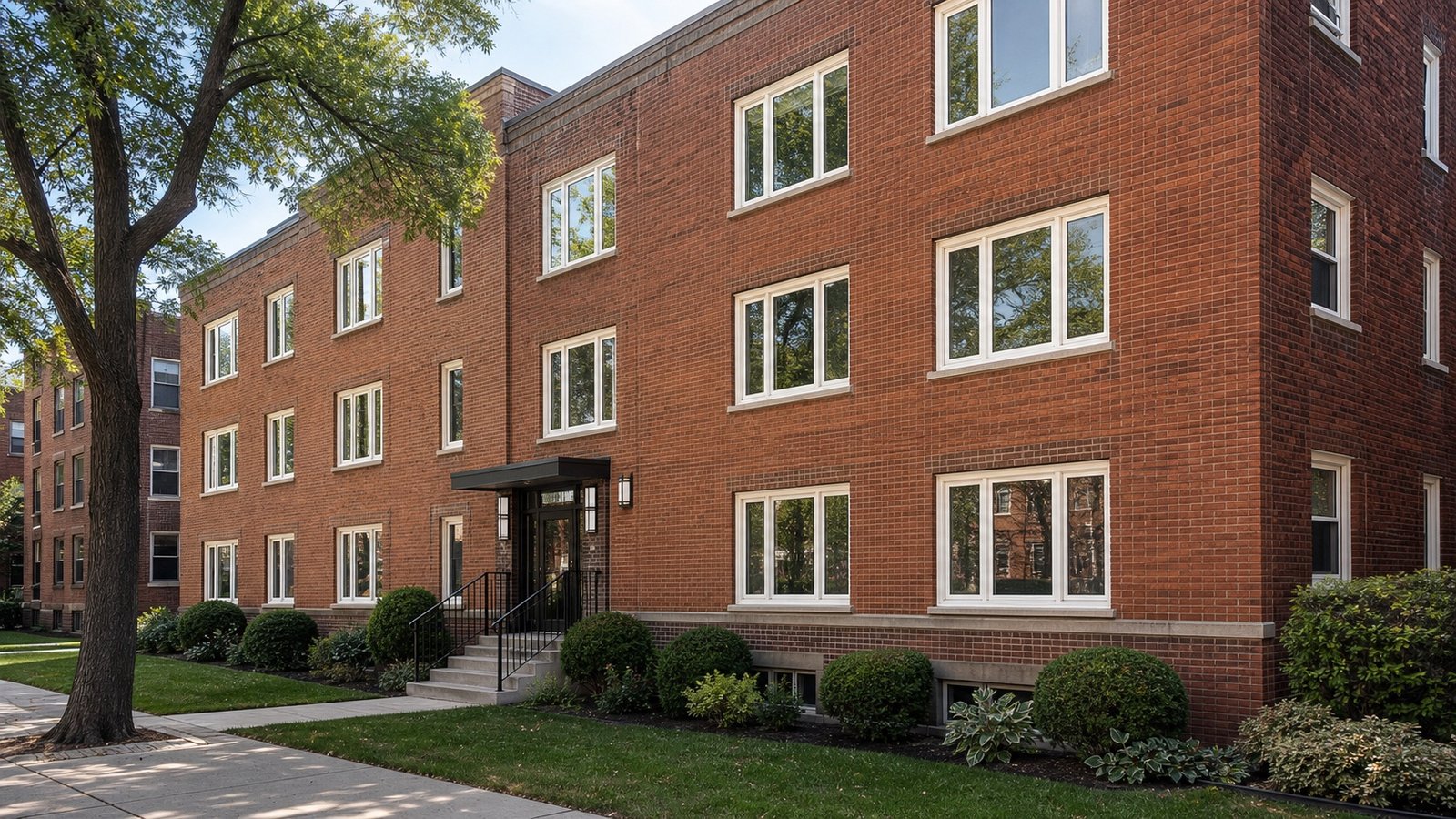
Property and approval path
Start with the property type, existing opening, facade rules, unit-owner or board responsibilities, access, occupant protection, and the approval path. A one- or two-family home, a co-op apartment, a larger multifamily building, and a landmarked property can require different documentation and coordination.
Most NYC construction work requires approval and permits, with limited exemptions depending on the exact scope. Landmark exterior window work may need LPC review even where a DOB permit is not required. Verify the current path for the specific property before work begins.
Official guidance: NYC Department of Buildings permit overview and NYC Landmarks Preservation Commission minor-work permits.
Scope and budget
Accurate pricing requires field measurements and a written scope. Per-window numbers can be misleading when product series, glass, operation, floor, access, removal method, concealed repairs, finish work, protection, and approvals differ.
Frame material, configuration, dimensions, grids, tempered or specialty glass, screens, hardware, color, and performance package.
Insert versus full-frame removal, retained conditions, jamb depth, frame preparation, waterproofing, and perimeter insulation.
Sill, framing, sheathing, masonry, lintel-area coordination, exterior caps, interior casing, plaster, paint, and sealants.
Floor, stairs, occupied rooms, furniture, sidewalk or yard access, lifts or scaffold, debris route, and daily cleanup.
Co-op requirements, insurance, approved samples, resident scheduling, delivery windows, working-hour limits, and closeout records.
Design review, DOB or LPC path, product lead time, sequencing with facade work, inspections, weather, and discovered conditions.
Coordinated delivery
The sequence should protect measurements, selections, approvals, openings, finishes, and occupied spaces while giving discovered conditions a defined decision path.
Review openings, symptoms, facade conditions, access, property rules, and connected work.
Compare replacement method, frame, glass, operation, finish, repairs, approvals, and allowances.
Field-verify each opening, confirm schedules and labels, approve samples, and protect lead-time decisions.
Protect rooms, remove in sequence, address exposed conditions, set, flash, seal, finish, and clean.
Check operation and locks, complete punch work, remove protection, and provide available records and care notes.
Planning visuals
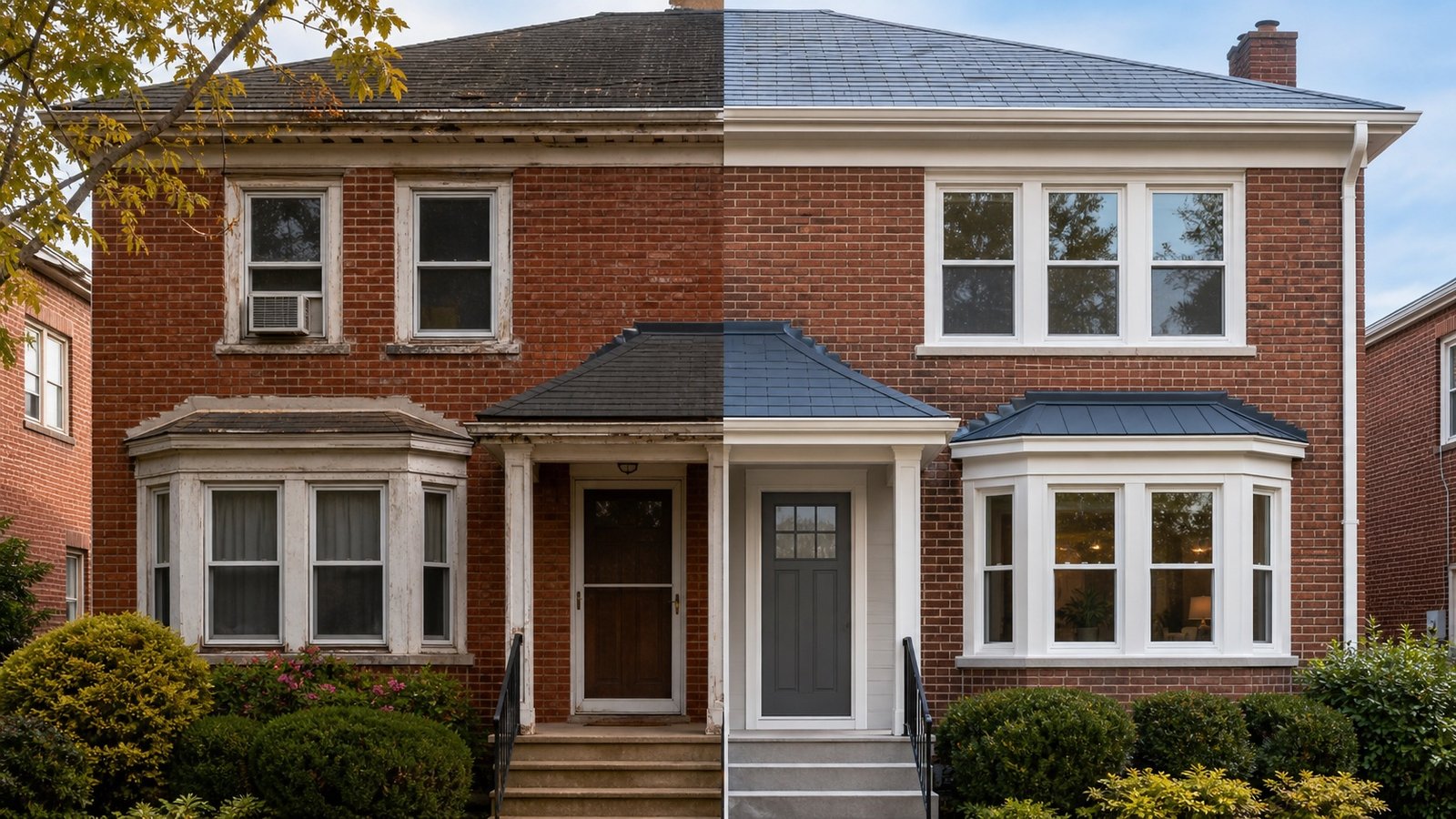
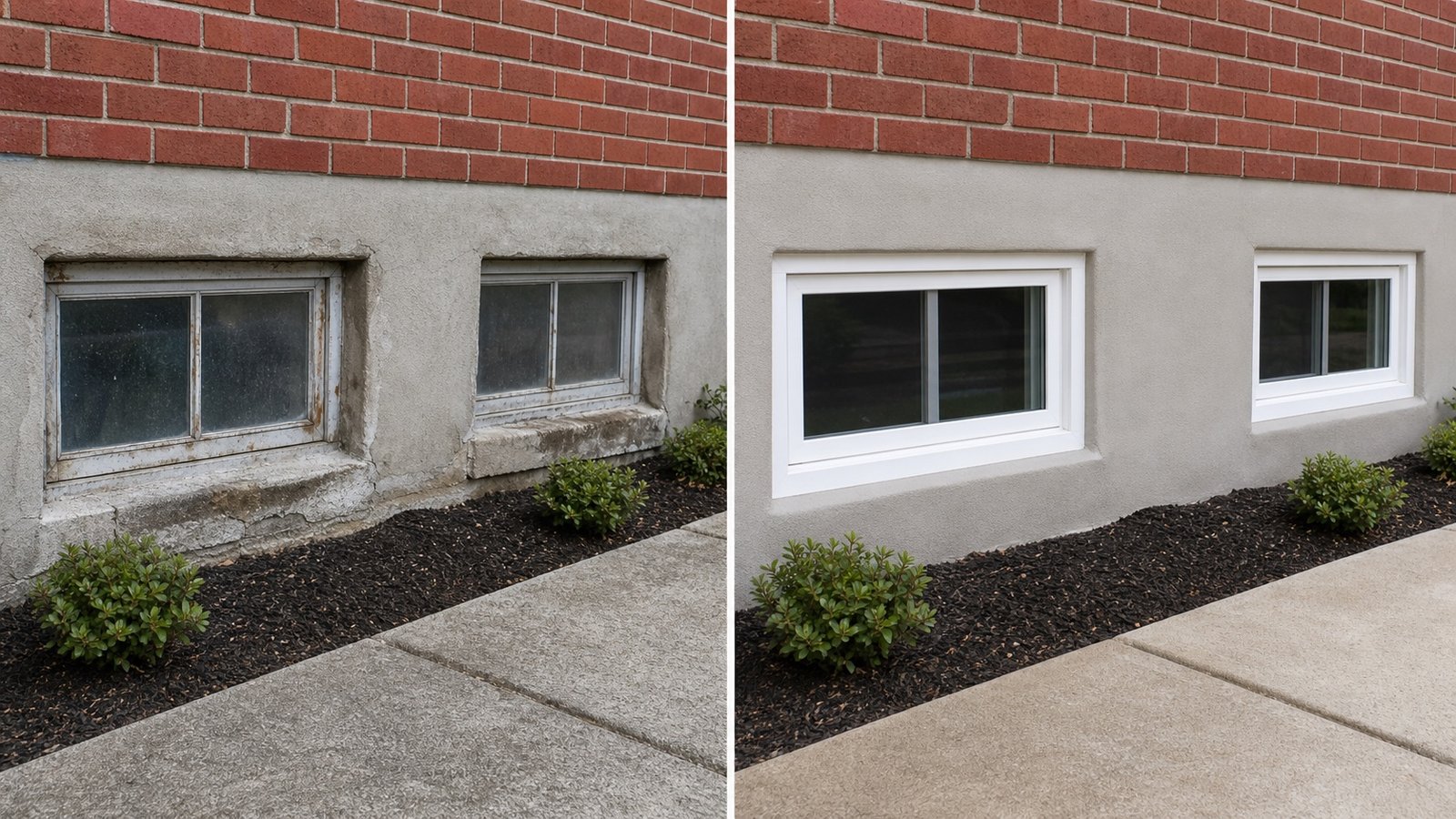
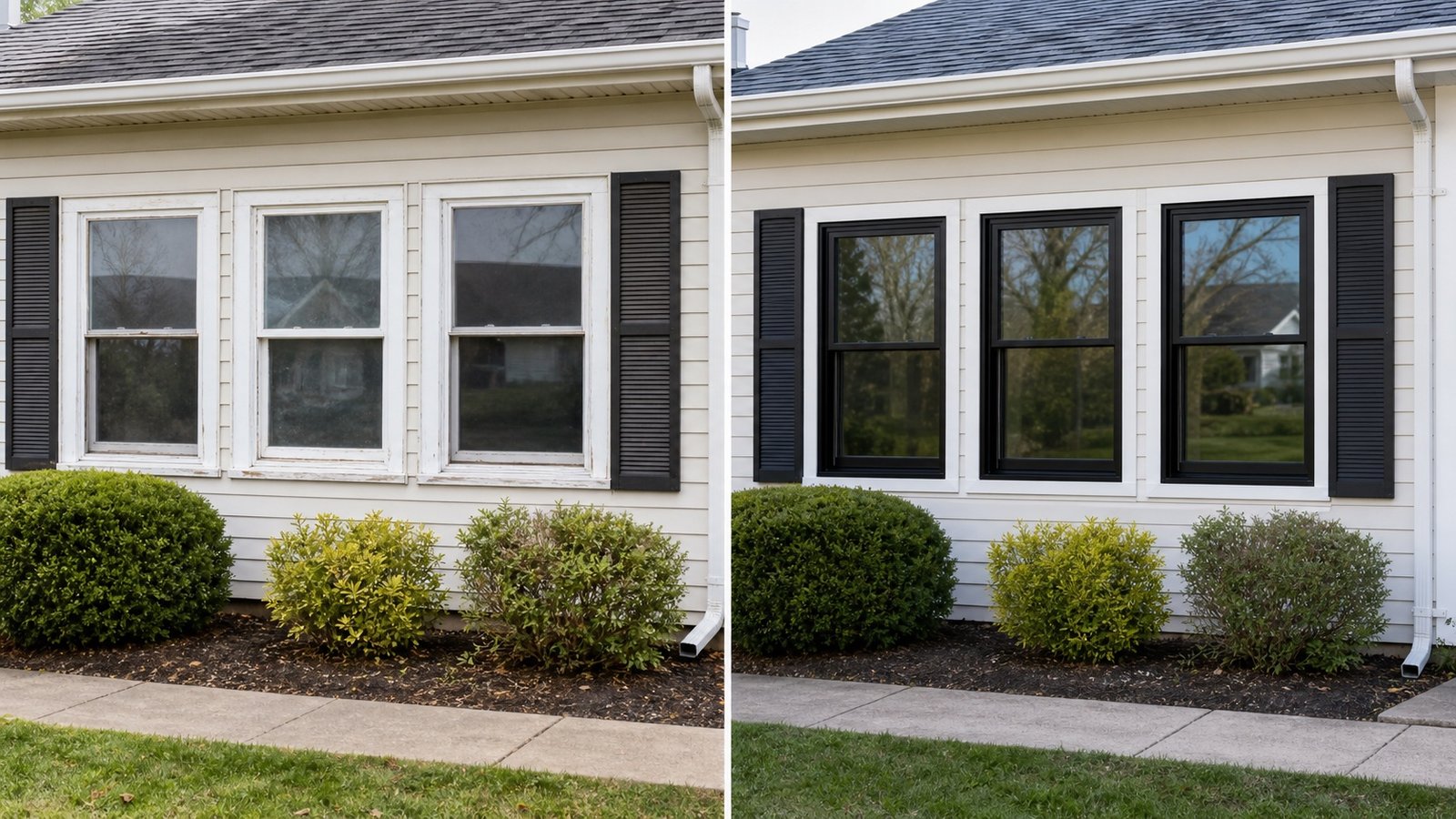
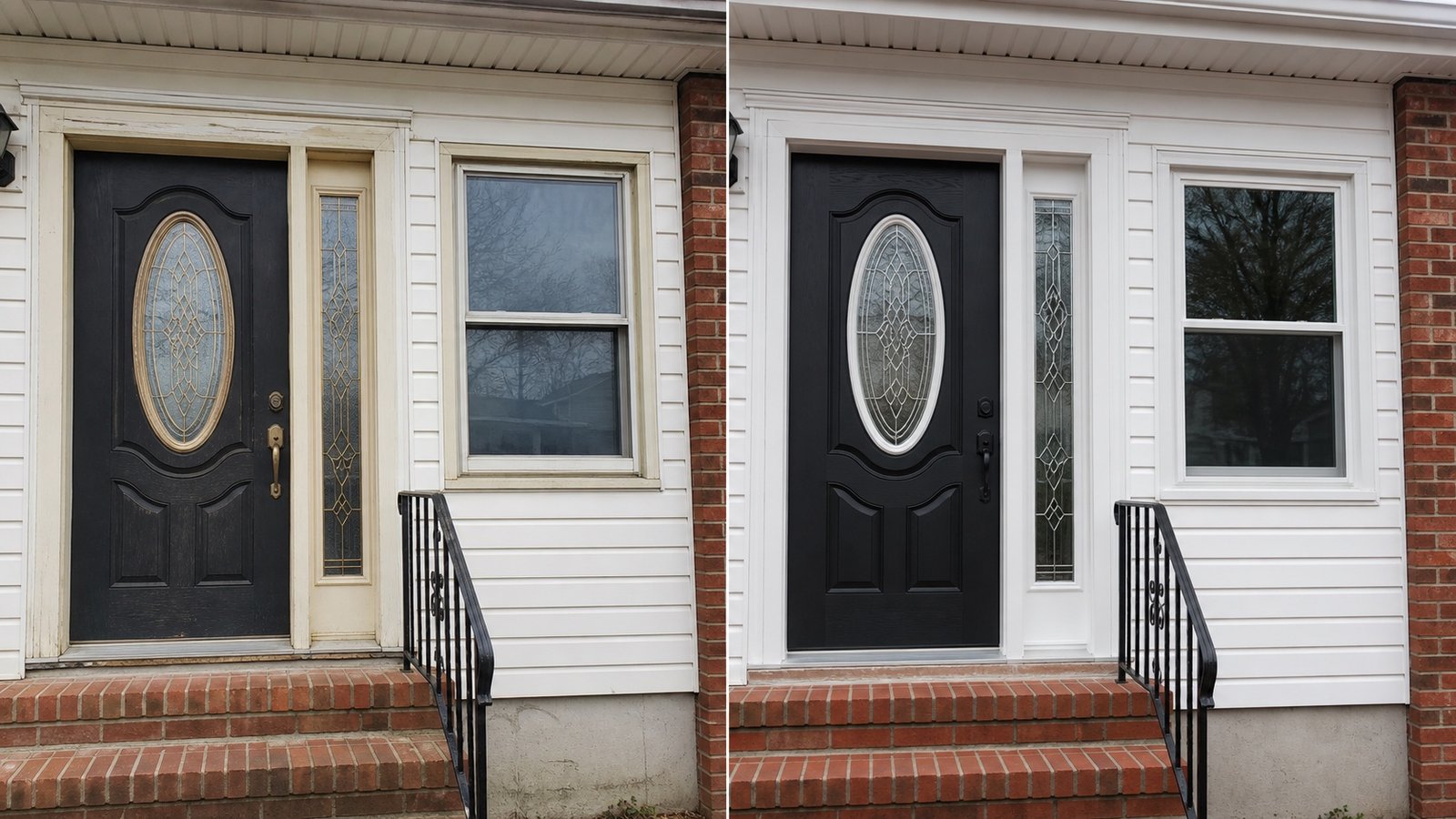
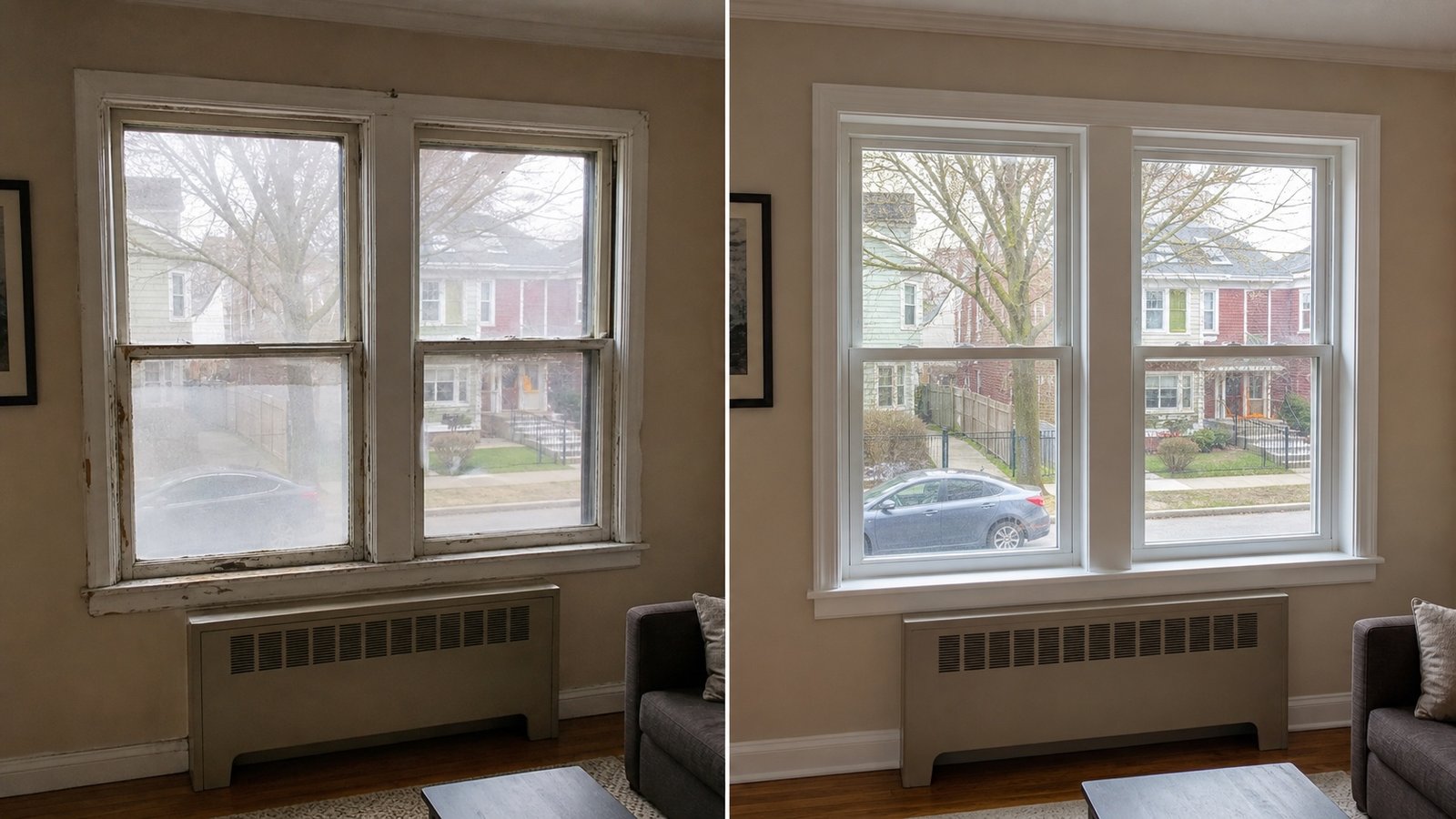
These concept visuals support selection conversations. They do not depict completed BluRock projects, promised outcomes, specific products, or field-verified existing conditions.
Window replacement FAQ
Useful early information includes the property address, building type, window count, photos, symptoms, preferred styles, co-op or condo requirements, access constraints, and target timing.
Yes. BluRock Services coordinates residential window replacement and installation for Queens homes, apartments, co-ops, and multifamily properties, subject to the property, scope, access, approvals, product availability, and schedule.
Neither method is automatically better. Insert replacement may fit a dry, stable, correctly drained existing frame. Full-frame replacement exposes more of the opening for inspection, flashing, insulation, alignment, and repairs but requires more finish work.
The best fit depends on the opening, architecture, maintenance preference, finish, sightlines, verified performance, budget, lead time, and installation details. Vinyl, fiberglass, composite, wood-clad, and thermally improved aluminum each have project-specific tradeoffs.
Compare the complete product using the NFRC label, applicable ENERGY STAR certification, U-factor, solar heat gain coefficient, visible transmittance, air leakage, and any reported condensation-resistance value. Installation and perimeter sealing also affect real-world comfort.
The answer depends on building type, exact scope, opening changes, fire-rating conditions, energy-code obligations, and other project facts. Most NYC construction requires permits, with limited exemptions. Verify the current path with the appropriate professionals and agencies before work starts.
Yes, when the project scope and schedule fit. Early planning should address alteration rules, insurance, approved configurations, access, resident notices, protection, delivery, working hours, facade consistency, inspections, and closeout records.
Connected services
Window work often touches siding, masonry, doors, trim, roof edges, drawings, permits, and broader renovation scope. These links point to the current canonical BluRock pages.
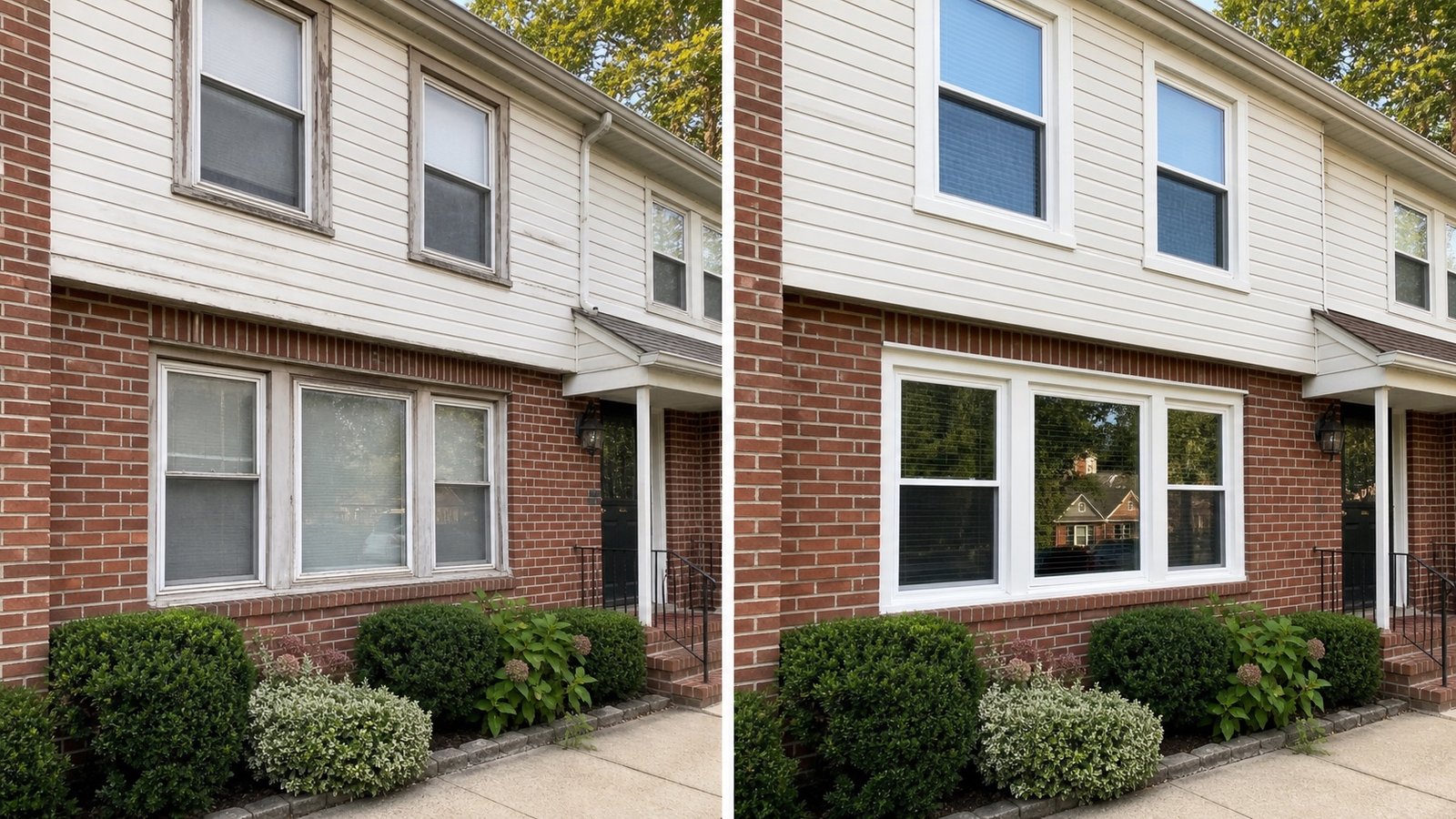
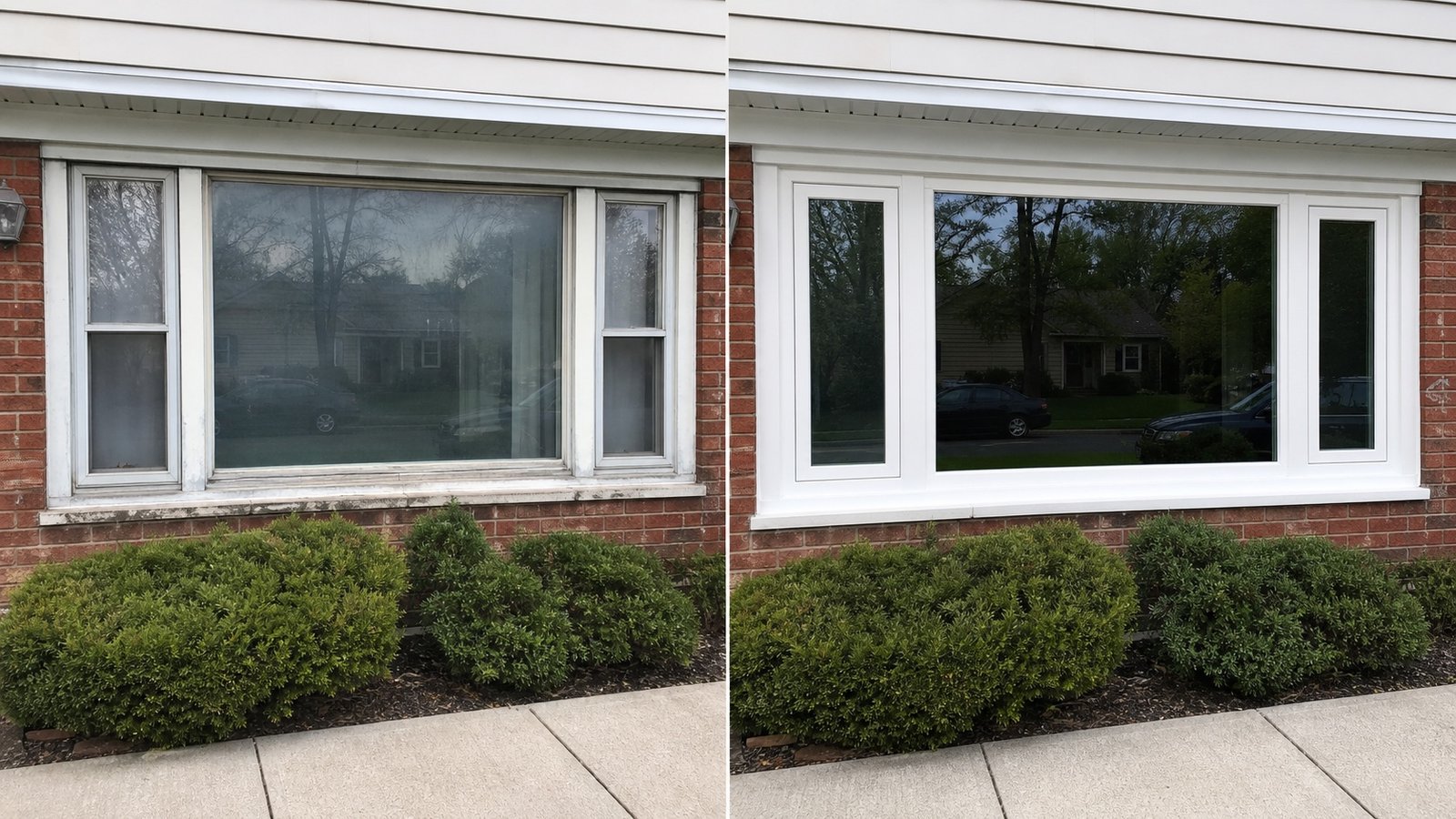
Before & After Projects
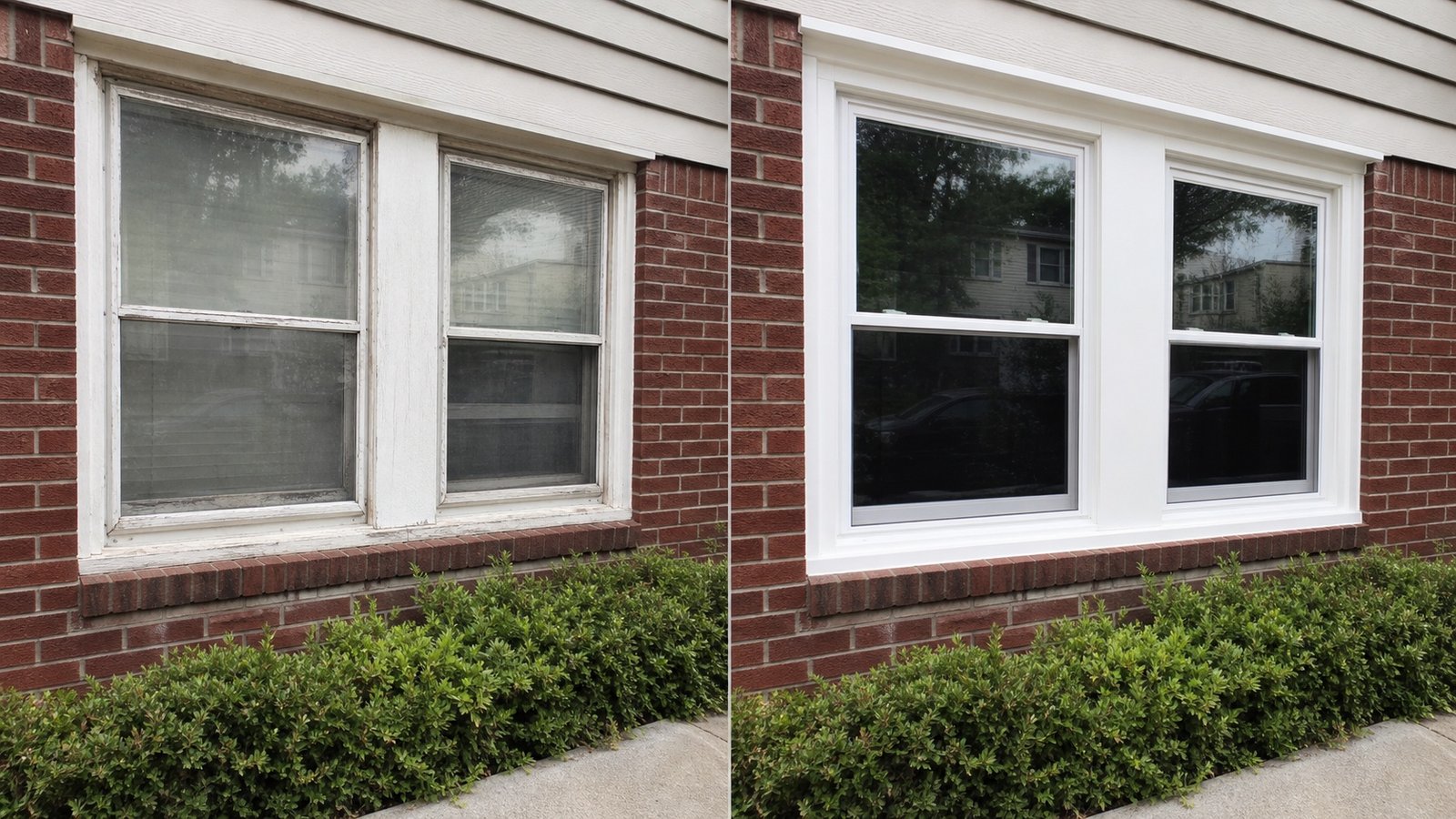
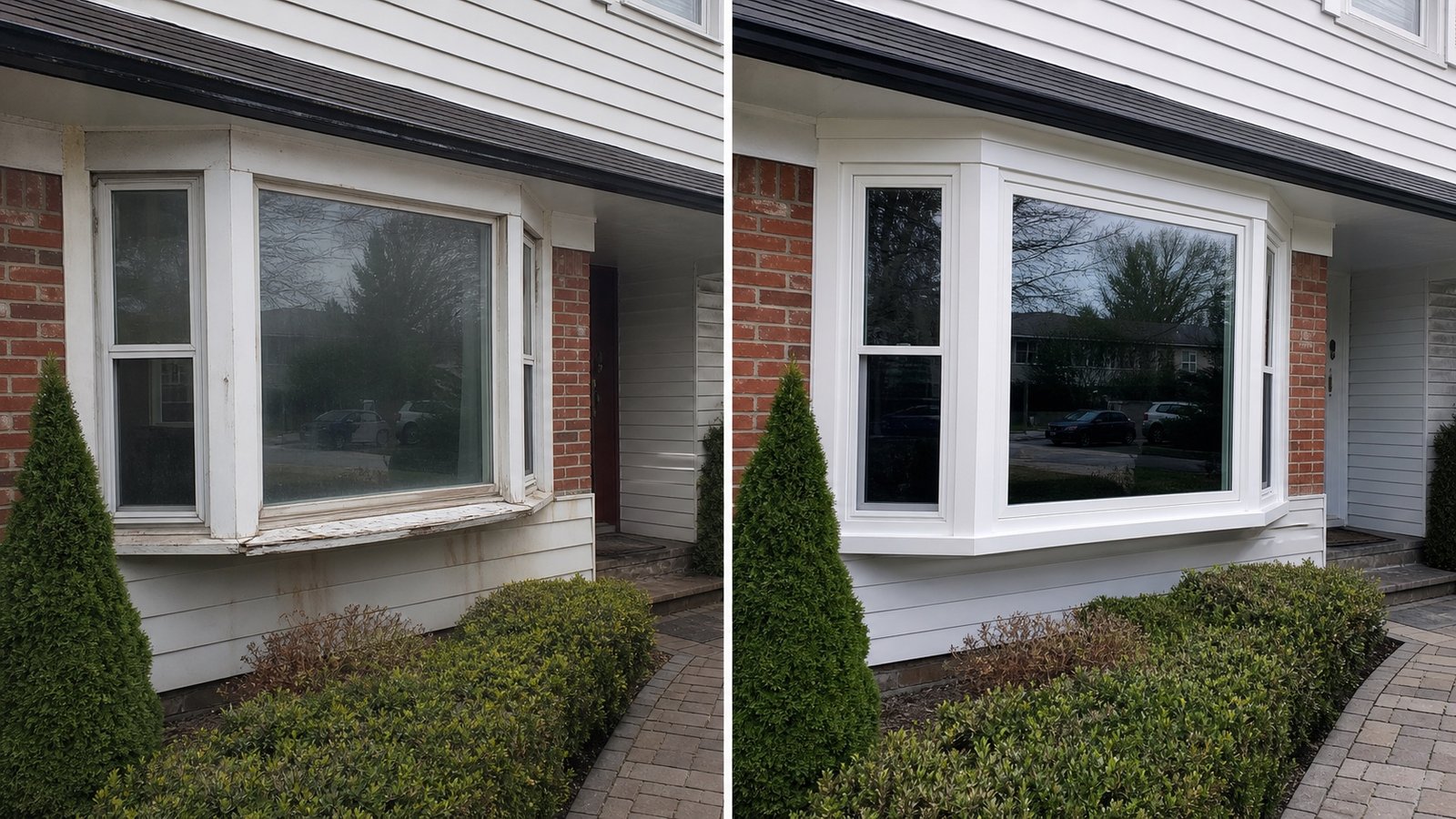
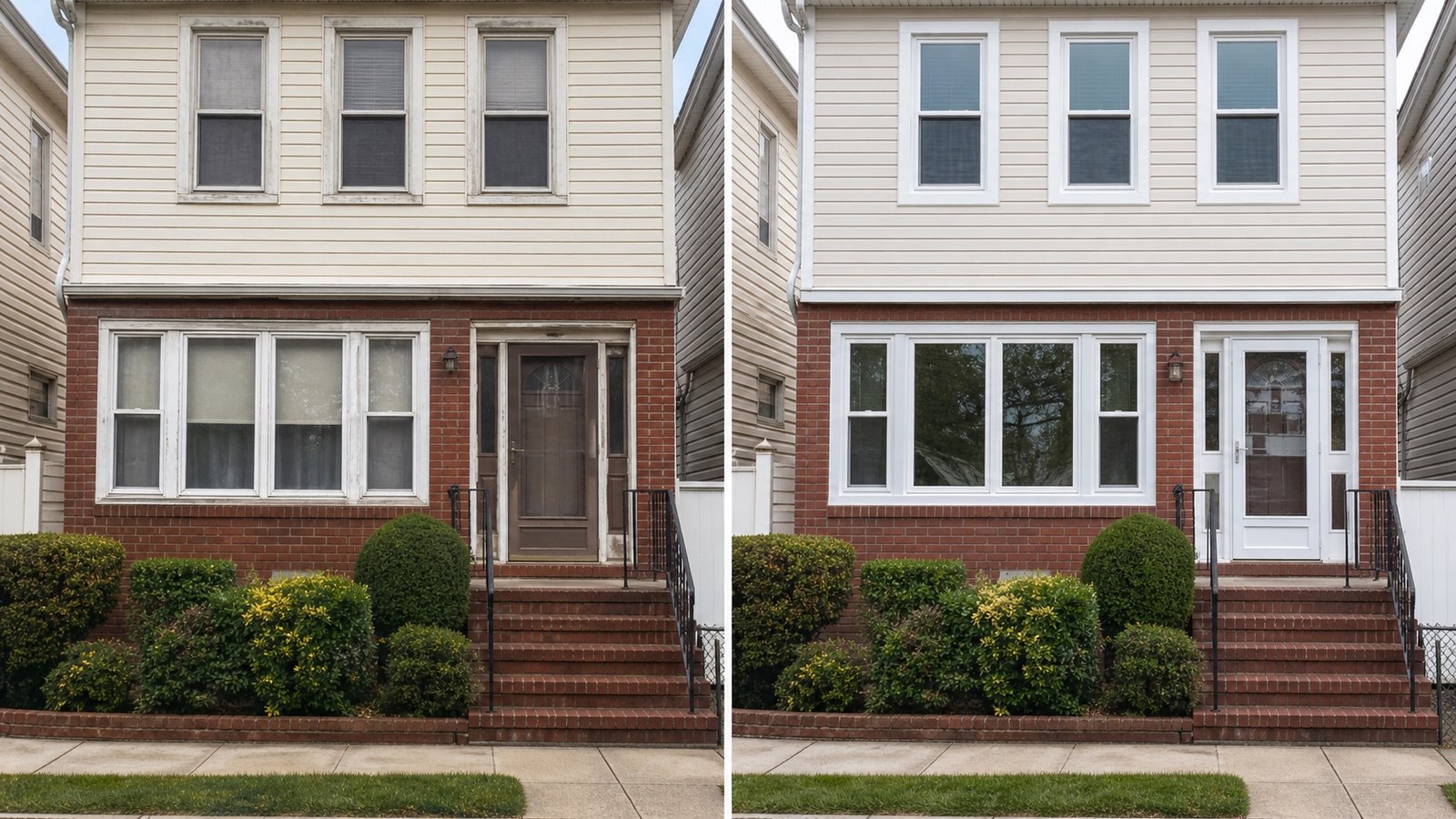
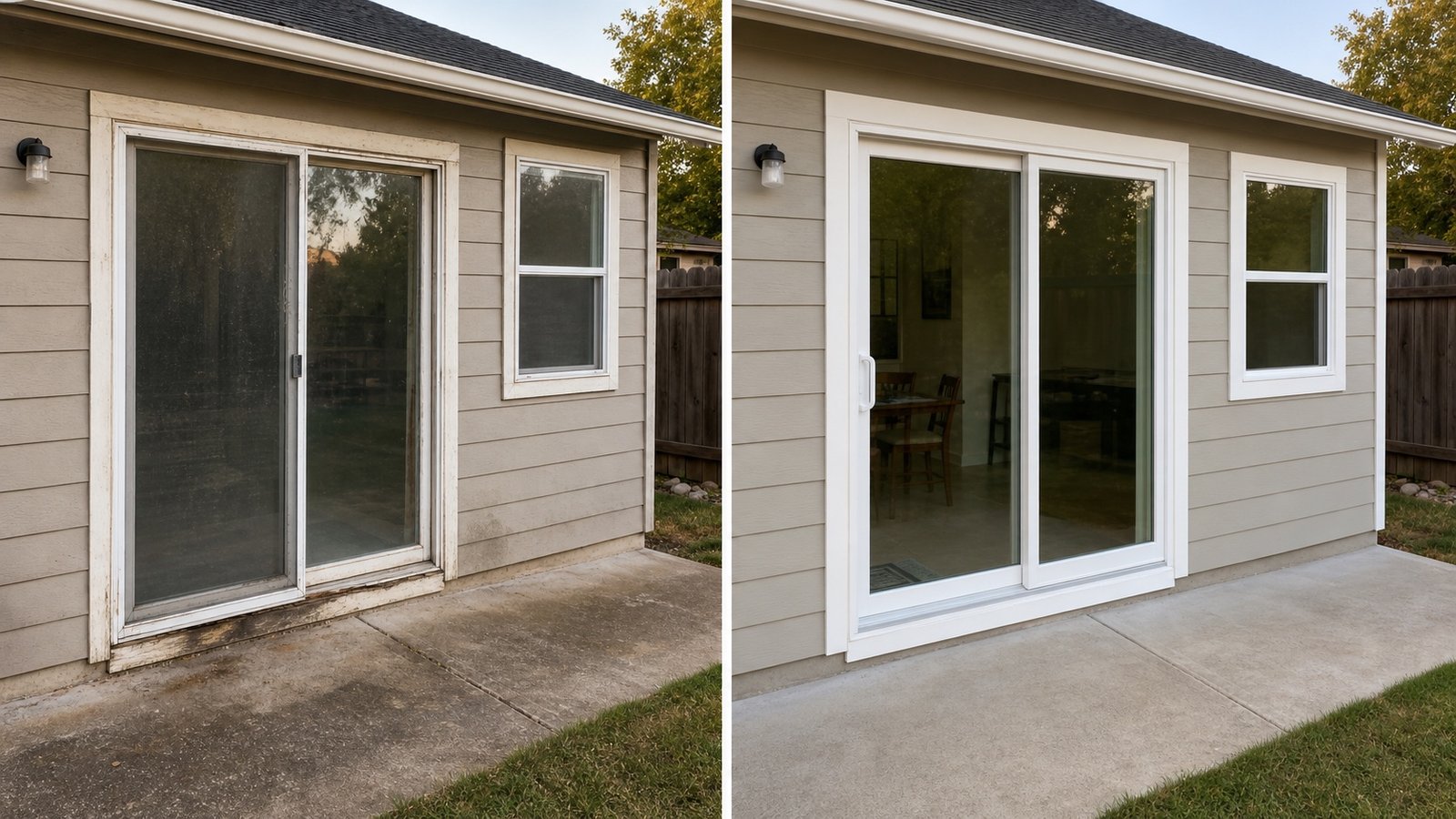
Compare window replacement, facade, patio door, bay window, and interior window upgrades by BluRock Services.
Plan the opening, product, and finish together
Share the property address, building type, approximate window count, photos, current problems, preferred styles, approval requirements, and timing. BluRock can help define the next practical step.