

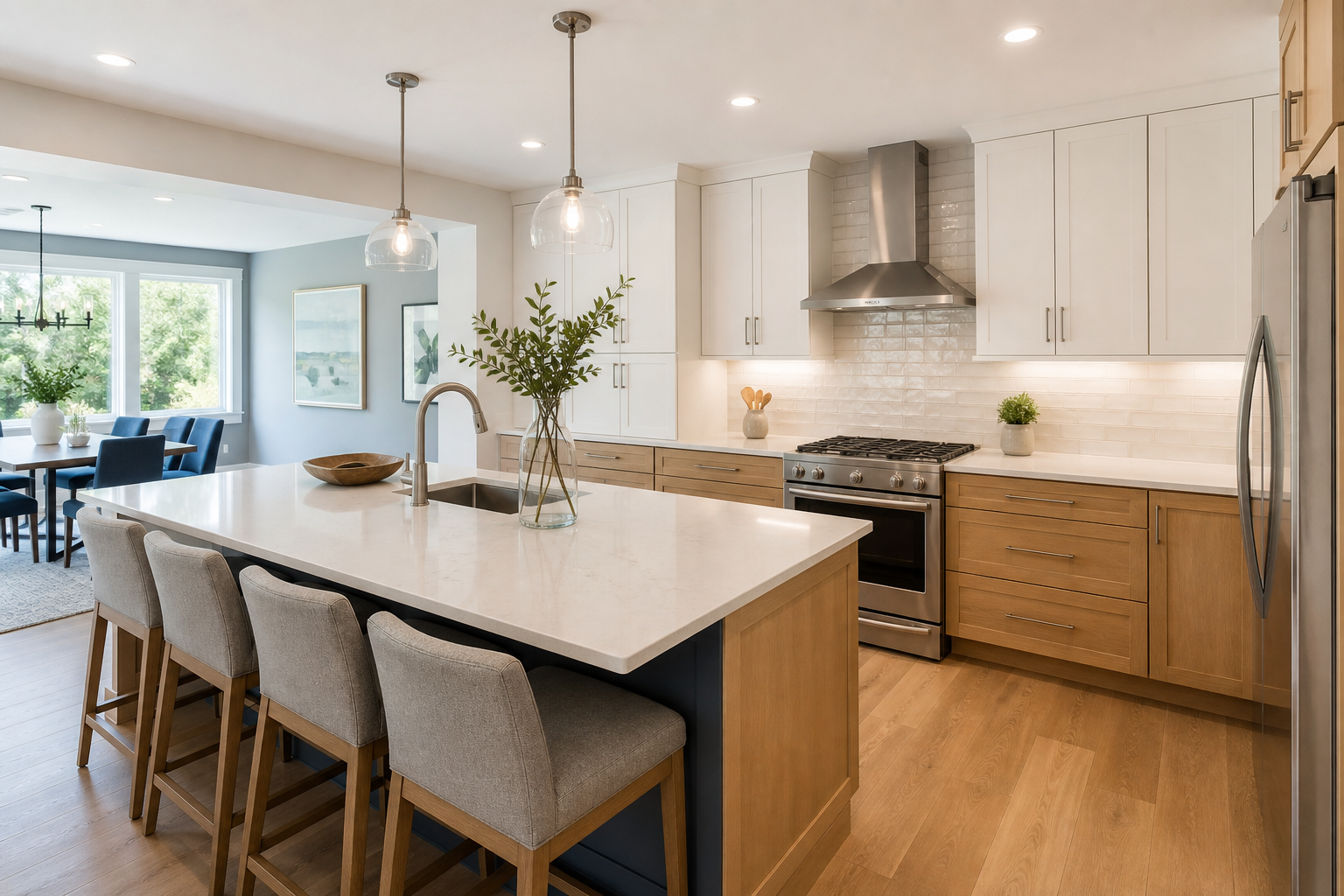
Layout-first kitchen renovation planning
Kitchen Remodeling Contractors in Queens NY
BluRock Services coordinates kitchen layout planning, cabinetry, countertops, backsplash tile, plumbing, electrical work, lighting, flooring, trim, and finish details for Queens homes, apartments, co-ops, and multifamily properties.
Service summary
What kitchen remodeling work does BluRock coordinate in Queens?
A successful kitchen remodel connects the room plan with cabinet dimensions, appliance specifications, plumbing, electrical capacity, lighting, ventilation, surfaces, flooring heights, and finish transitions before installation begins.
BluRock Services provides kitchen remodeling and renovation services in Queens, New York. Work may include existing-condition review, layout planning, demolition, carpentry, cabinet installation, countertop and backsplash coordination, plumbing and electrical work, lighting, flooring, painting, trim, protection, cleanup, and project-specific permit or design coordination.
- Targeted cabinet, counter, backsplash, lighting, or flooring upgrades
- Full kitchen renovations with coordinated trade work
- Galley, L-shaped, U-shaped, peninsula, island, and compact layouts
- Queens houses, apartments, co-ops, condos, and multifamily properties
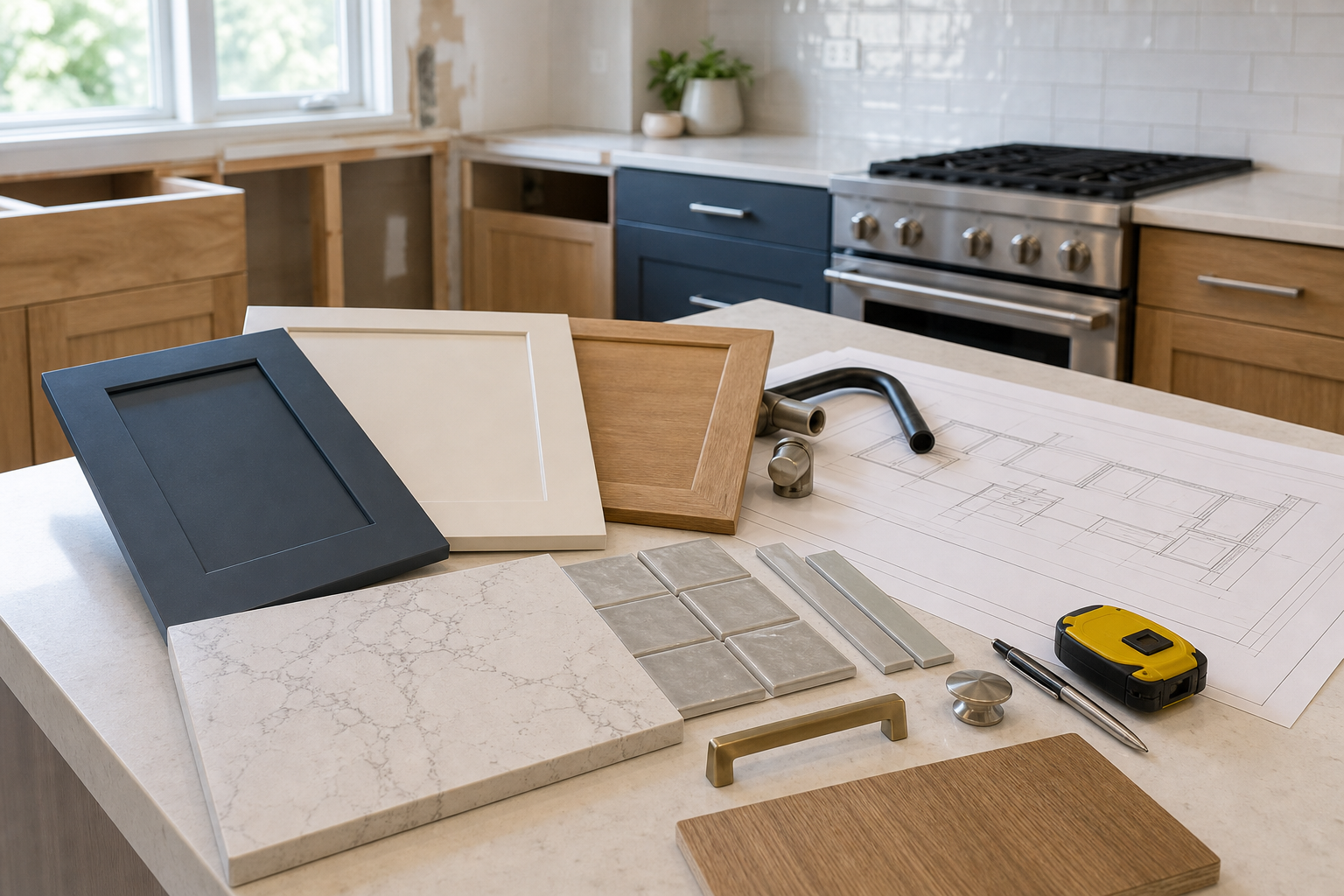
Planning and existing conditions
What should be resolved before a Queens kitchen is demolished?
Resolve the room measurements, building conditions, appliance schedule, cabinet plan, utility needs, finish transitions, access rules, and approval path before demolition. Early decisions reduce avoidable field conflicts and show where allowances are still needed.
- Measure walls, openings, ceilings, soffits, chases, floors, and out-of-square conditions
- Confirm appliance models, door swings, ventilation, clearances, and service requirements
- Coordinate sink, dishwasher, refrigerator, cooking, outlets, switches, and task lighting
- Define cabinet elevations, fillers, panels, storage accessories, hardware, and trim
- Review flooring transitions, countertop seams, backsplash limits, paint, and adjacent-room repairs
- Identify co-op, condo, DOB, design-professional, access, and protection requirements
A surface review cannot reveal every concealed condition. Framing, plumbing, electrical work, ventilation, moisture damage, or uneven surfaces may change the final scope after demolition.
Kitchen renovation services
Which parts of a kitchen remodel can be coordinated together?
A kitchen is a compact building system. Cabinetry, appliances, plumbing, power, lighting, ventilation, flooring, surfaces, and adjacent finishes should be sequenced as one scope even when some existing elements remain.
Layout and carpentry
Field measurement, partition or opening review, blocking, framing repairs, soffits, door and window trim, and finish carpentry.
Cabinetry and storage
Cabinet setting, pantry storage, pullouts, fillers, panels, crown, toe kicks, hardware, and appliance surrounds.
Countertops and backsplash
Template coordination, seams, edge profiles, sink and cooktop openings, wall preparation, tile layout, grout, and transitions.
Plumbing and fixtures
Sink, faucet, dishwasher, refrigerator water, disposal, shutoffs, waste, vent, and project-specific pipe relocation planning.
Electrical and lighting
Appliance circuits, countertop receptacles, switches, recessed and under-cabinet lighting, controls, and device locations.
Flooring and finishes
Subfloor review, tile or resilient flooring, hardwood coordination, wall repair, paint, trim, sealants, and final adjustments.
Room use and circulation
Which kitchen layouts fit different Queens homes?
Choose the layout that fits the room, structure, openings, appliance sizes, storage needs, circulation, and adjacent living space. An island is useful only when required clearances and everyday movement still work.
Galley
Two working walls can make efficient use of a narrow room. Verify opposing appliance doors, aisle width, landing zones, and end-of-run circulation.
L-shaped
Two connected walls can open the room toward dining or living space. Plan corner storage, refrigerator location, and the work path between zones.
U-shaped
Three working sides add storage and surface area. Check corner access, entry width, appliance doors, and whether the room feels enclosed.
Peninsula
A connected counter can add prep area and seating without a freestanding island. Coordinate circulation, support, outlets, and overhang dimensions.
Island
A freestanding island can support prep, seating, storage, or appliances. Its size must follow verified clearances, utilities, structure, and room movement.
Compact single-wall
One-wall kitchens depend on deliberate vertical storage, correctly sized appliances, useful landing space, lighting, and a clean connection to the room.
| Layout | Common planning fit | Useful strengths | Items to verify |
|---|---|---|---|
| Galley | Narrow rooms and apartments | Efficient opposing work zones | Aisles, door conflicts, daylight, ventilation |
| L-shaped | Open corners and connected dining areas | Flexible circulation and work triangle | Corner storage, landing space, wall length |
| U-shaped | Dedicated rooms with three usable walls | High storage and counter potential | Entry width, corners, enclosure, appliance doors |
| Peninsula | Rooms needing a connected prep or seating edge | Surface and storage without a full island | Supports, outlets, overhang, circulation |
| Island | Larger rooms or carefully opened plans | Flexible prep, seating, storage, or appliance zone | Clearances, utilities, structure, ventilation |
| Single-wall | Compact apartments and open living spaces | Minimal footprint and simple room connection | Landing zones, vertical storage, appliance widths |
This comparison is a planning aid, not a code determination or a promise that a layout fits a specific property. Final dimensions depend on field conditions, selected products, current requirements, and approvals.
Cabinets, appliances, and surfaces
How should cabinets, appliances, and countertops be coordinated?
Build one dimensioned schedule. Appliance specifications affect cabinet openings, fillers, panels, electrical and plumbing locations, ventilation, countertop templating, and the order in which permanent finishes can be installed.
Manufacturer instructions and project-specific conditions control final installation details. Confirm dimensions from current product documents rather than relying on nominal sizes.
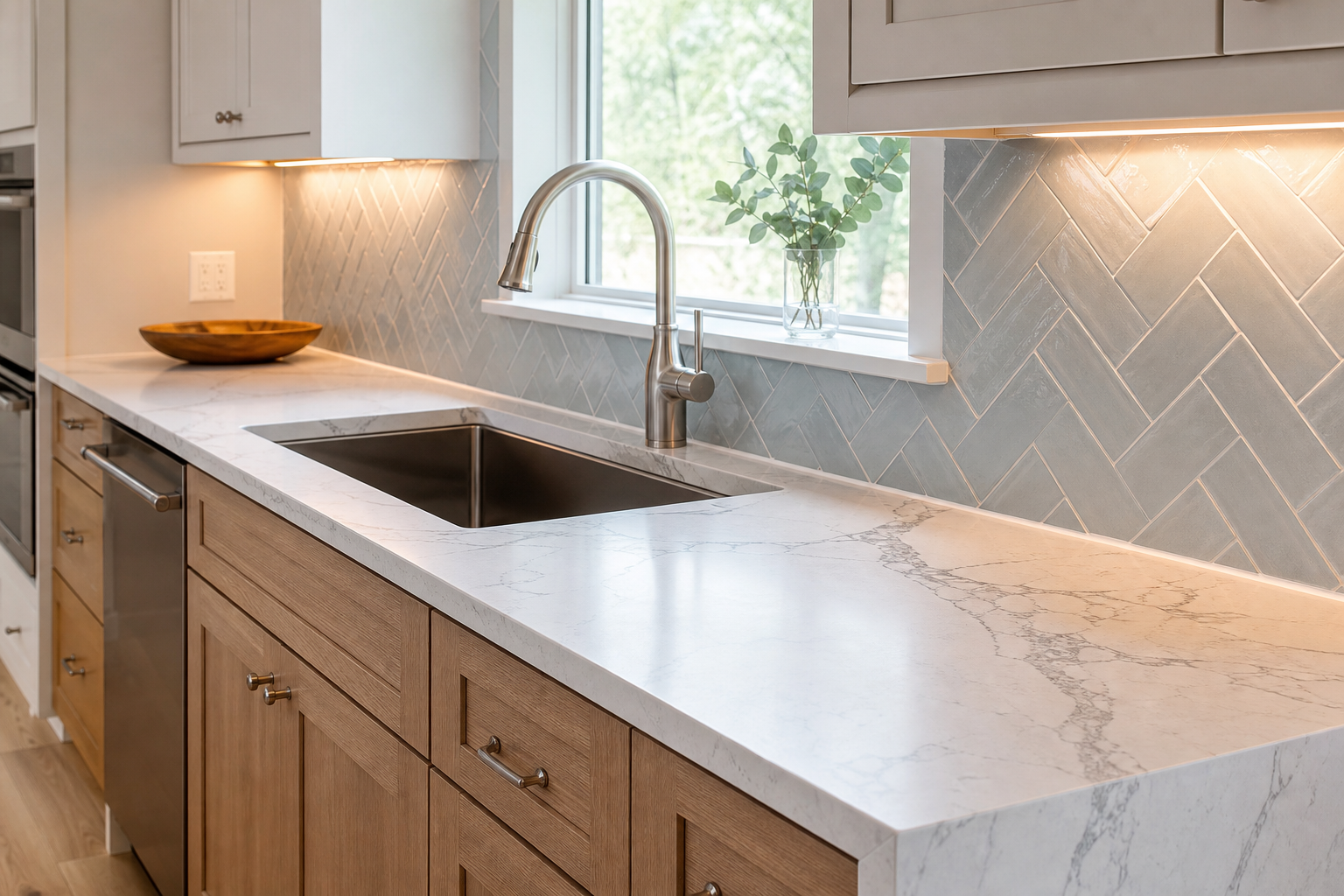
Property and approval path
Do kitchen renovations require permits in New York City?
The answer depends on the exact scope. NYC Department of Buildings guidance says plans and permits may be required and that most kitchen and bathroom renovations require an ALT2 application when multiple work types are involved.
Examples in the current DOB guidance include rerouting gas piping, adding electrical outlets, or moving a load-bearing wall. The same guidance identifies some minor work—such as painting, plastering, installing new cabinets, and resurfacing floors—as examples that may not require a work permit.
Official source: NYC Department of Buildings: Renovating Kitchens & Bathrooms. A design professional, appropriate licensed trade, or DOB should confirm the current project-specific path before work begins.
- Confirm whether walls, openings, structure, gas, plumbing, electrical work, or ventilation change
- Review property type, prior filings, open issues, and building rules
- For co-ops and condos, obtain the alteration agreement, approved hours, insurance requirements, and review procedure
- Coordinate plans, filings, licensed trades, inspections, and sign-off when required
- Do not order layout-dependent materials until the approval path and field dimensions are understood
Scope and quote planning
What changes a kitchen remodeling quote in Queens?
Accurate pricing needs field measurements, a defined scope, product selections, building requirements, and written assumptions. Per-square-foot allowances can hide major differences in cabinetry, appliances, utilities, access, protection, and discovered conditions.
Layout and demolition
Retaining the plan versus moving walls, doors, openings, plumbing, gas, electrical work, ventilation, or appliance locations.
Cabinetry and millwork
Box construction, door style, finish, storage accessories, panels, fillers, crown, hardware, customization, and lead time.
Surfaces and flooring
Countertop material and seams, backsplash layout, floor preparation, tile, resilient flooring, hardwood coordination, and transitions.
Building systems
Electrical capacity, new circuits, lighting, plumbing condition, shutoffs, waste and vent work, gas, ventilation, and inspections.
Access and protection
Floor, elevator or stairs, occupied rooms, dust control, staging, delivery windows, debris route, temporary kitchen needs, and cleanup.
Approvals and unknowns
Co-op or condo review, design and filing needs, licensed trades, inspections, long-lead selections, and concealed conditions.
Information that improves the first estimate
- Property address, building type, floor, access, and co-op or condo requirements
- Current photos, room measurements, and the problems the remodel should solve
- Appliance list, preferred layout, cabinet level, surface and flooring preferences
- Known wall, plumbing, electrical, gas, ventilation, moisture, or permit concerns
- Target timing, occupancy plan, items to retain, and decision-makers
Coordinated delivery
How does a Queens kitchen remodel move from survey to turnover?
A practical sequence protects measurements, selections, approvals, occupied spaces, and finish work while giving concealed conditions a defined review path.
- 1
Survey
Review the room, building, access, goals, existing systems, and connected conditions.
- 2
Define
Set the layout, appliance schedule, cabinet plan, finishes, approvals, allowances, and scope.
- 3
Prepare
Complete required reviews, confirm selections, protect adjacent areas, and plan deliveries and shutdowns.
- 4
Build
Demolish in sequence, review exposed conditions, complete rough work, install finishes, and coordinate trades.
- 5
Turn over
Adjust doors and hardware, complete punch work, clean the area, and provide available care or project records.
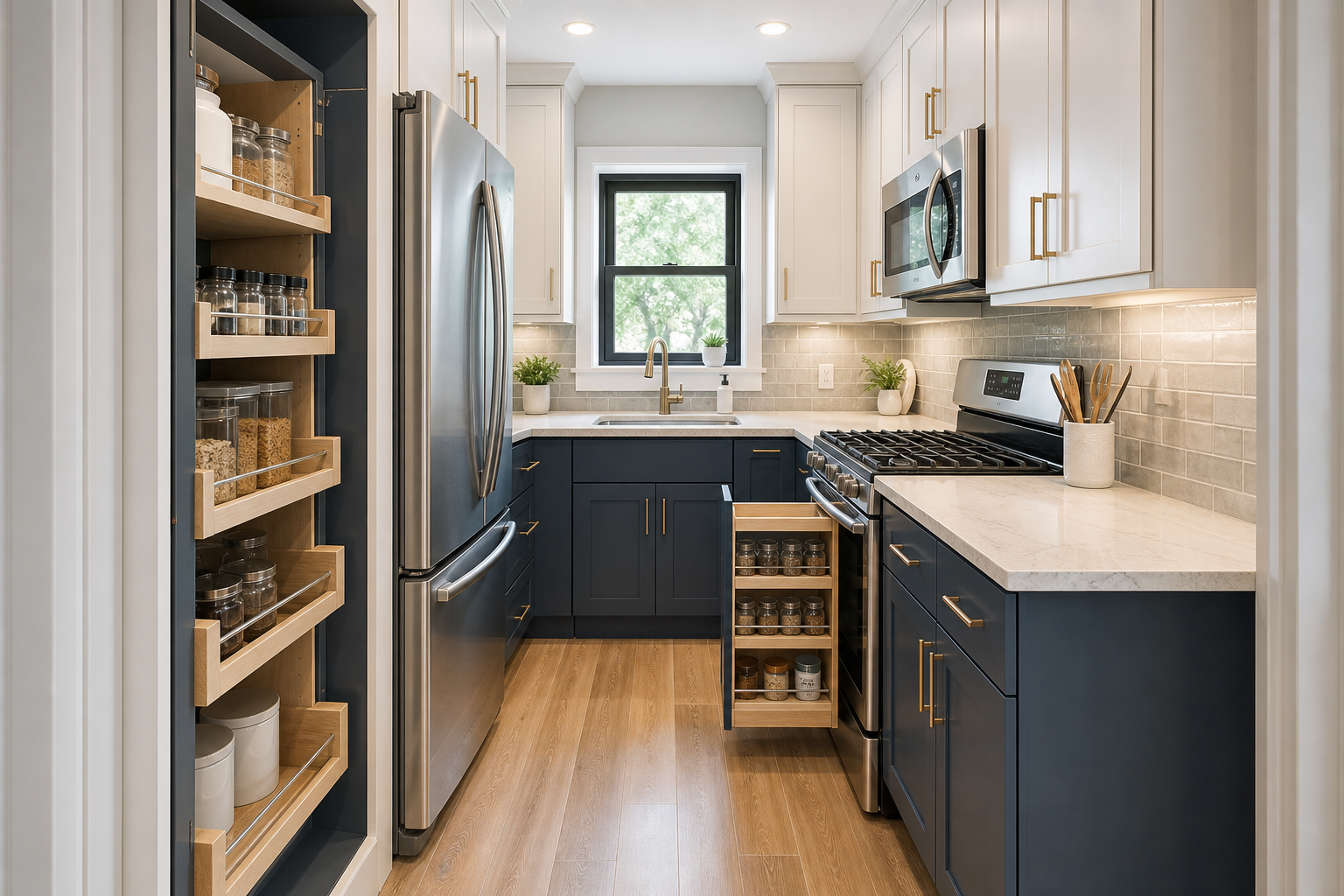
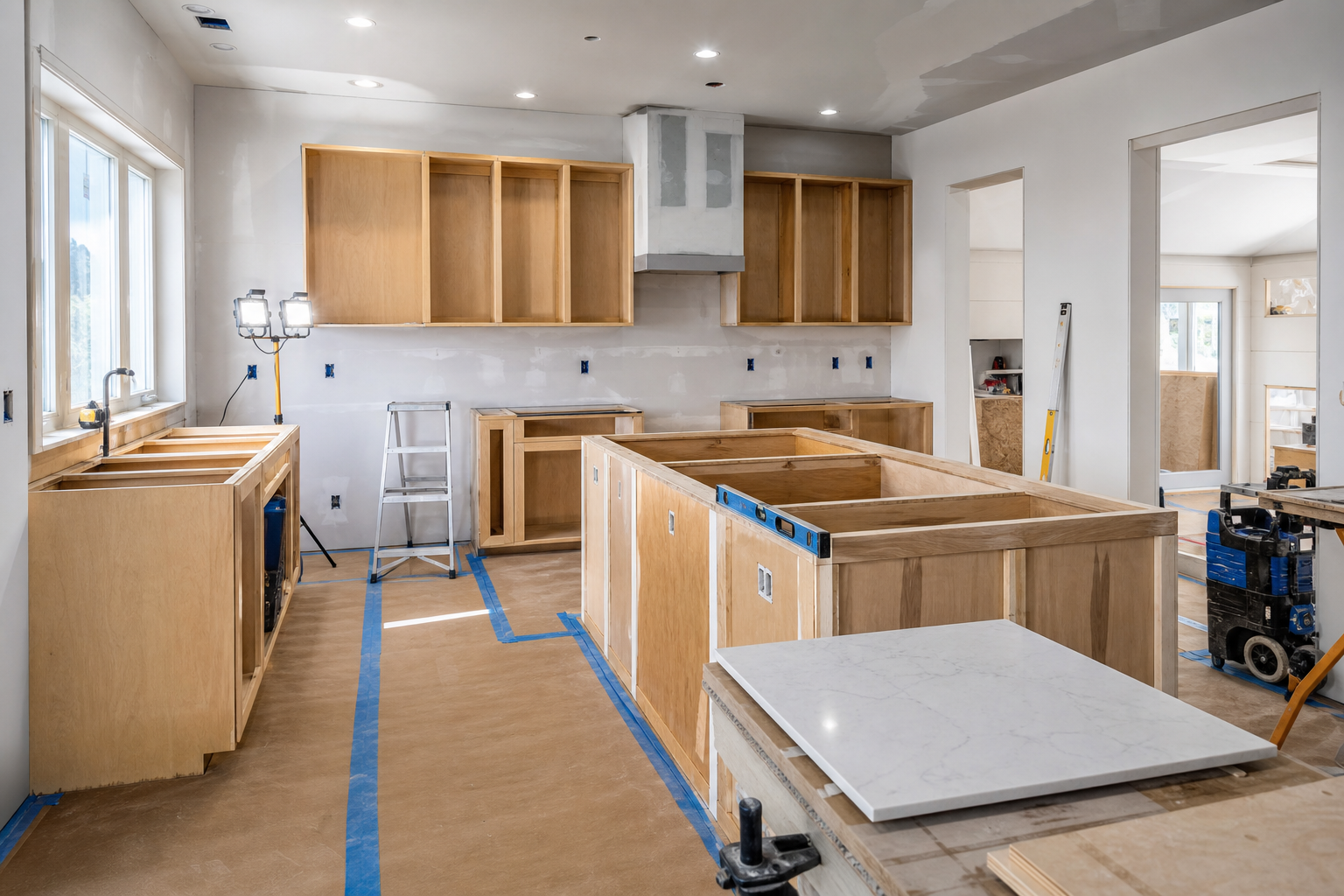
Planning visuals
What kitchen conditions can Queens homeowners compare?
These concept visuals support layout and selection conversations. They do not depict completed BluRock projects, promised outcomes, specific products, or field-verified existing conditions.
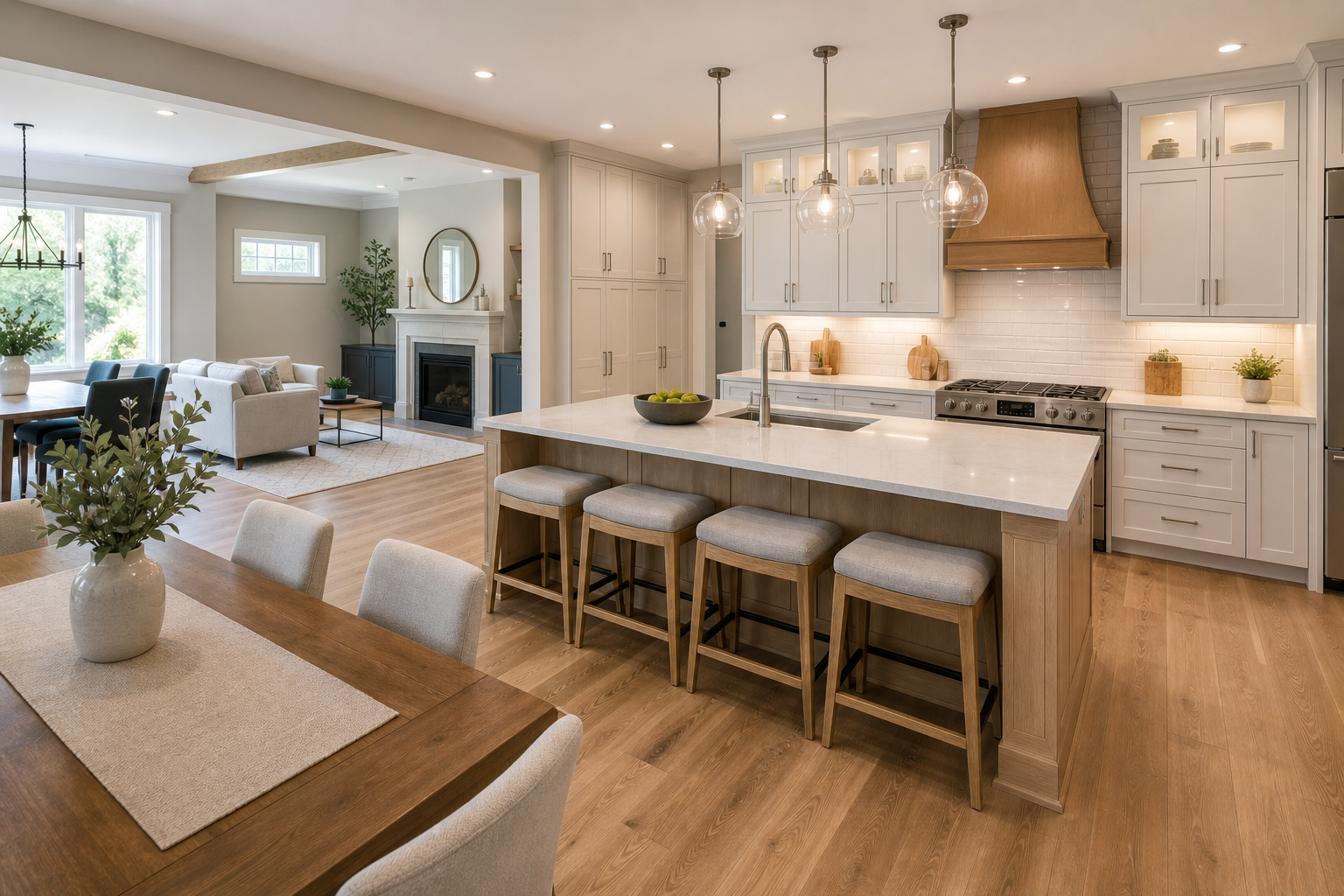
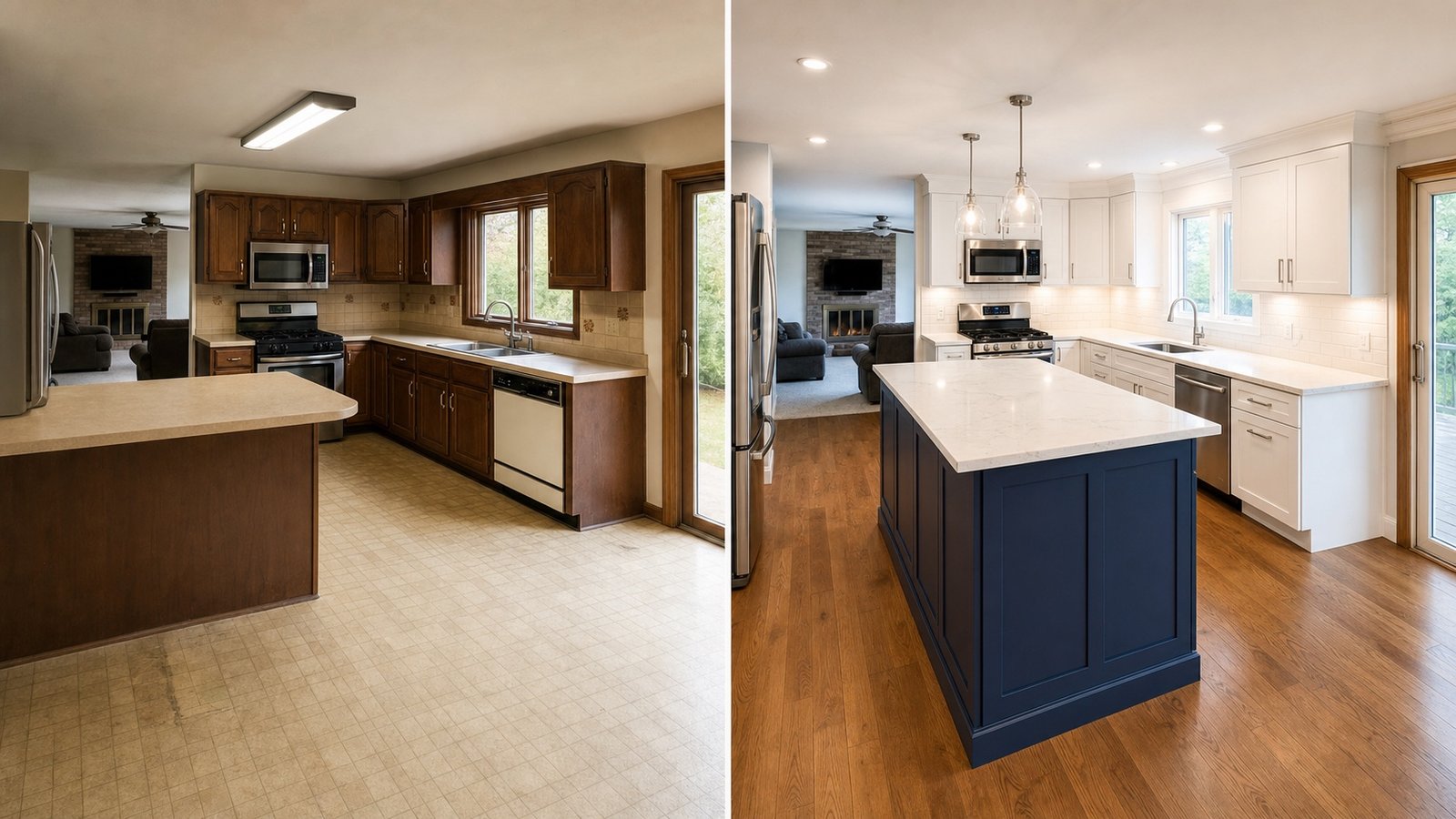
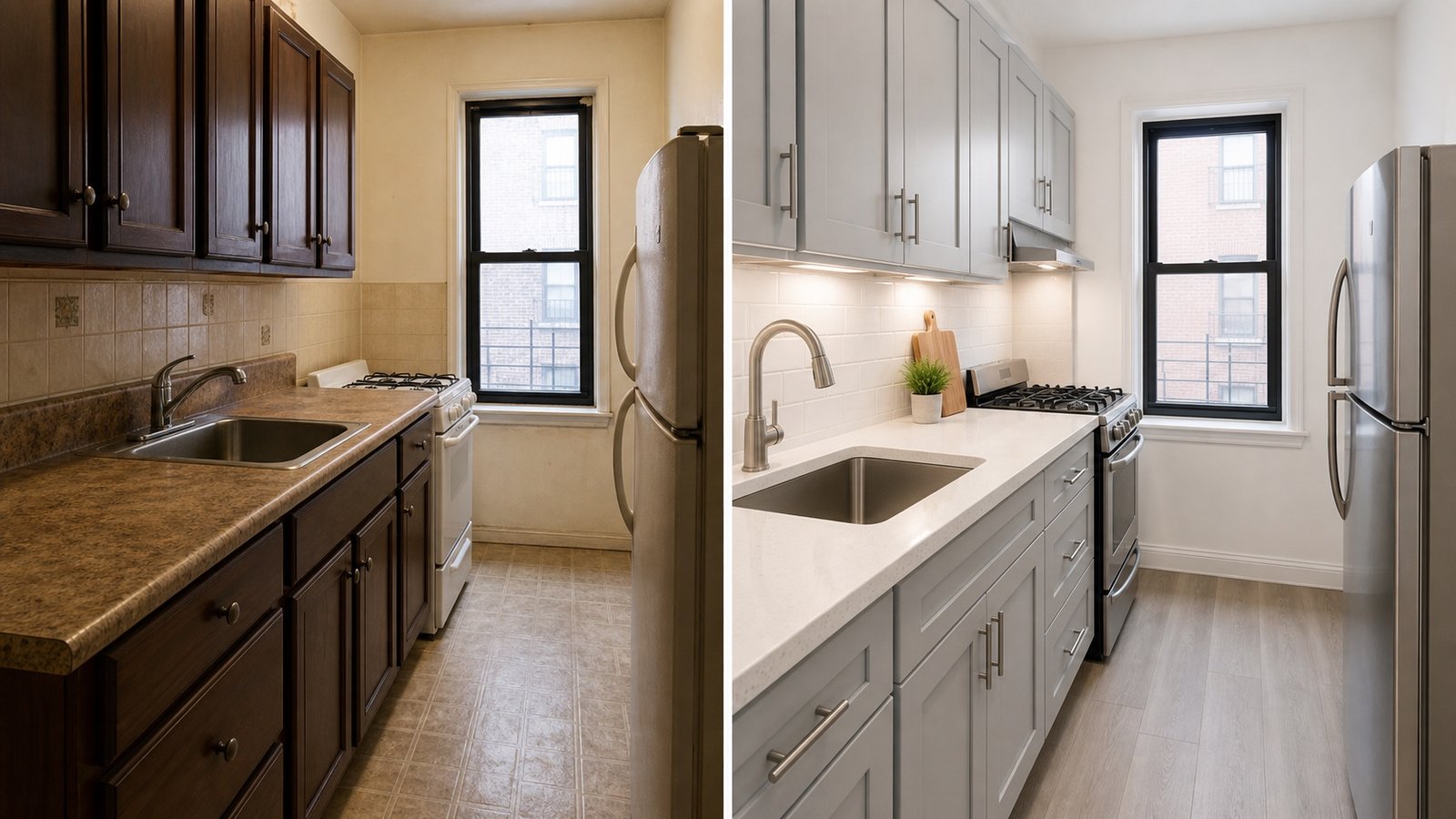
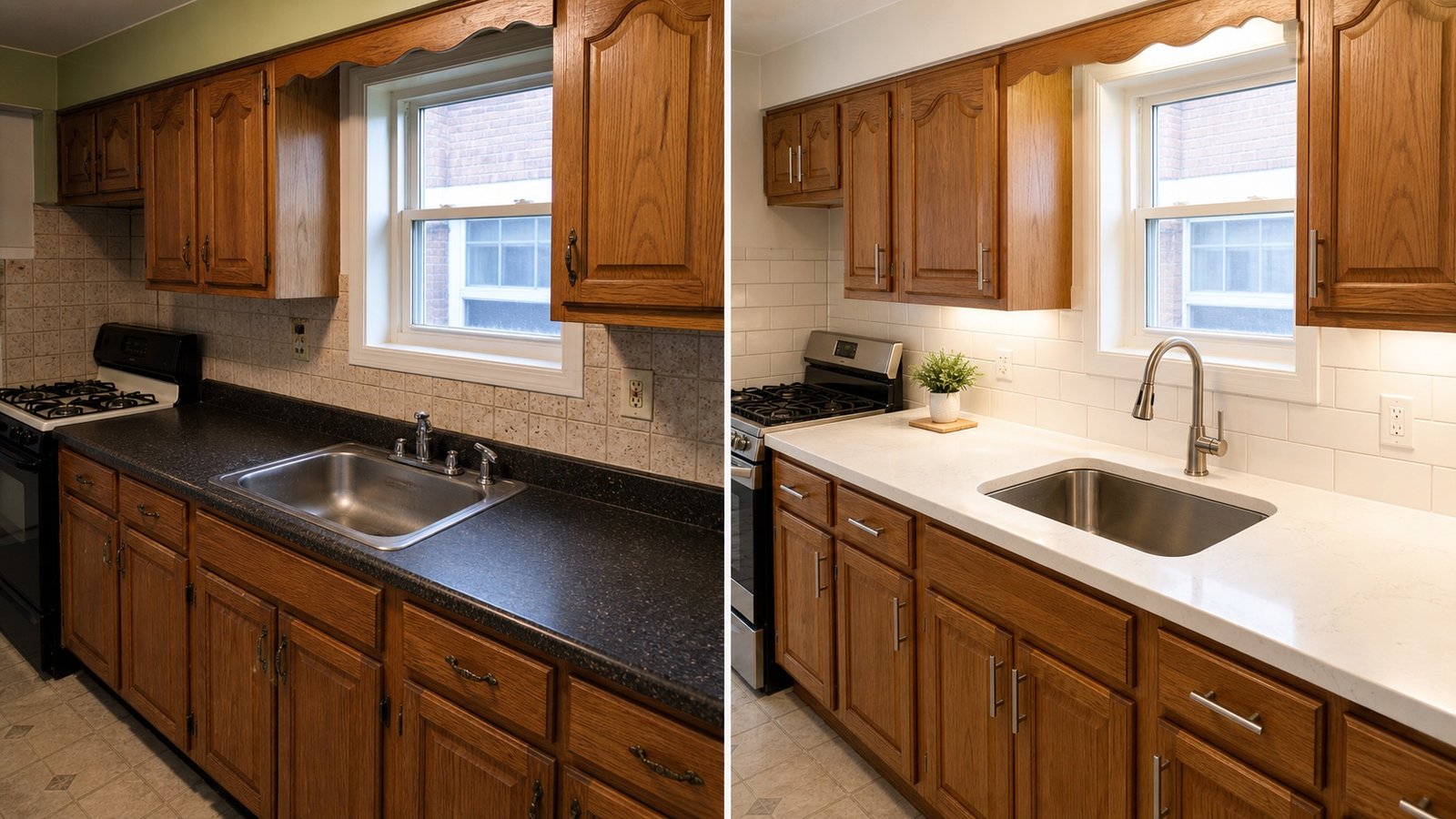
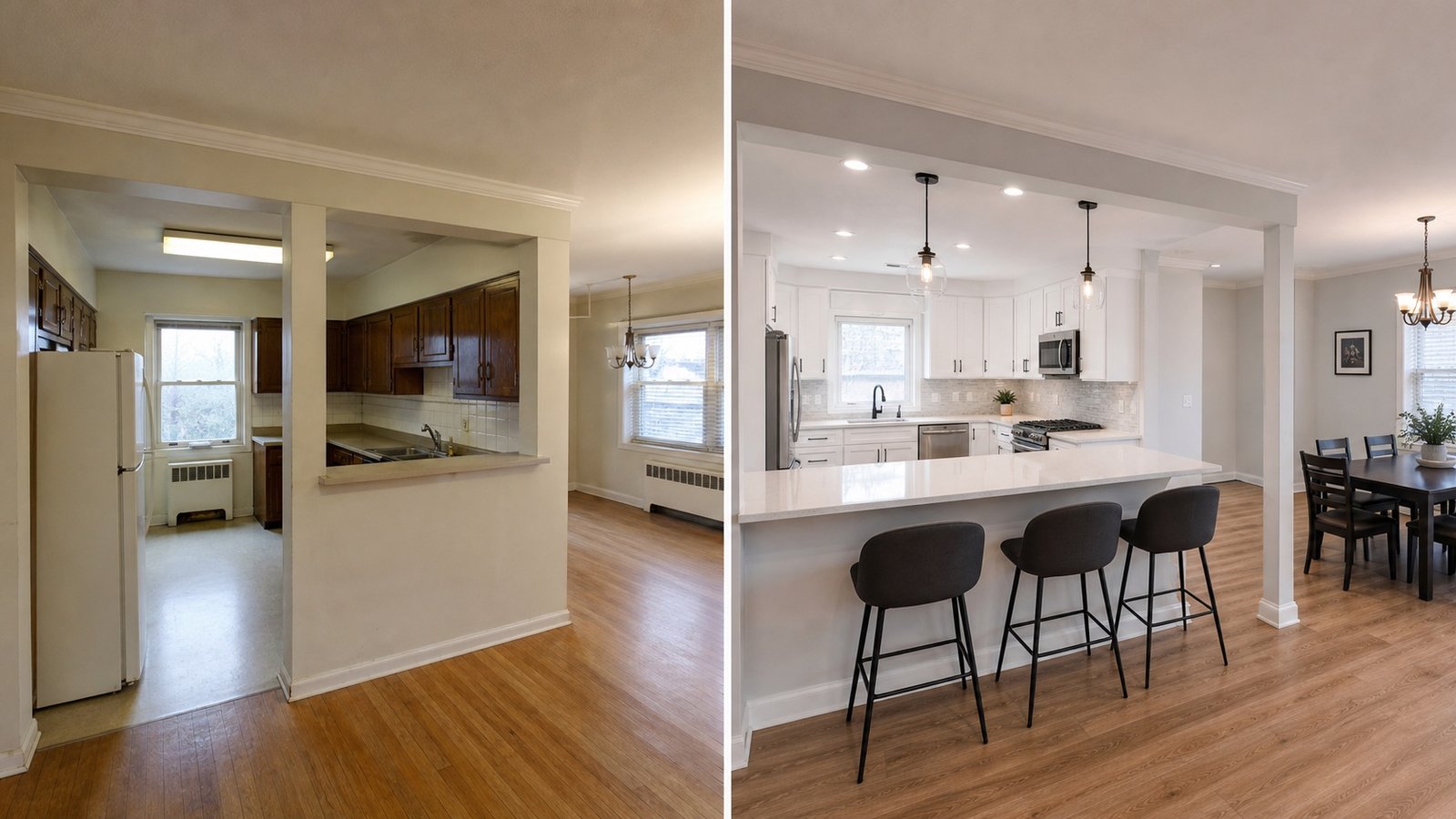
Before & after projects
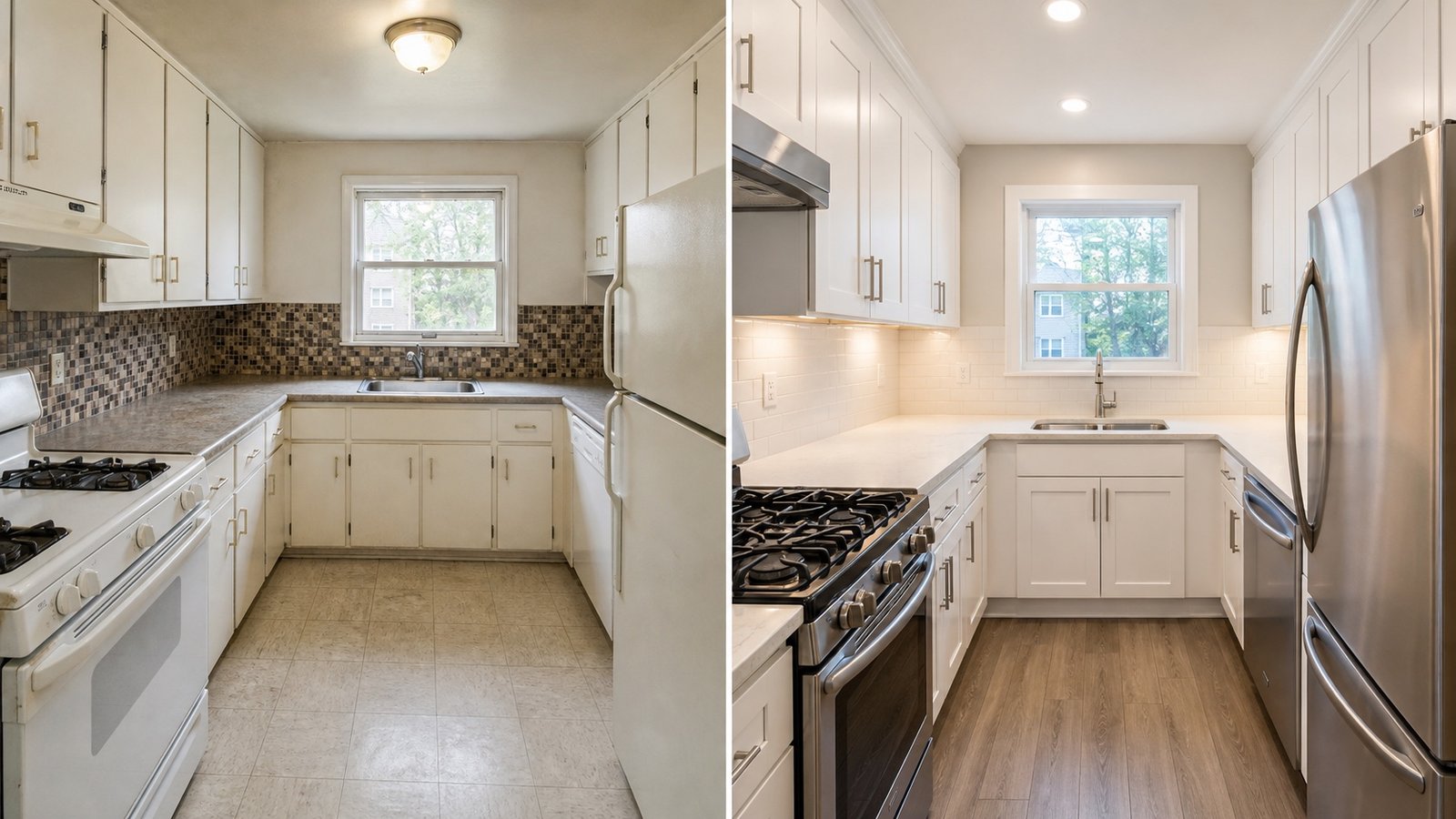
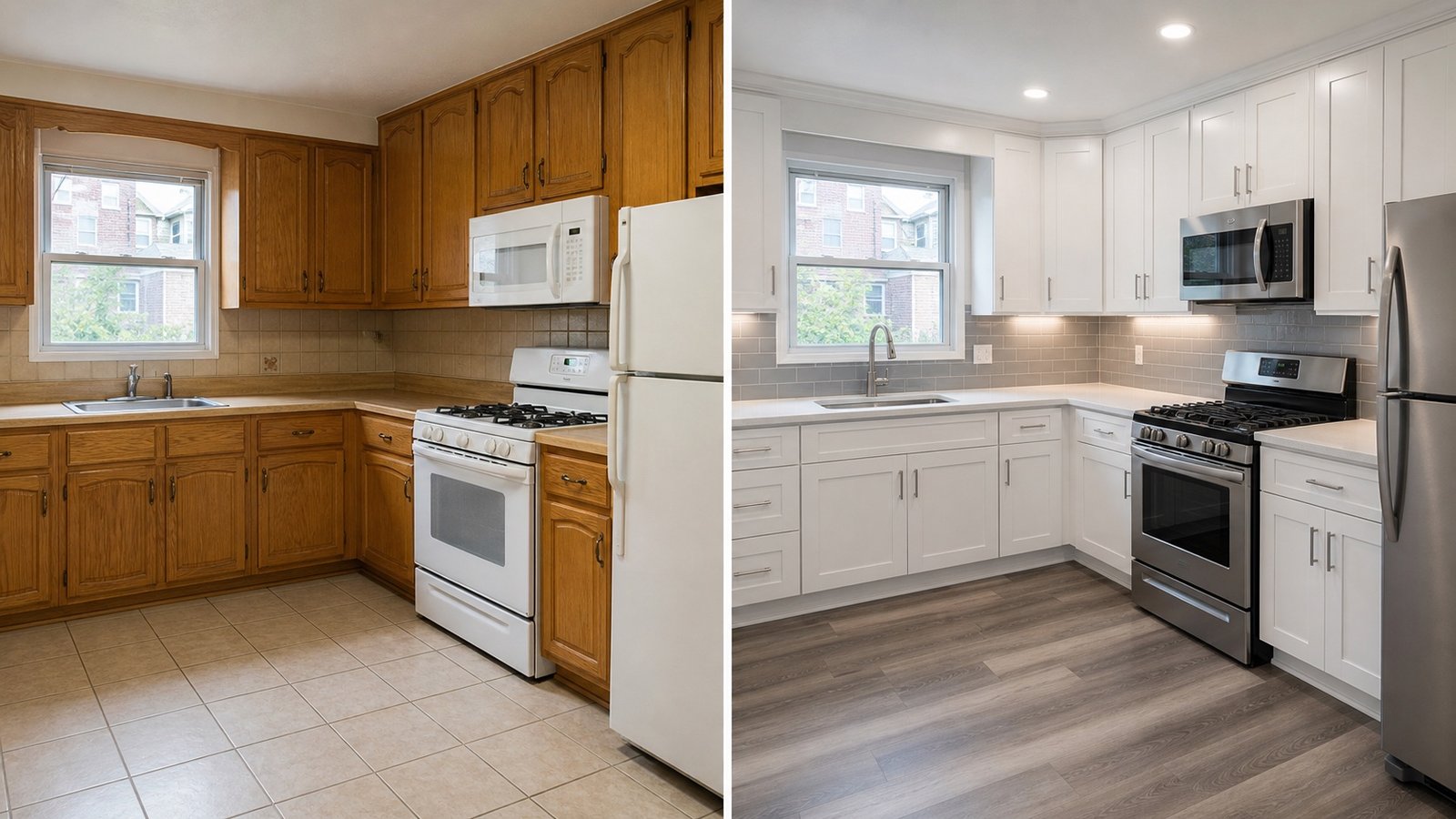
Which kitchen transformations can property owners compare before and after?
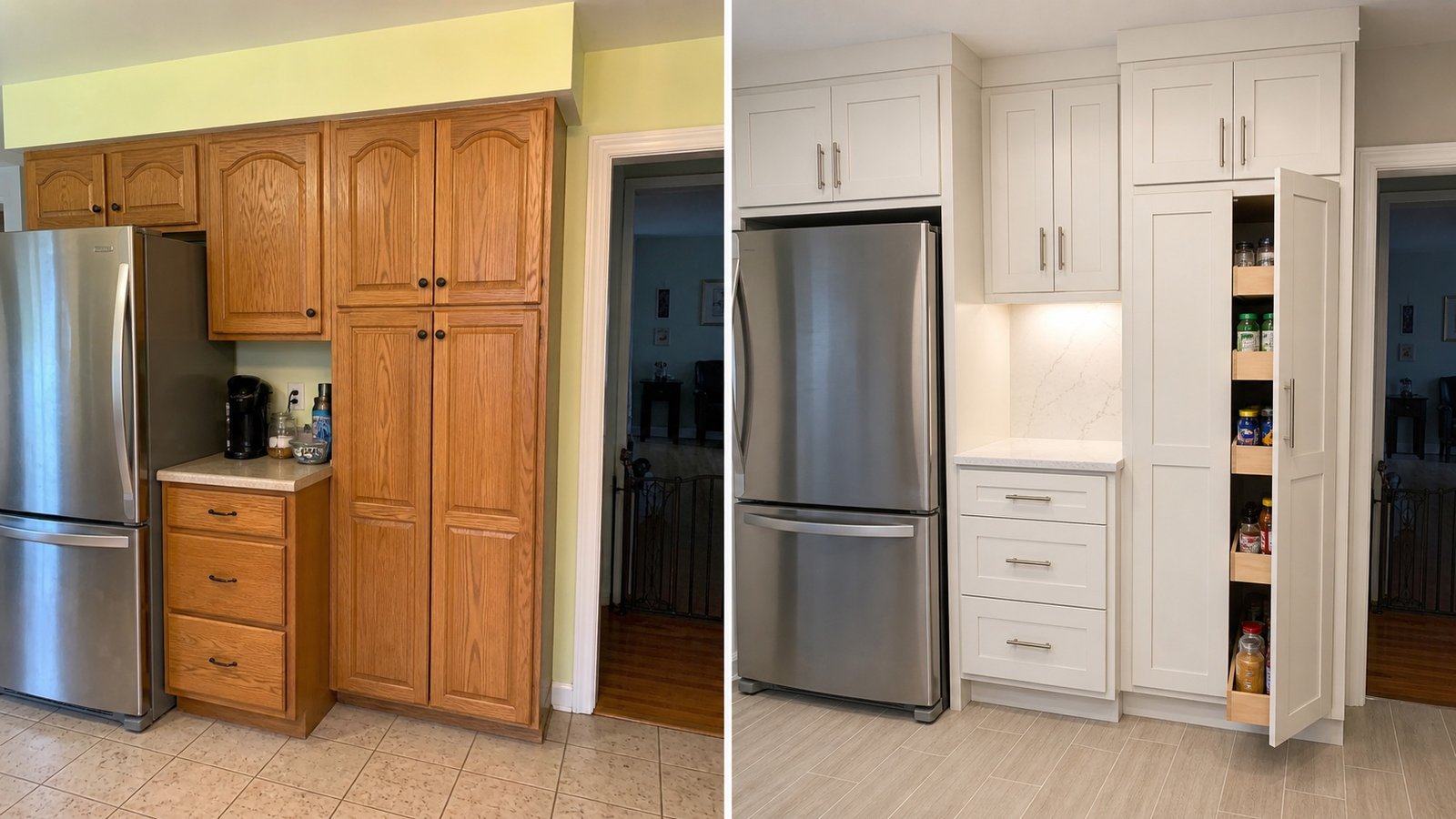
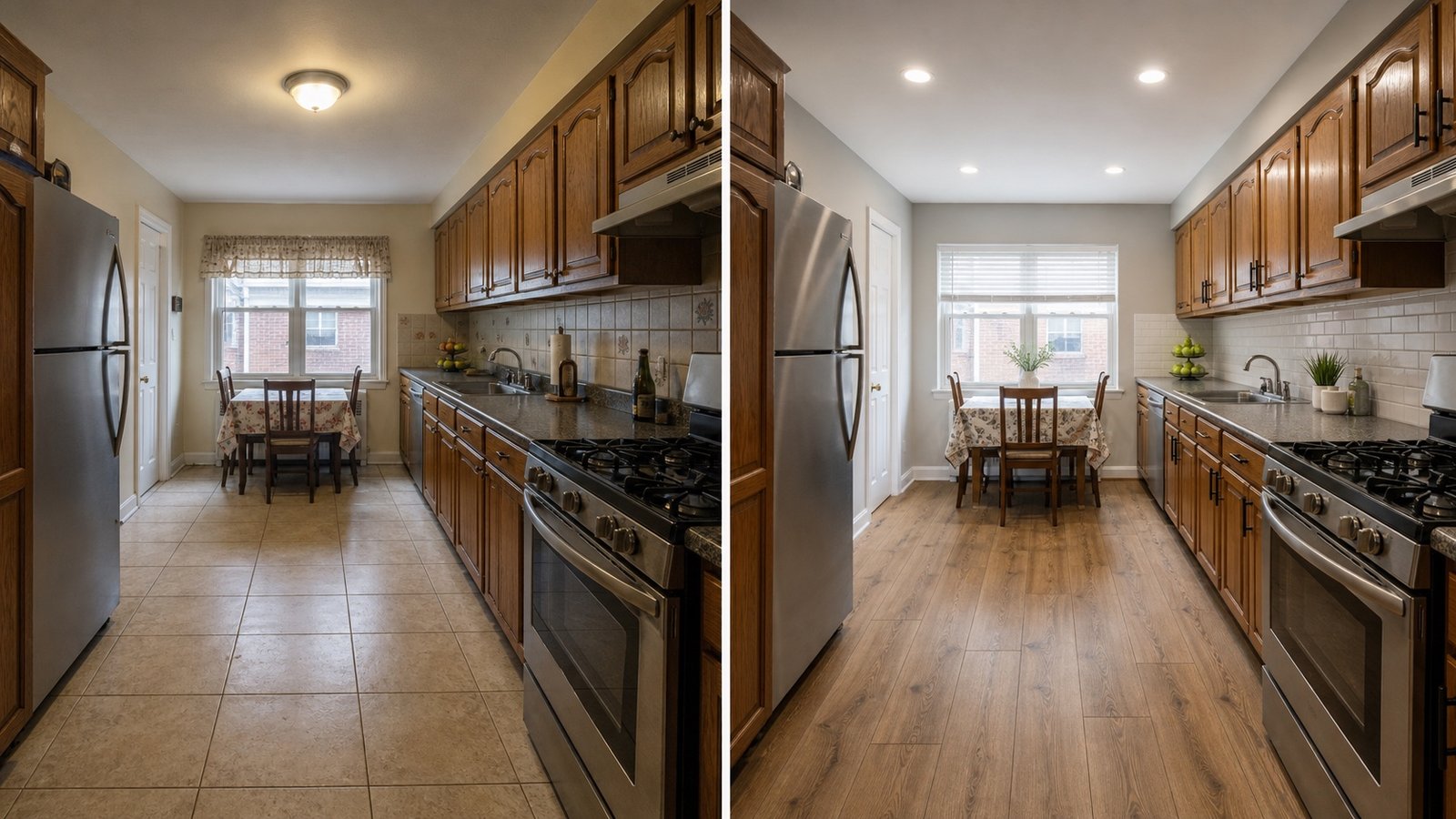
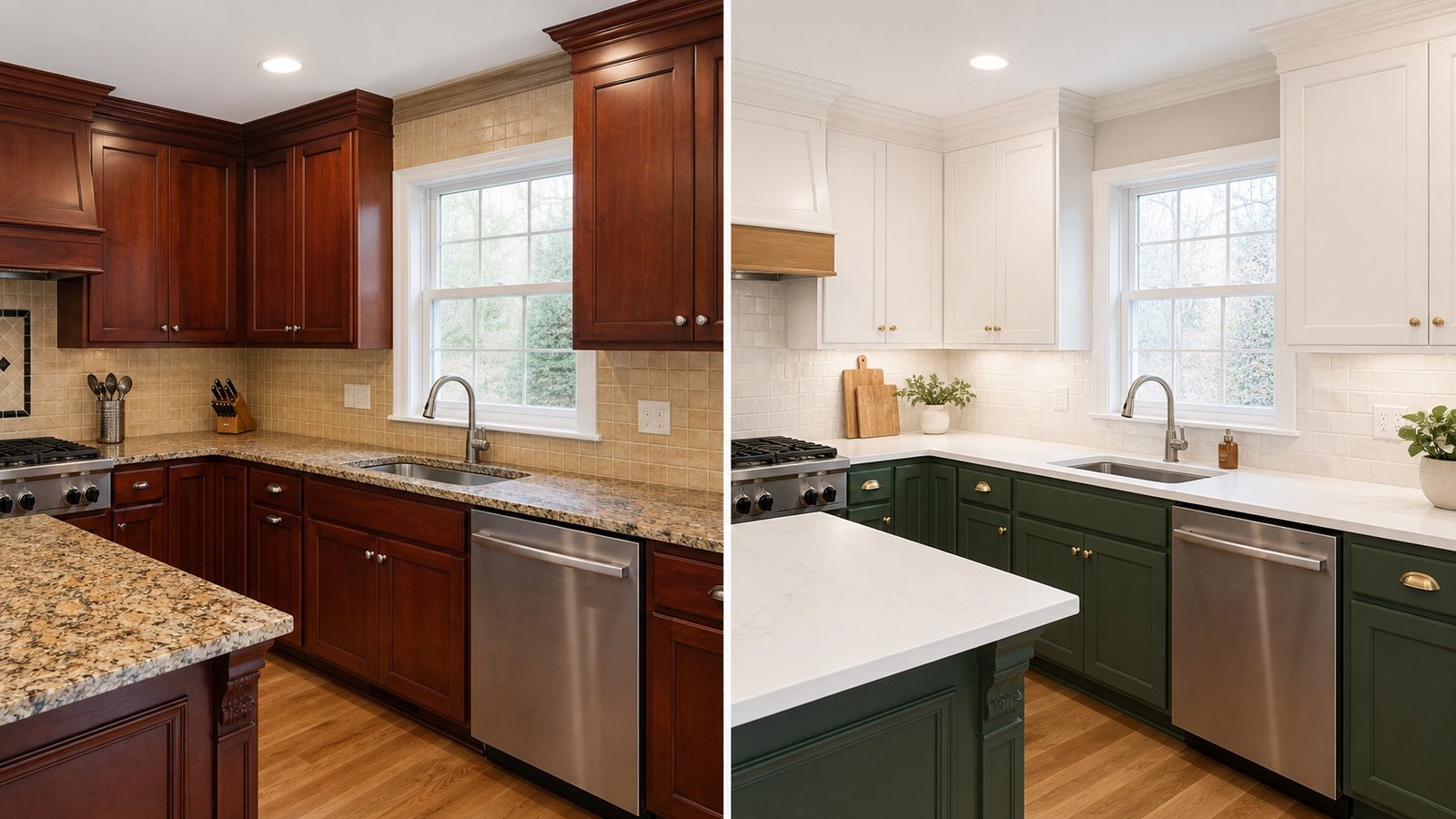
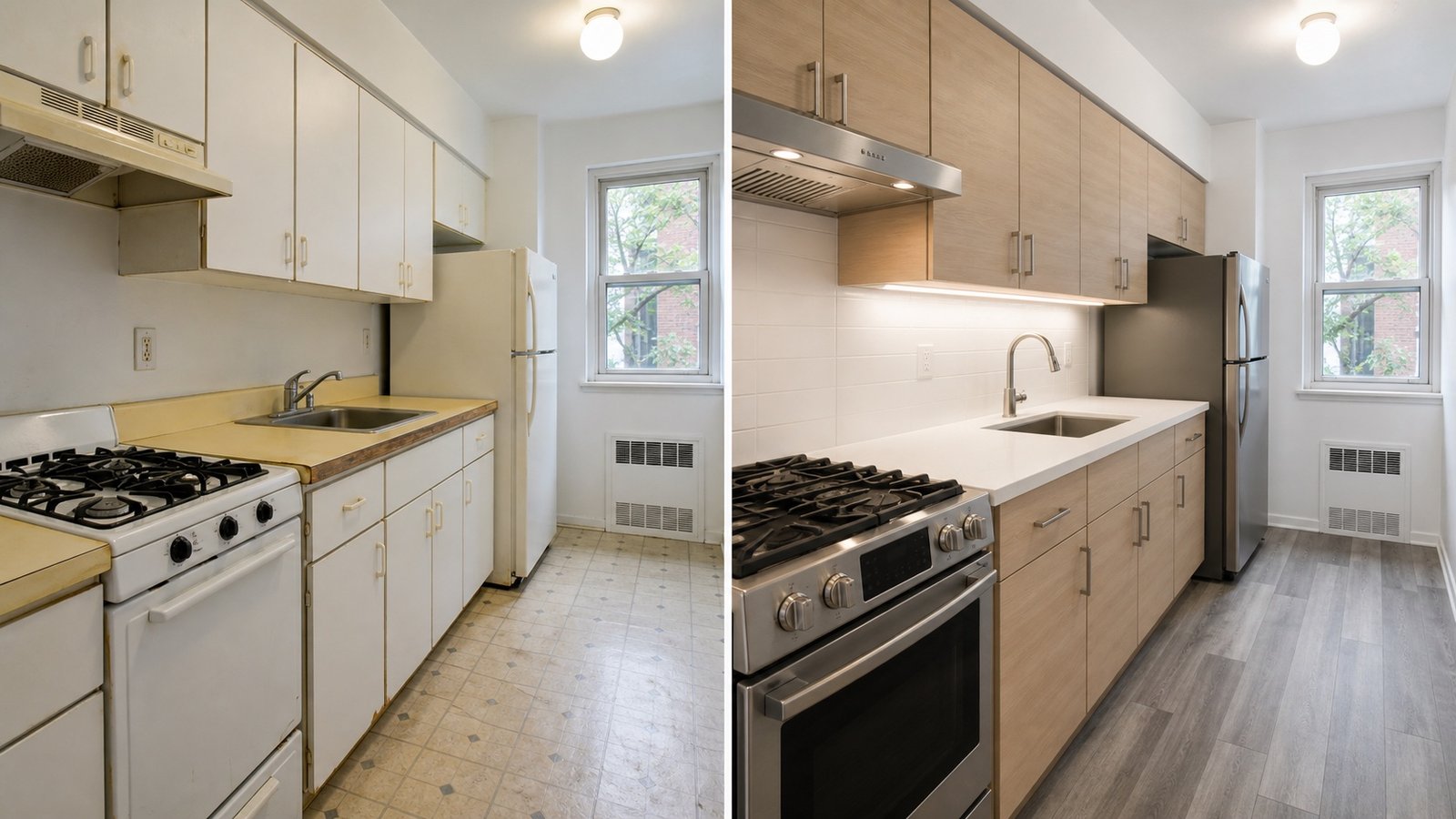
This restored gallery contains the 10 paired kitchen transformations previously published by BluRock Services. Project labels identify whether each example is in Queens or elsewhere on Long Island.
Kitchen remodeling FAQ
What should Queens property owners know before starting?
Useful early information includes the property address, building type, room photos, goals, appliance list, preferred layout, building rules, access constraints, approval concerns, and target timing.
Does BluRock remodel kitchens in Queens?
Yes. BluRock Services coordinates targeted kitchen updates and full kitchen renovations for Queens homes, apartments, co-ops, condos, and multifamily properties, subject to the property, scope, access, approvals, selections, and schedule.
Do kitchen renovations require permits in New York City?
The answer depends on the exact work. NYC Department of Buildings guidance says plans and permits may be required and identifies rerouted gas piping, added electrical outlets, and load-bearing wall changes as examples that can require an ALT2 filing. Confirm the current project-specific path before work begins.
Can a compact kitchen improve without expanding the room?
Often, yes. Taller cabinets, pullouts, correctly sized appliances, improved lighting, better landing zones, clearer aisles, and deliberate finish choices can improve function without enlarging the footprint.
What should be selected before kitchen cabinets are ordered?
Confirm field dimensions, layout, cabinet construction and finish, appliance models, sink, faucet, ventilation, storage accessories, panels, fillers, hardware, lighting, outlets, countertop, backsplash, flooring, and trim expectations.
What affects a kitchen remodeling quote?
Major factors include the layout, demolition, cabinetry, appliances, plumbing, gas, electrical work, lighting, ventilation, surfaces, flooring, access, protection, approvals, lead times, and concealed conditions.
How do I request a kitchen remodeling quote?
Contact BluRock Services with the property address, building type, current photos, desired changes, appliance or material preferences, access or approval requirements, and target timing so the next planning step can be defined.
Supporting planning guide
Need a kitchen-planning checklist for Long Island?
BluRock’s Nassau County kitchen checklist covers layout, cabinet, appliance, material, approval, and estimate questions that are useful when organizing an early project brief. It does not replace property-specific measurements, code review, or professional advice.
Connected services
Which BluRock services support a kitchen renovation?
Kitchen work often connects to flooring, bathrooms, basements, additions, layout design, drawings, and permit coordination. These links point directly to current canonical BluRock pages.
Plan the room, systems, and finishes together
Ready to plan kitchen remodeling in Queens?
Share the property address, building type, room photos, desired changes, appliance list, preferred layout, access or approval requirements, and target timing. BluRock can help define the next practical step.