


Concrete, brick, stone, waterproofing, and repairs
Masonry and Concrete Contractors in Queens NY
BluRock Services coordinates masonry and concrete work for Queens homes, multifamily properties, and commercial spaces, from brick repair, stoops, walkways, patios, and retaining walls to foundations, drainage, waterproofing, and facade details.
Service summary
What masonry and concrete work does BluRock coordinate in Queens?
BluRock Services plans concrete and masonry construction, repair, and restoration around the property, the affected assembly, water movement, structural requirements, access, approvals, and the finish the owner wants to keep or create.
- Primary service
- Masonry and concrete construction, repair, restoration, waterproofing coordination, and exterior hardscape work.
- Location focus
- Queens, New York properties, with scope shaped by the building type, site, public-way conditions, and approval path.
- Main options
- Brick, CMU, poured concrete, stone, veneer, pavers, mortar repair, parging, coatings, and drainage systems.
- Typical components
- Assessment, demolition, excavation, base work, reinforcement, forming, installation, curing, flashing, drainage, cleanup, and closeout.
Project scopes
Which concrete and masonry services can fit a Queens property?
The right category depends on what is moving, cracking, carrying load, holding back soil, exposed to water, or being changed for appearance and everyday use.
Steps, stoops, and entries
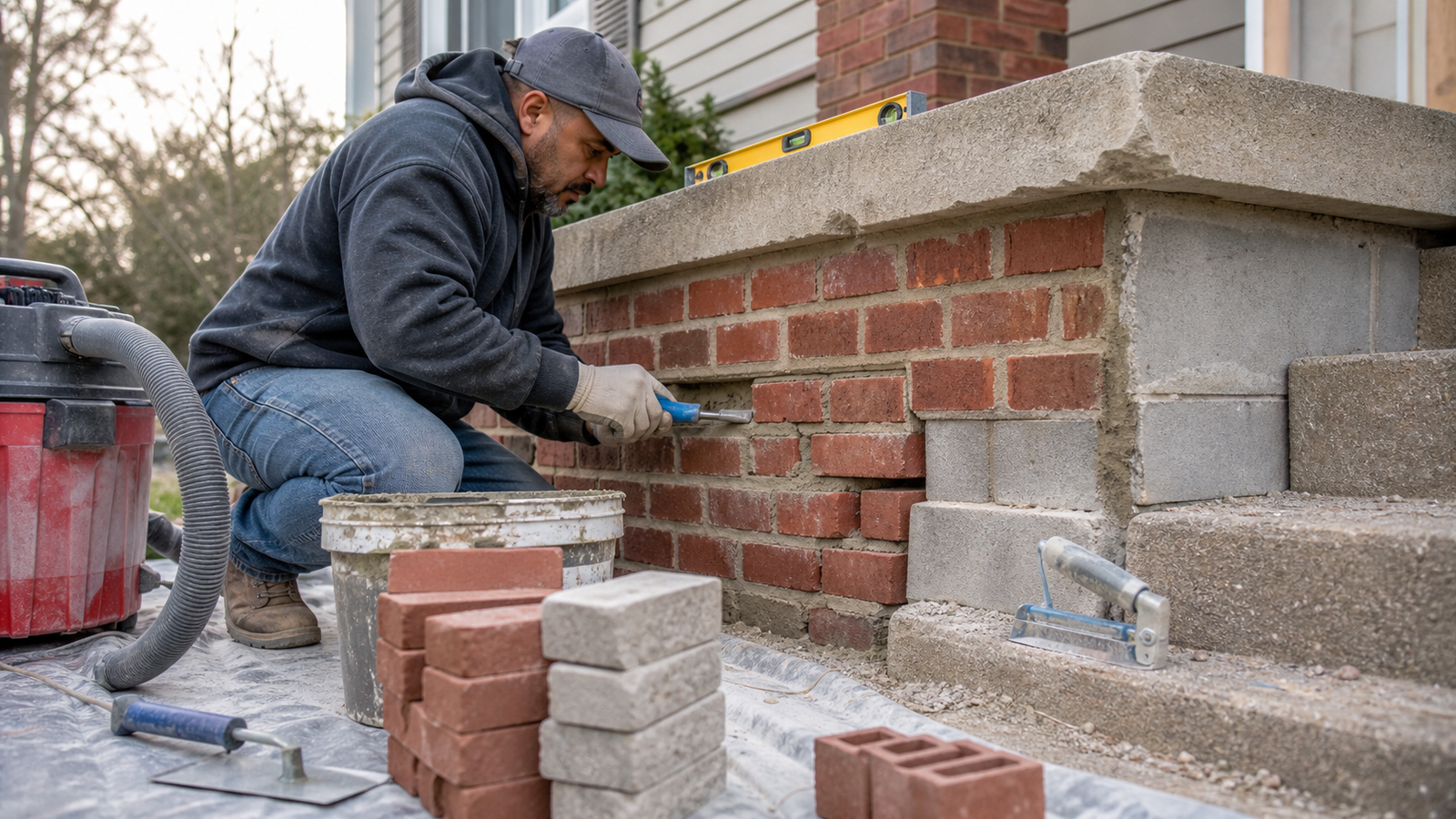
Concrete or masonry steps, brick stoops, landings, cheek walls, caps, rail-support coordination, tread repairs, finish replacement, and drainage at the entry.
Walkways, patios, and driveways
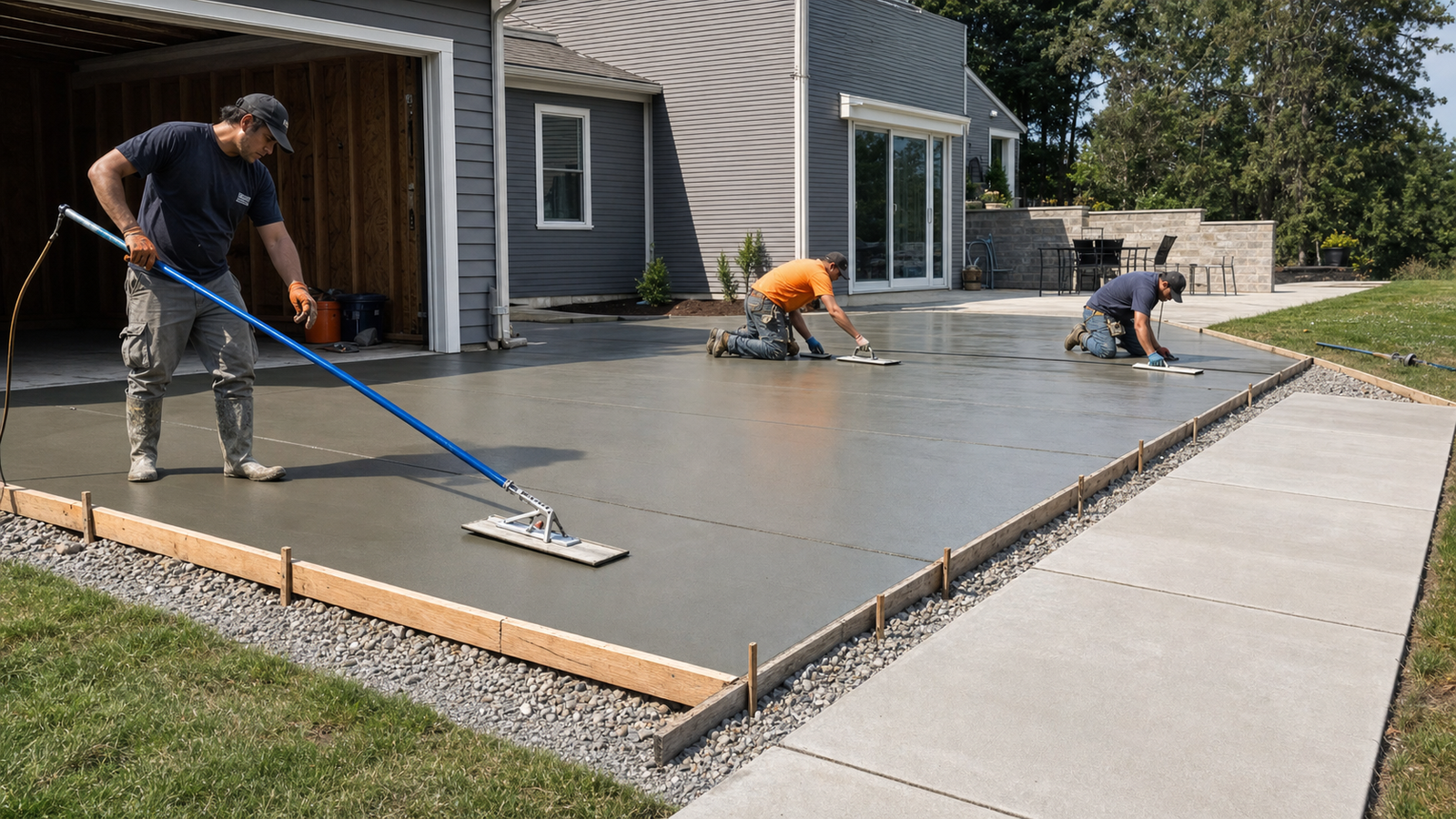
Concrete flatwork, pavers, aprons, paths, patios, utility pads, garage slabs, base preparation, pitch, joints, transitions, and finish selection.
Brick, block, and stone work
Brick and CMU walls, garden walls, columns, piers, stonework, repointing, selective unit replacement, parging, caps, sills, and matching existing masonry.
Foundations and structural concrete
Footings, foundation walls, slabs, pads, reinforced pours, repair areas, excavation support coordination, and concrete connected to additions or new construction.
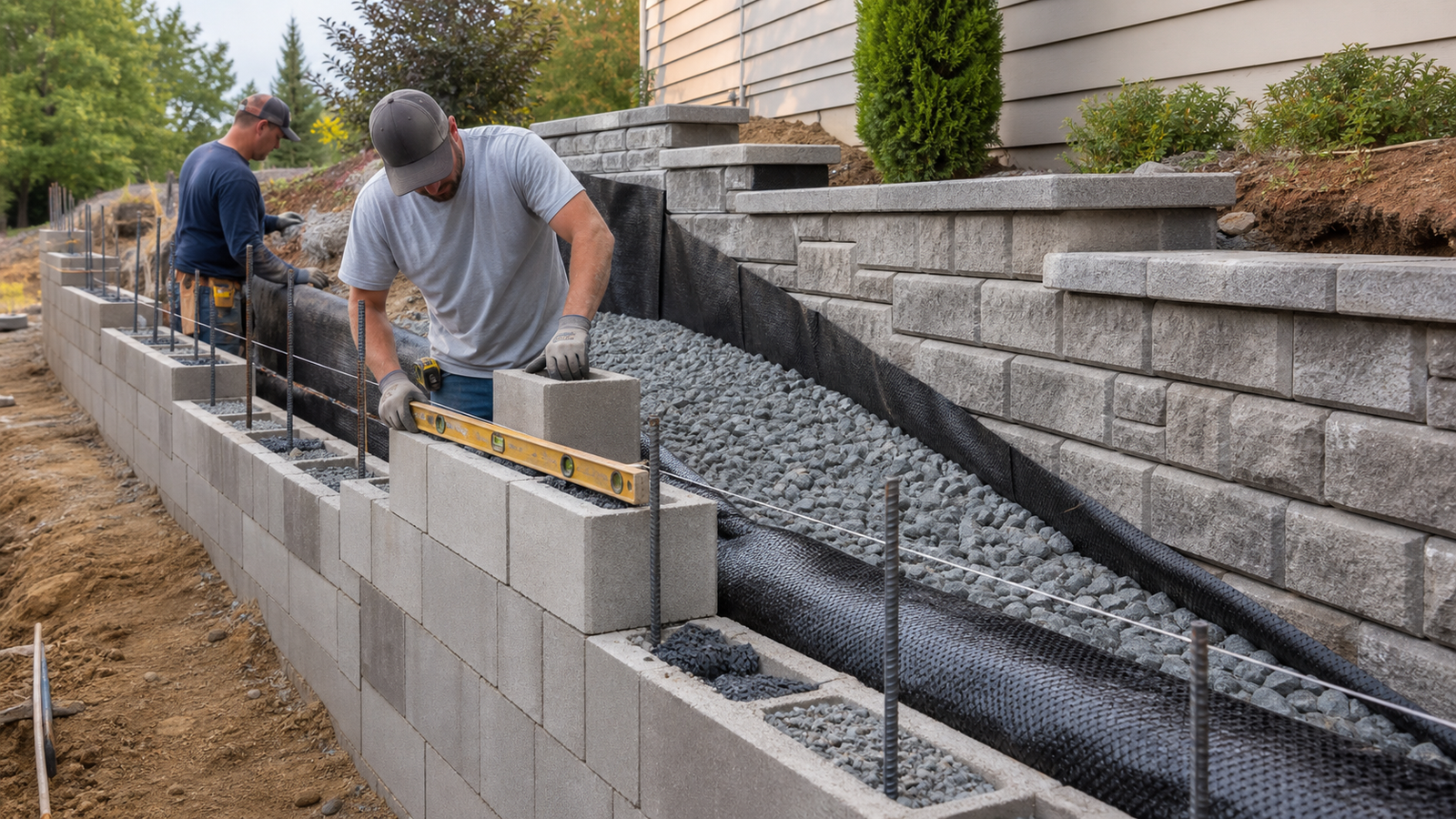
Retaining walls and site masonry
Condition review, drainage, wall geometry, reinforcement, caps, adjacent grades, stairs, fences, landscape interfaces, and property-specific design requirements.
Facades, veneer, and waterproofing
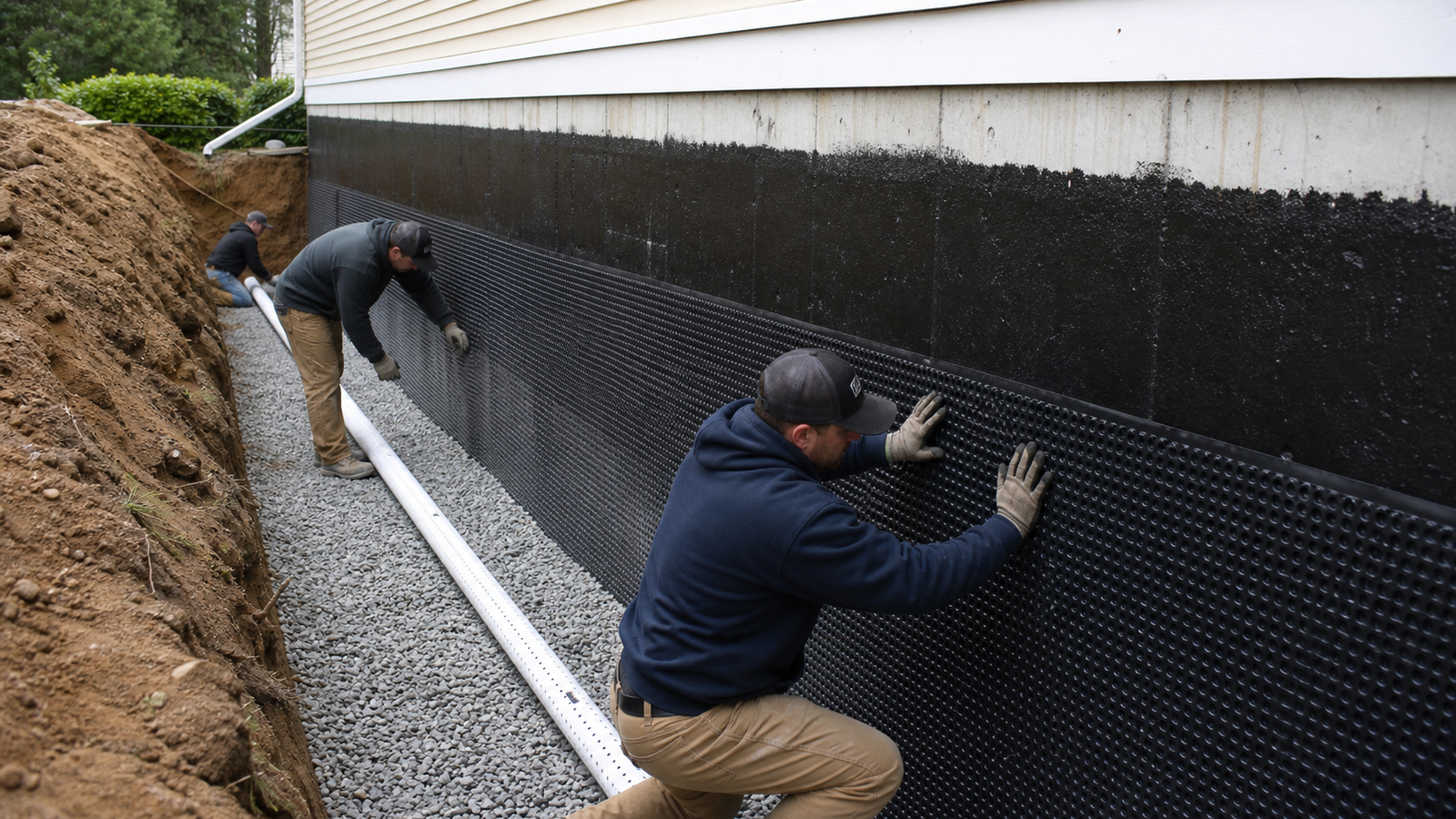
Brick or stone facade repair, manufactured or natural stone veneer, flashing, weep paths, crack repair, membranes, drainage board, below-grade protection, and finish tie-ins.
Existing-condition review
How should cracks, settlement, leaks, and loose masonry be assessed?
Start by separating visible damage from its likely cause. A repair plan should consider movement, water entry, drainage, substrate condition, load, temperature exposure, previous patching, and whether adjacent work must be opened or protected.
- Map cracks, displacement, bulging, spalling, and loose units
- Review grade, runoff, drains, joints, flashing, and weep paths
- Check whether the condition is cosmetic, structural, or both
- Identify matching requirements for brick, stone, mortar, and finish
- Plan access, public protection, demolition, and debris handling
- Confirm design, permit, inspection, and landmark questions
Material comparison
Which material fits the function, exposure, and appearance?
Concrete, brick, block, stone, veneer, and pavers solve different problems. Compare the supporting assembly, water management, repairability, maintenance, visual match, and installation conditions—not appearance alone.
| Material or system | Common uses | Planning strengths | Questions to resolve |
|---|---|---|---|
| Poured concrete | Slabs, walkways, patios, driveways, footings, walls, pads, and steps | Continuous placement, multiple finish options, and reinforcement designed for the intended assembly | Base, thickness, reinforcement, joints, pitch, access, placement method, curing, and edge transitions |
| Brick masonry | Facades, stoops, walls, steps, columns, repairs, and historic or traditional details | Modular repair potential, familiar Queens building character, and durable finished surfaces when detailed correctly | Brick match, mortar composition, bond, support, flashing, lintels, sills, freeze-thaw exposure, and repointing limits |
| Concrete masonry unit | Foundation, retaining, utility, backup, partition, and structural wall assemblies | Regular unit sizing and compatibility with reinforced and grouted wall designs | Footing, reinforcement, grout, drainage, waterproofing, cap, finish, and engineering requirements |
| Natural stone | Walls, steps, caps, entries, facades, landscape features, and premium finish areas | Natural color and texture variation with strong visual presence | Stone type, thickness, weight, support, absorption, cutting, matching, mortar, caps, and lead time |
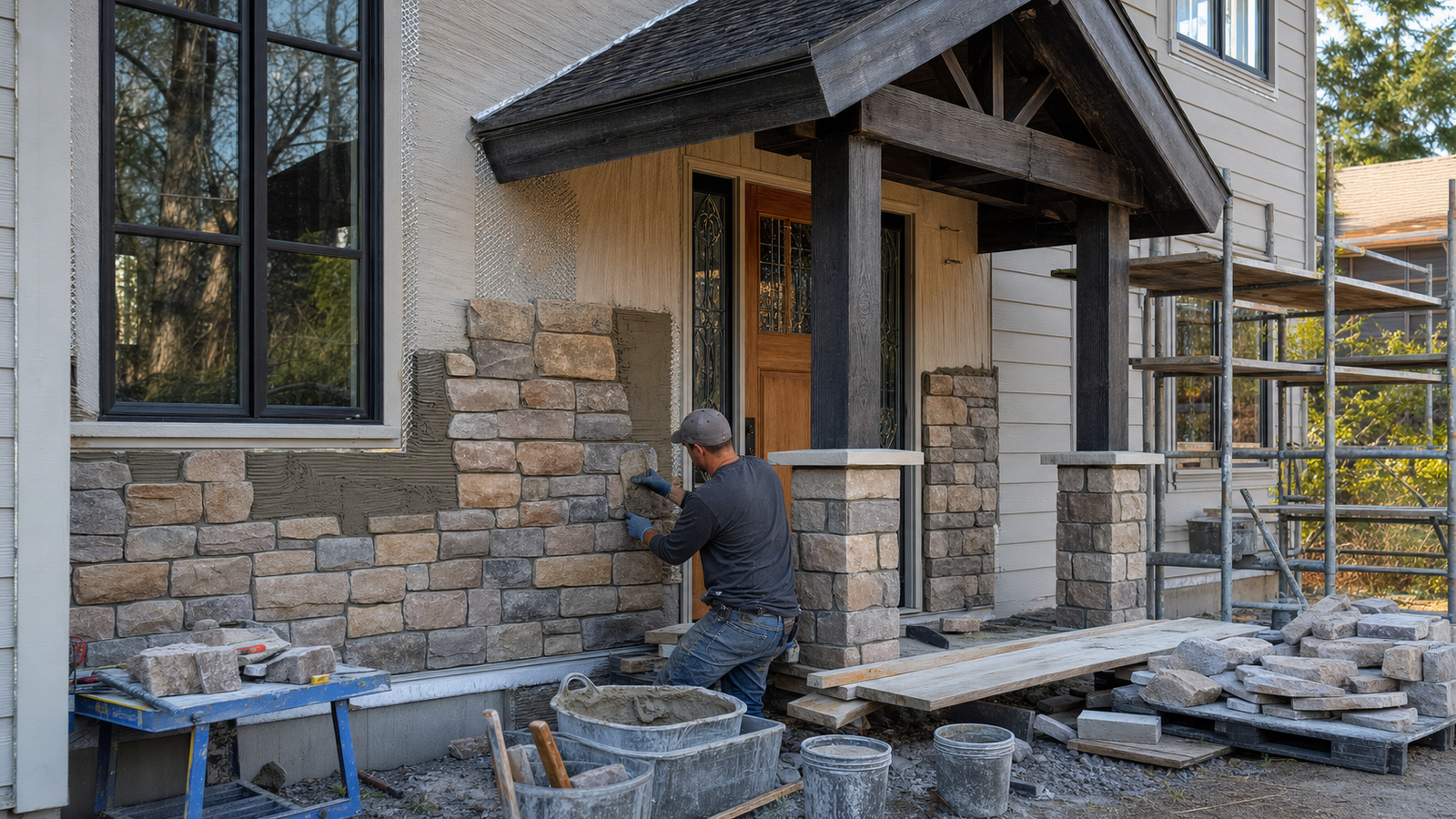
| Manufactured stone veneer | Entry accents, column wraps, lower facades, porch bases, and interior feature walls | Stone appearance with less weight than full-depth stone in suitable approved assemblies | Substrate, water-resistive layer, lath or backup, scratch coat, flashing, weeps, clearances, and manufacturer instructions |
| Concrete or clay pavers | Patios, walkways, courtyards, driveways, borders, and repairable hardscape areas | Modular layout, color and pattern choices, and access to isolated areas when the base remains serviceable | Excavation, compacted base, edge restraint, bedding, drainage, joint fill, traffic load, and settlement risk |
NYC approvals and public safety
When do masonry and concrete projects need permit or agency review?
Most NYC construction requires approval or permits, while limited ordinary repairs may qualify for exemptions. The answer depends on the exact scope, structure, facade height, public-way impact, retaining-wall condition, property designation, and whether licensed or registered professionals are required.
Sidewalk work can involve NYC DOT permits and violation-dismissal steps. Facade and retaining-wall work can involve NYC DOB filing, professional review, public-protection measures, or periodic inspection rules. Landmarked properties and historic districts may require prior LPC review, including material and mortar matching for masonry repairs.
These links provide planning context, not a property-specific code determination. Confirm the current path with the applicable agency and qualified design or trade professional before work begins.
Planning visuals
What do concrete, waterproofing, veneer, and retaining-wall details look like?
Use these service visuals to discuss assemblies and finish direction. Final materials, reinforcing, drainage, dimensions, and installation details must follow the approved property-specific scope.
Scope and quote planning
What changes a masonry or concrete quote in Queens?
A useful quote is tied to measured conditions, demolition, access, base or substrate preparation, reinforcement, water management, material choices, finish requirements, protection, approvals, and restoration—not square footage alone.
Existing damage and demolition
Loose units, failed patches, hidden deterioration, removal depth, disposal, temporary support, and the amount of adjoining finish that must be protected or rebuilt.
Access and site logistics
Street or driveway access, occupied areas, stairs, narrow side yards, pumping or lifting needs, staging, neighbor conditions, public protection, and work-hour limits.
Base, structure, and reinforcement
Excavation, compaction, soil or drainage conditions, footing design, slab thickness, rebar, dowels, grout, anchors, forming, shoring, and engineering details.
Water and envelope details
Pitch, drains, membranes, flashing, weeps, caps, sealants, waterproofing transitions, below-grade access, and repair of adjacent roofing, siding, windows, or doors.
Material and finish selection
Brick or stone match, mortar color and tooling, concrete finish, paver pattern, veneer profile, caps, borders, staining, coatings, sample panels, and lead times.
Permits, inspections, and closeout
Design and filing coordination, DOT or DOB steps, LPC review where applicable, inspection milestones, violation dismissal, cleanup, protection removal, and final walkthrough.
Coordinated delivery
How does a Queens masonry or concrete project move from review to turnover?
A controlled sequence makes existing conditions, approvals, materials, water management, placement, curing, and adjacent finish repairs visible before the schedule tightens.
Assess
Review damage, structure, drainage, grade, access, adjacent materials, property constraints, and the owner’s goal.
Define
Measure the scope, compare systems and finishes, identify drawings or samples, and document assumptions.
Approve
Confirm agency, design-professional, permit, protection, schedule, material, and inspection requirements.
Build
Protect the site, remove failed work, prepare the base or substrate, install the assembly, and control water and transitions.
Close out
Allow required cure or set time, complete adjacent finishes, clean the site, review punch items, and address required sign-offs.
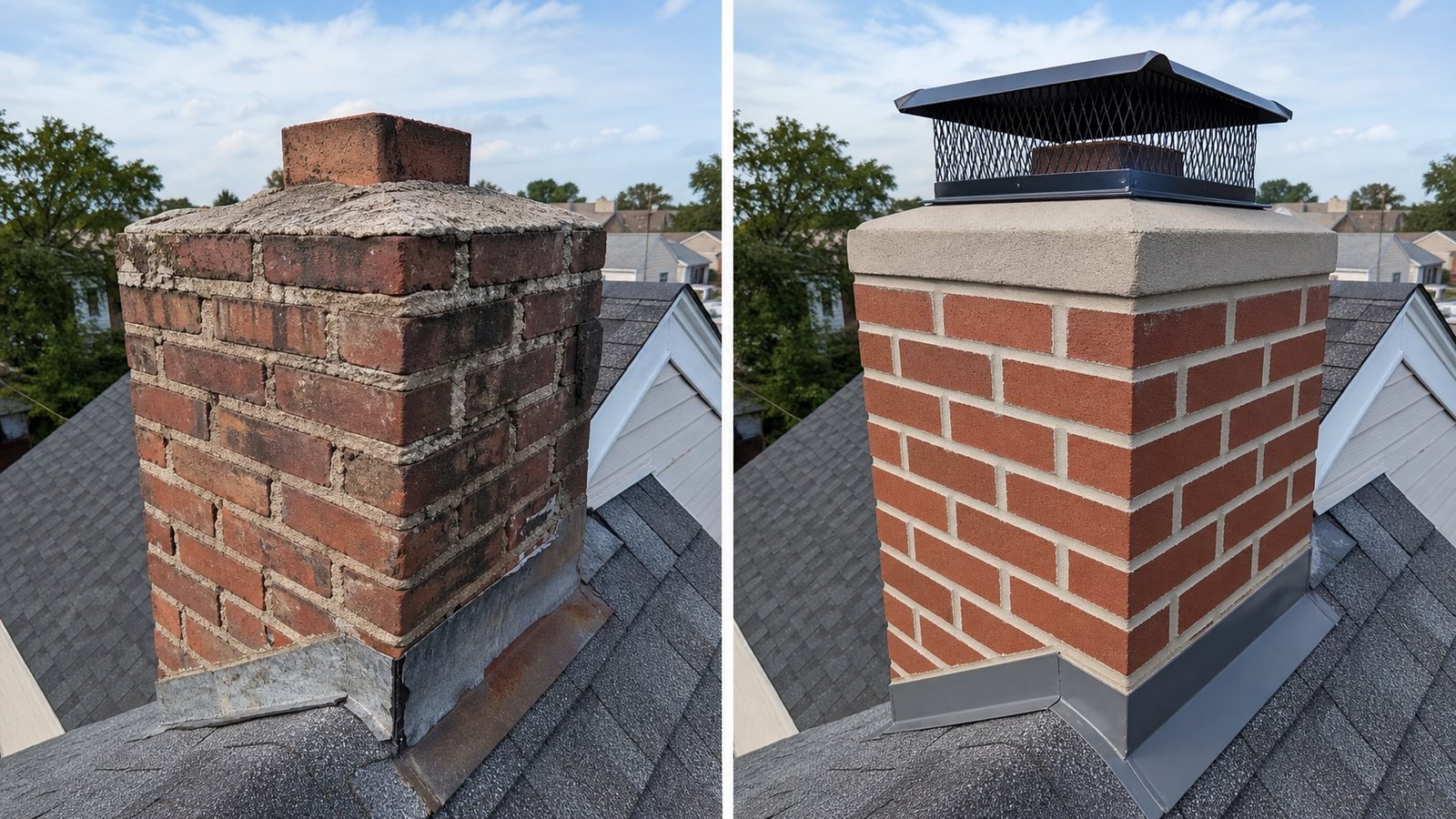
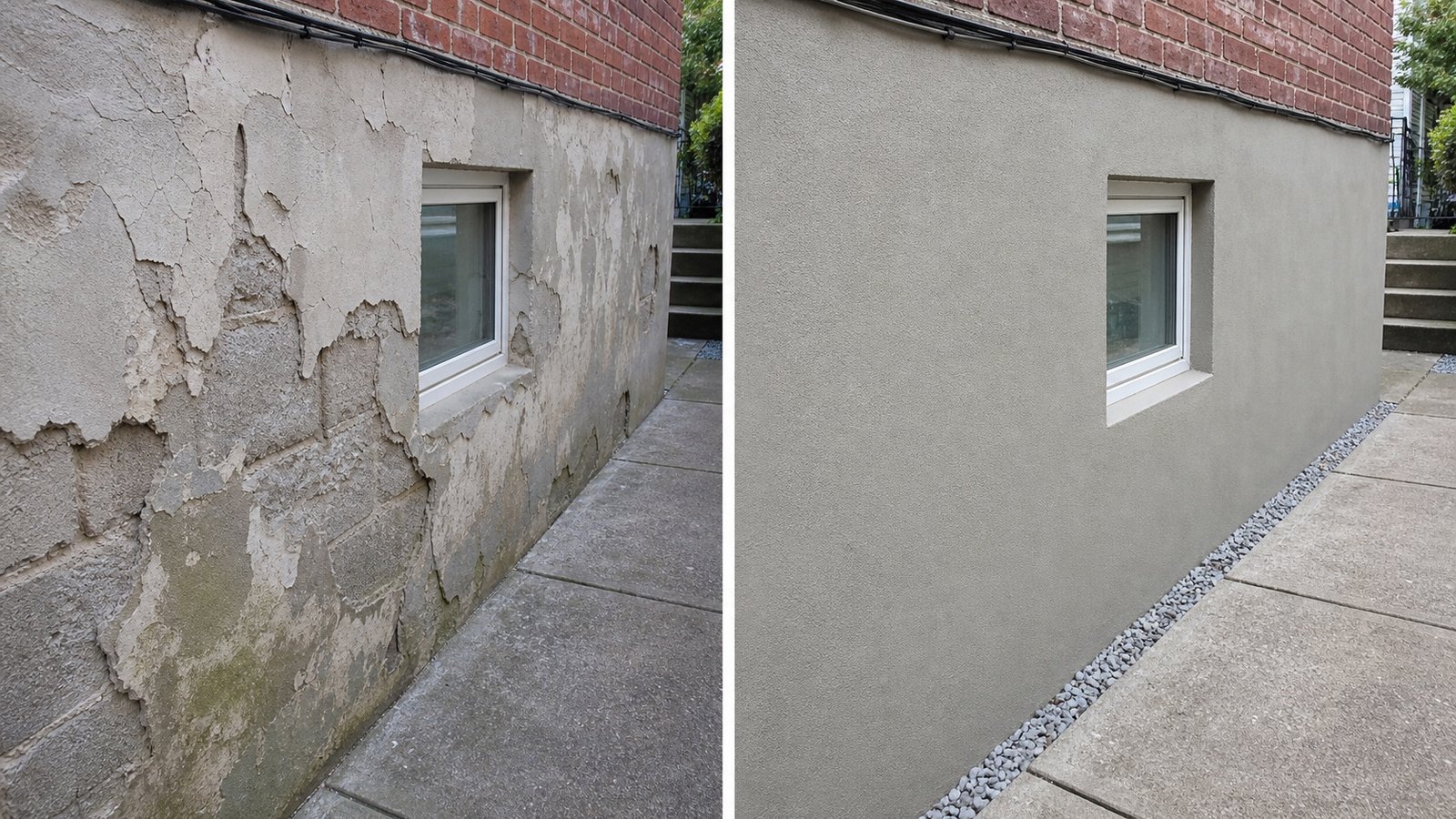
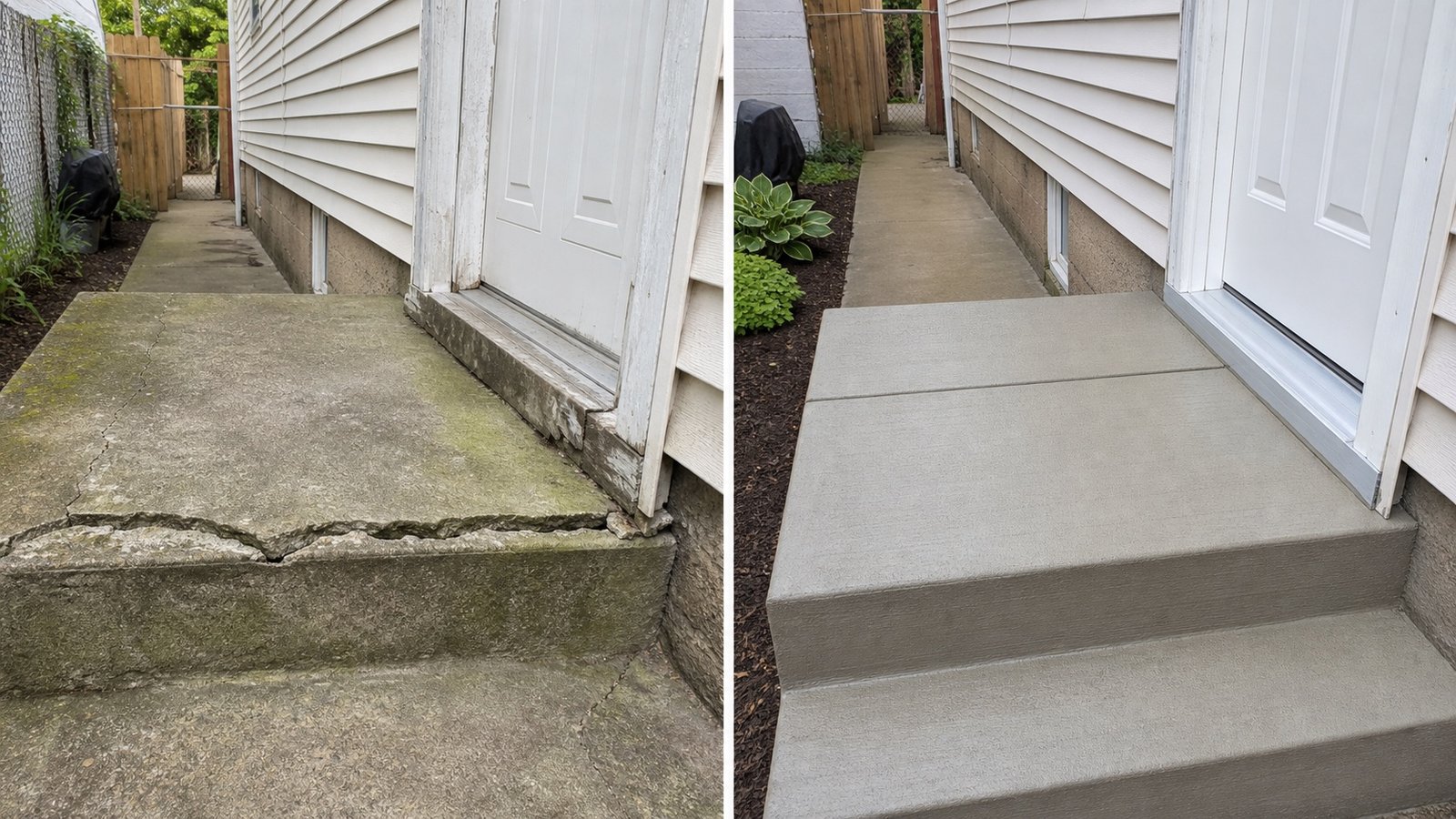
Before and after projects
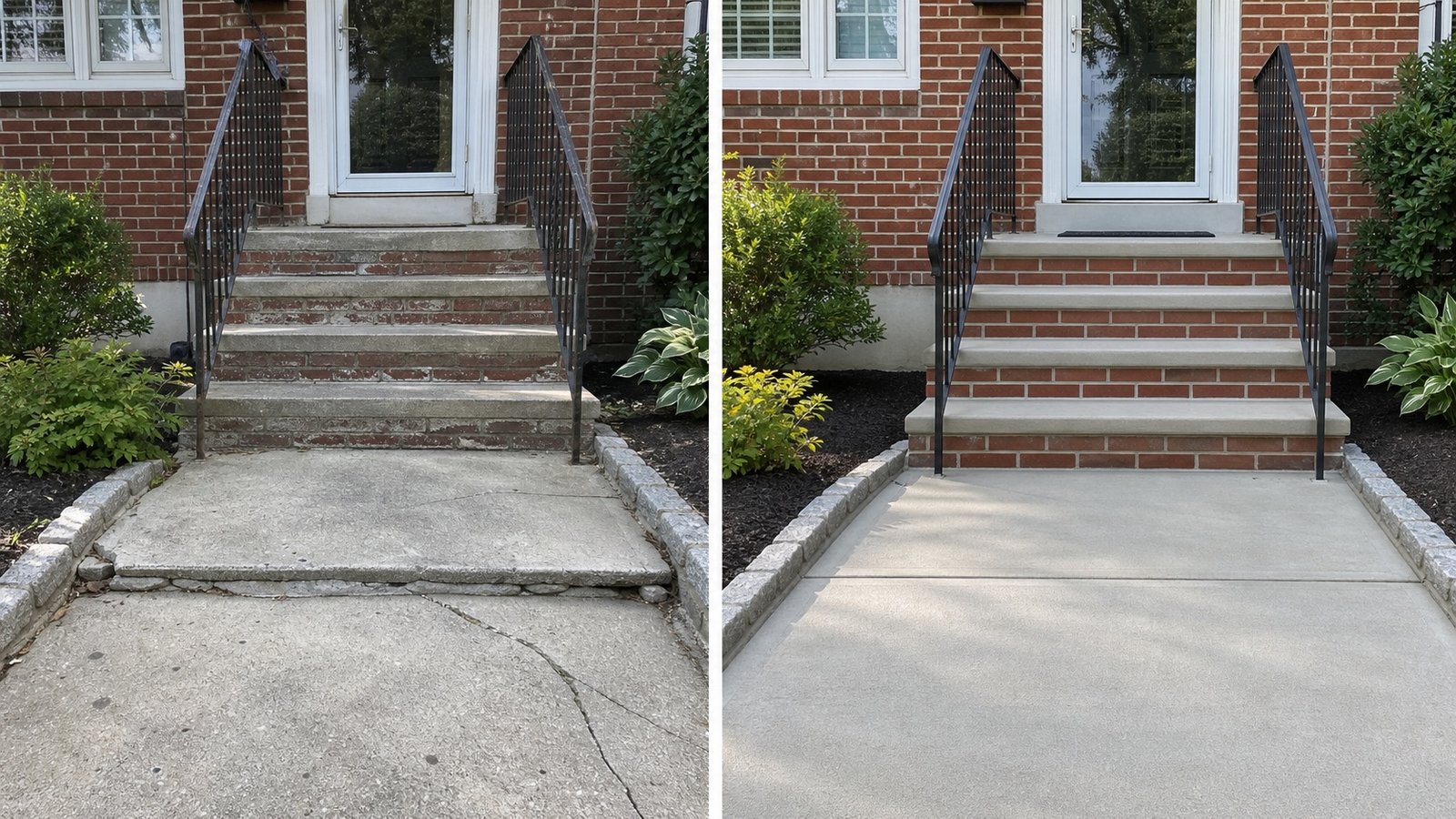
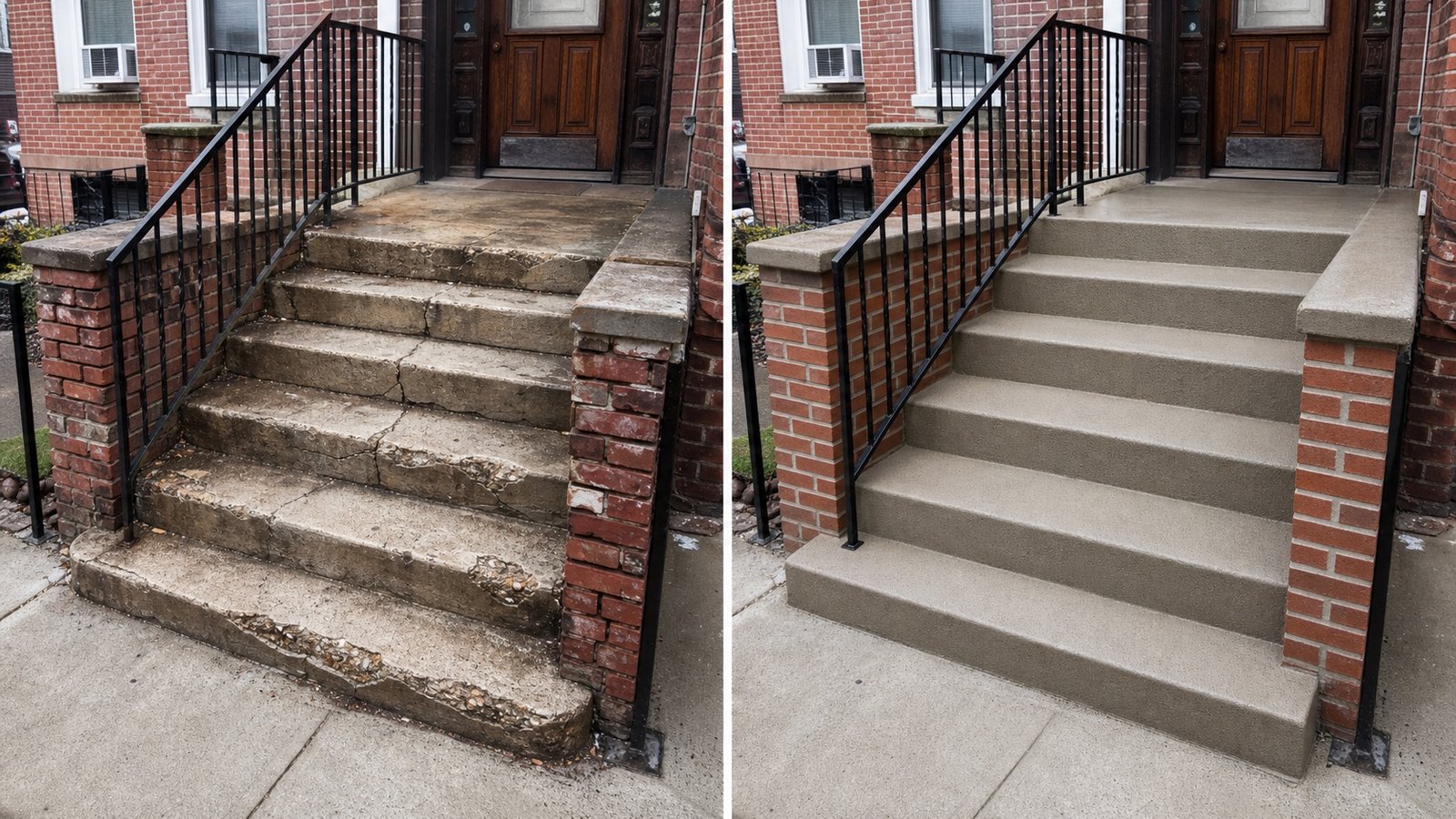
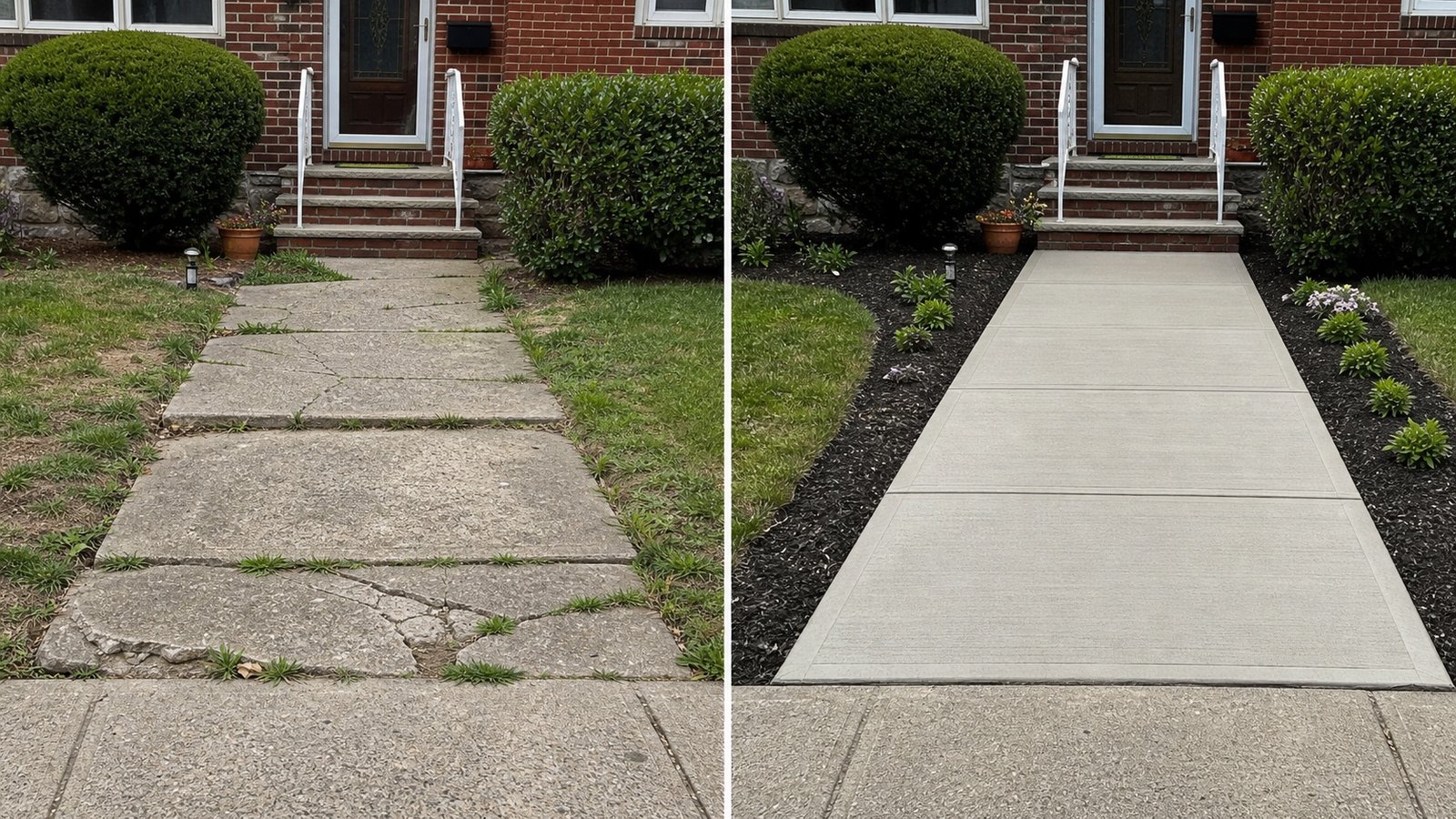
What do BluRock’s existing concrete and masonry project examples show?
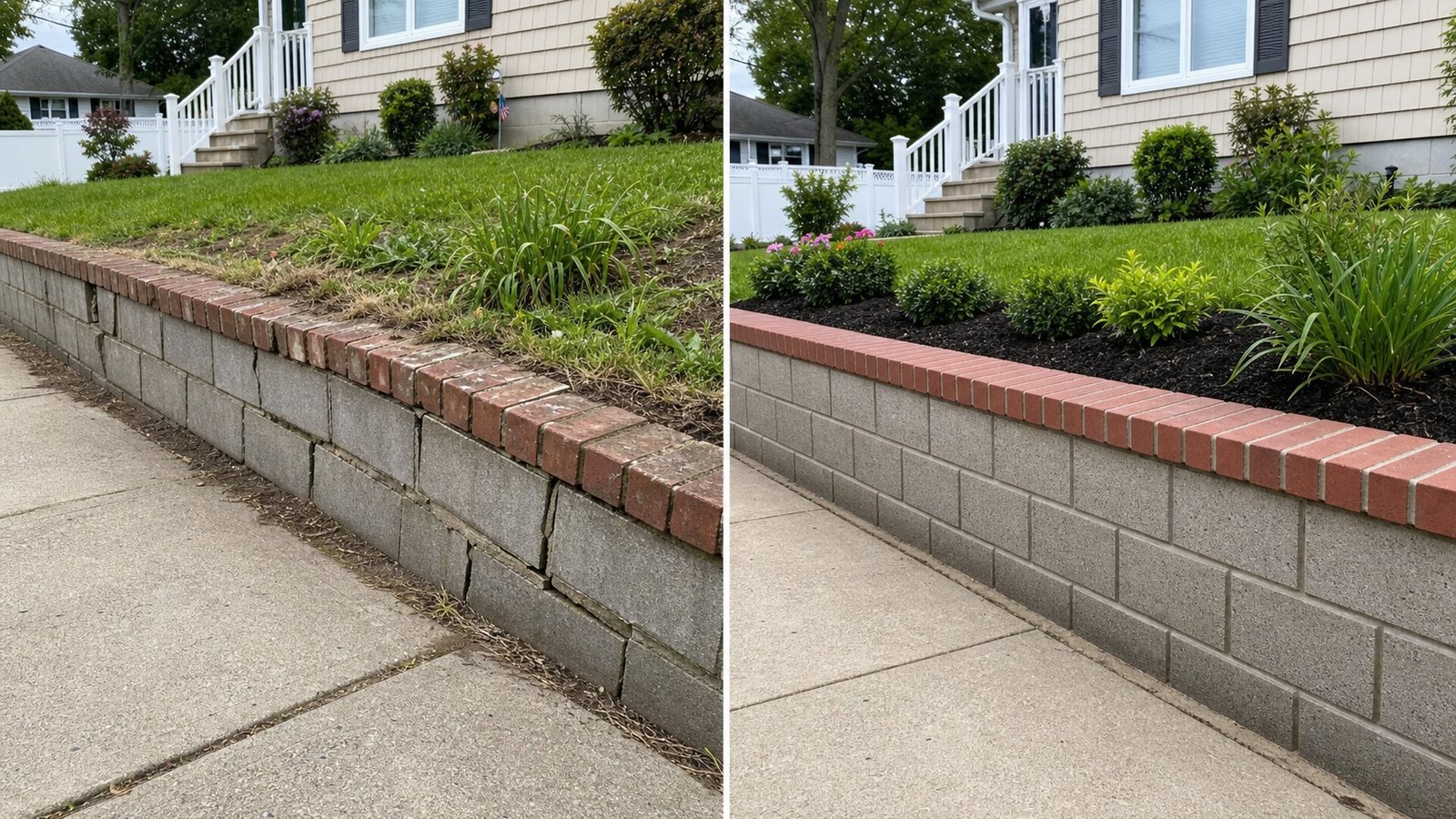
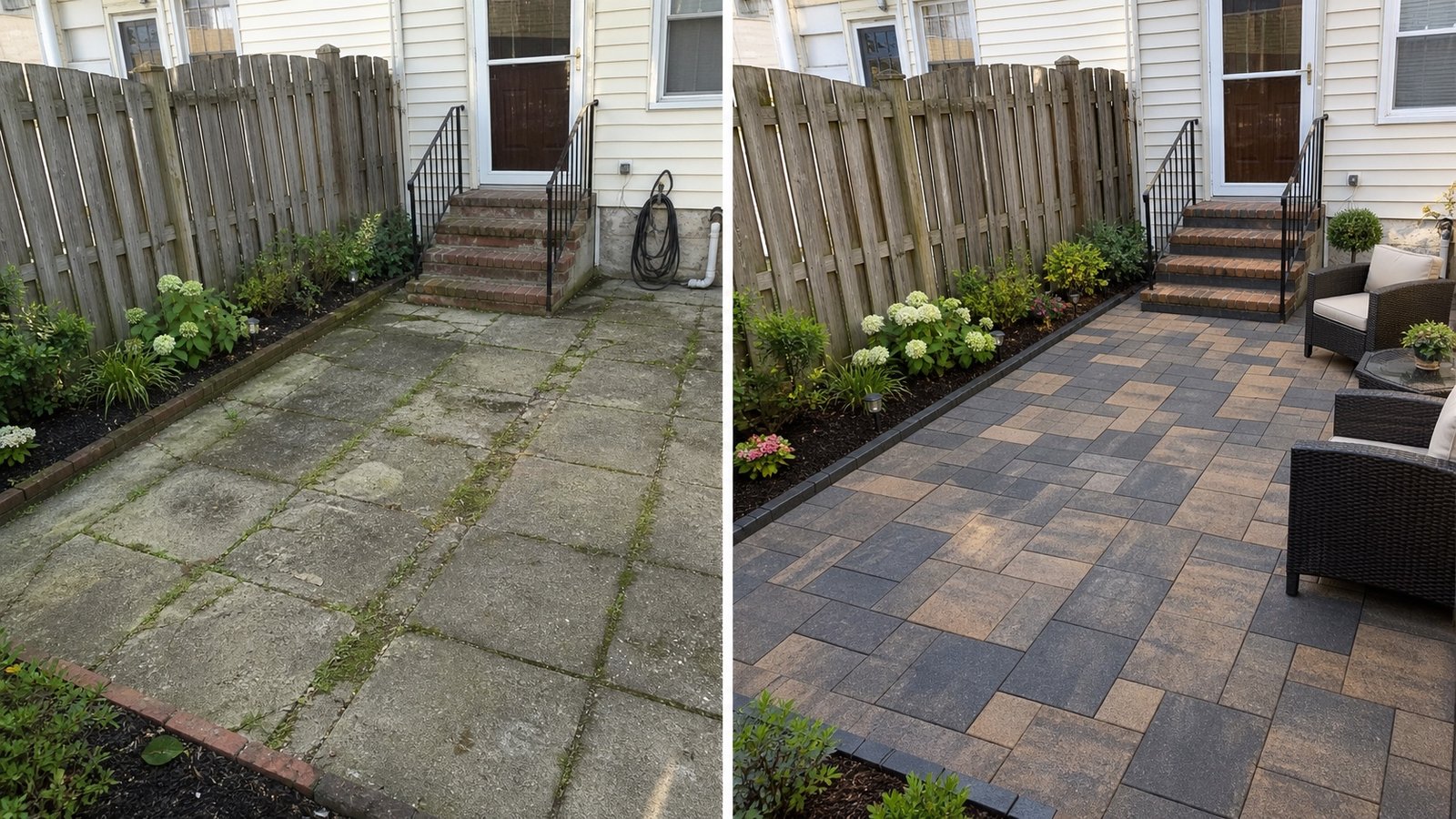
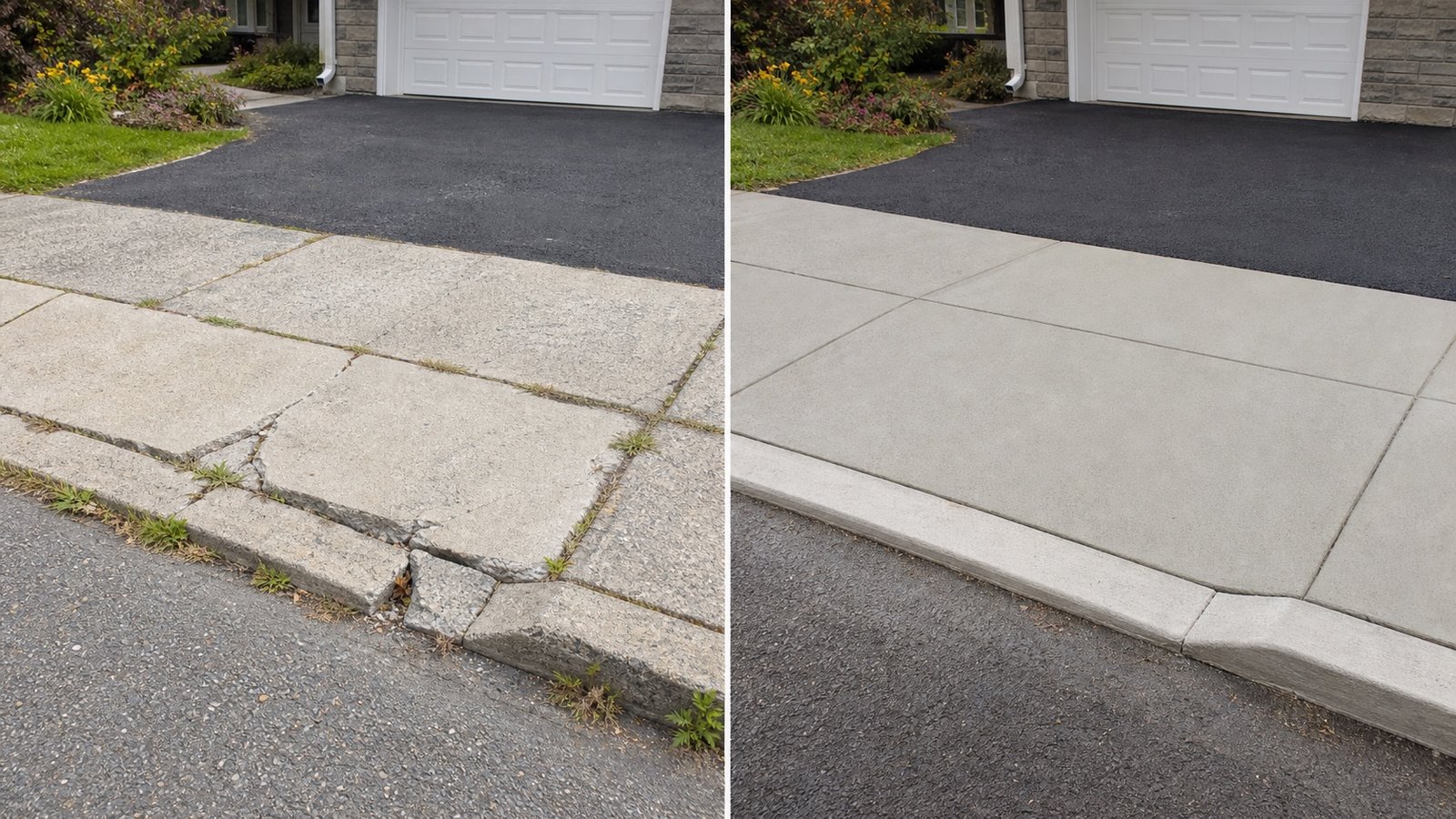
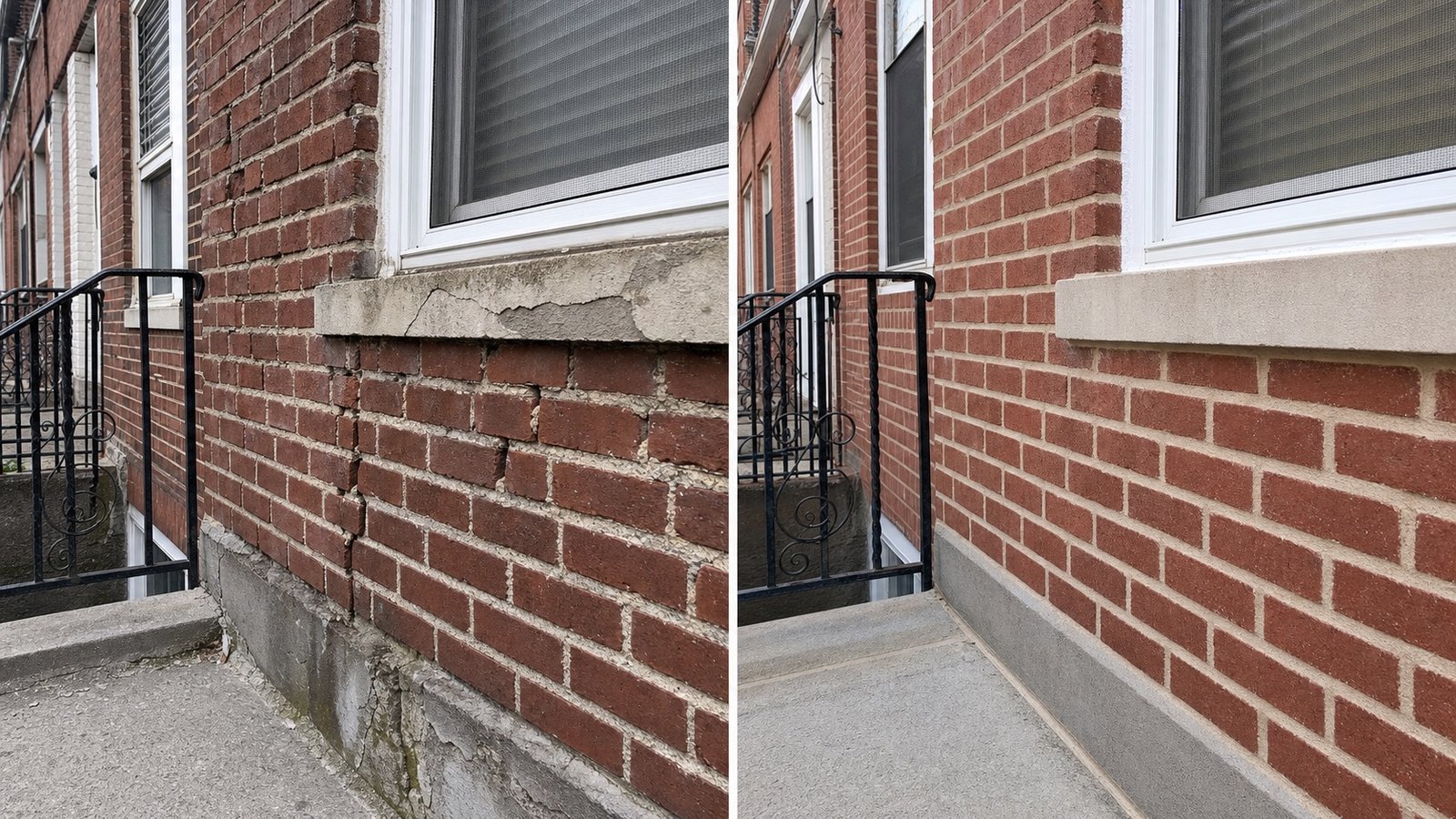
Review the ten project composites currently published on the canonical page, including stoops, walkways, retaining walls, paver patios, brick repairs, sidewalk work, foundation parging, and landings.
Frequently asked questions
What do Queens owners ask before masonry and concrete work?
These answers cover early planning. Final recommendations depend on a site review, the affected assembly, and any required design or agency confirmation.
What masonry and concrete projects can BluRock coordinate in Queens?
BluRock Services can review projects involving brick, block, stone, poured concrete, pavers, steps, stoops, walkways, patios, driveways, retaining walls, foundations, facade repairs, repointing, parging, veneer, waterproofing, and related drainage or finish restoration.
Can cracked concrete or damaged masonry be repaired instead of replaced?
Sometimes. Repair can be appropriate when the underlying assembly remains serviceable and the cause of the damage can be addressed. Widespread movement, failed base conditions, severe deterioration, water problems, unsafe conditions, or structural concerns may require partial or full reconstruction. The site condition should guide that decision.
Do sidewalk repairs in Queens require a permit?
NYC DOT guidance says owners should obtain necessary permits for private sidewalk repairs, and a valid sidewalk construction permit is part of the violation-dismissal process. The specific permit and contractor requirements should be confirmed for the property and scope before work starts.
When should a retaining wall be reviewed by an engineer or architect?
NYC DOB advises professional evaluation when a retaining wall shows leaning, bulging, severe cracking, displaced material, soil movement, water accumulation, or blocked drainage. Public-right-of-way walls that meet the City’s height criteria can also have periodic inspection and filing requirements.
What is the difference between repointing and rebuilding brickwork?
Repointing removes deteriorated mortar from joints and installs compatible new mortar while retaining serviceable masonry units. Rebuilding removes and resets or replaces bricks or other units where the wall, support, alignment, or material condition requires more than joint repair.
How should owners prepare for a masonry or concrete estimate?
Share the property address, photos, measurements if available, known leaks or movement, violation or permit information, access limits, desired materials, items to preserve, finish expectations, and target timing. A site review can then separate visible finish work from base, drainage, structural, and approval needs.
Related BluRock services
Which services often connect to masonry and concrete work?
Concrete and masonry scopes often meet additions, decks, basements, exterior assemblies, new construction, permit coordination, and occupied-building renovation.
Start with the property and the condition
Ready to discuss masonry or concrete work in Queens?
Send BluRock Services the property address, photos, the area you want to repair or build, known drainage or movement concerns, and any drawings or notices already available.