

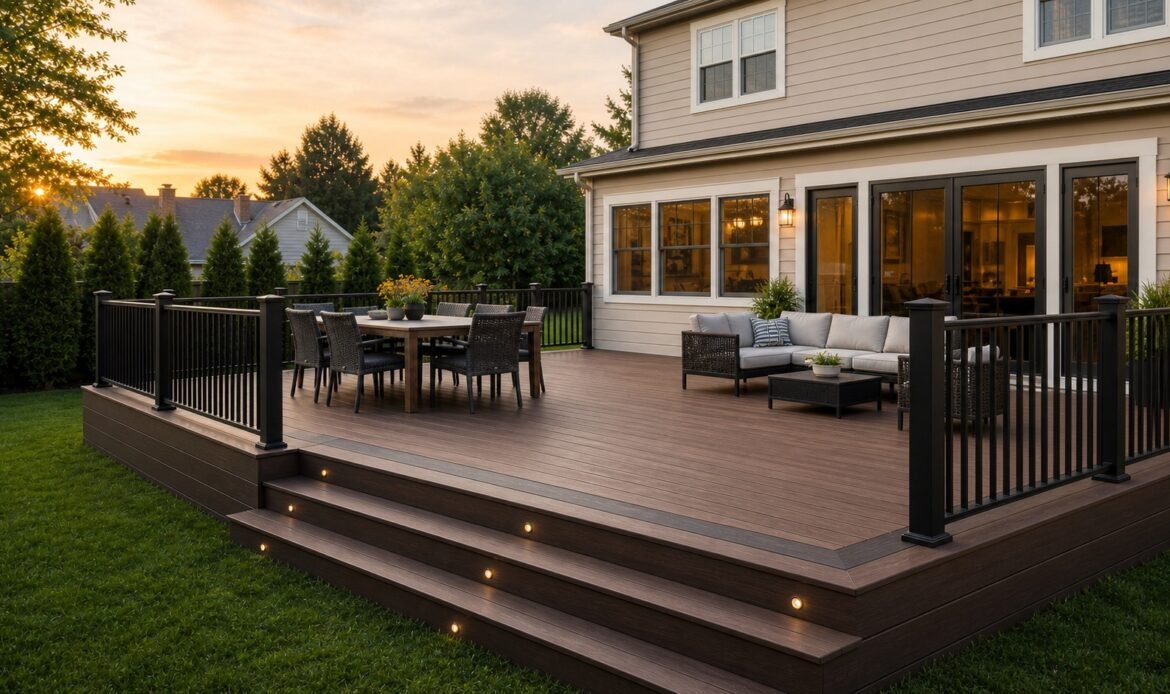
Choosing a new deck is no longer just a wood-versus-composite decision. Homeowners in Queens, Nassau County, Long Island, and the NYC boroughs now have access to a wide range of composite and PVC decking systems with different looks, heat performance, moisture resistance, warranties, price points, and maintenance expectations.
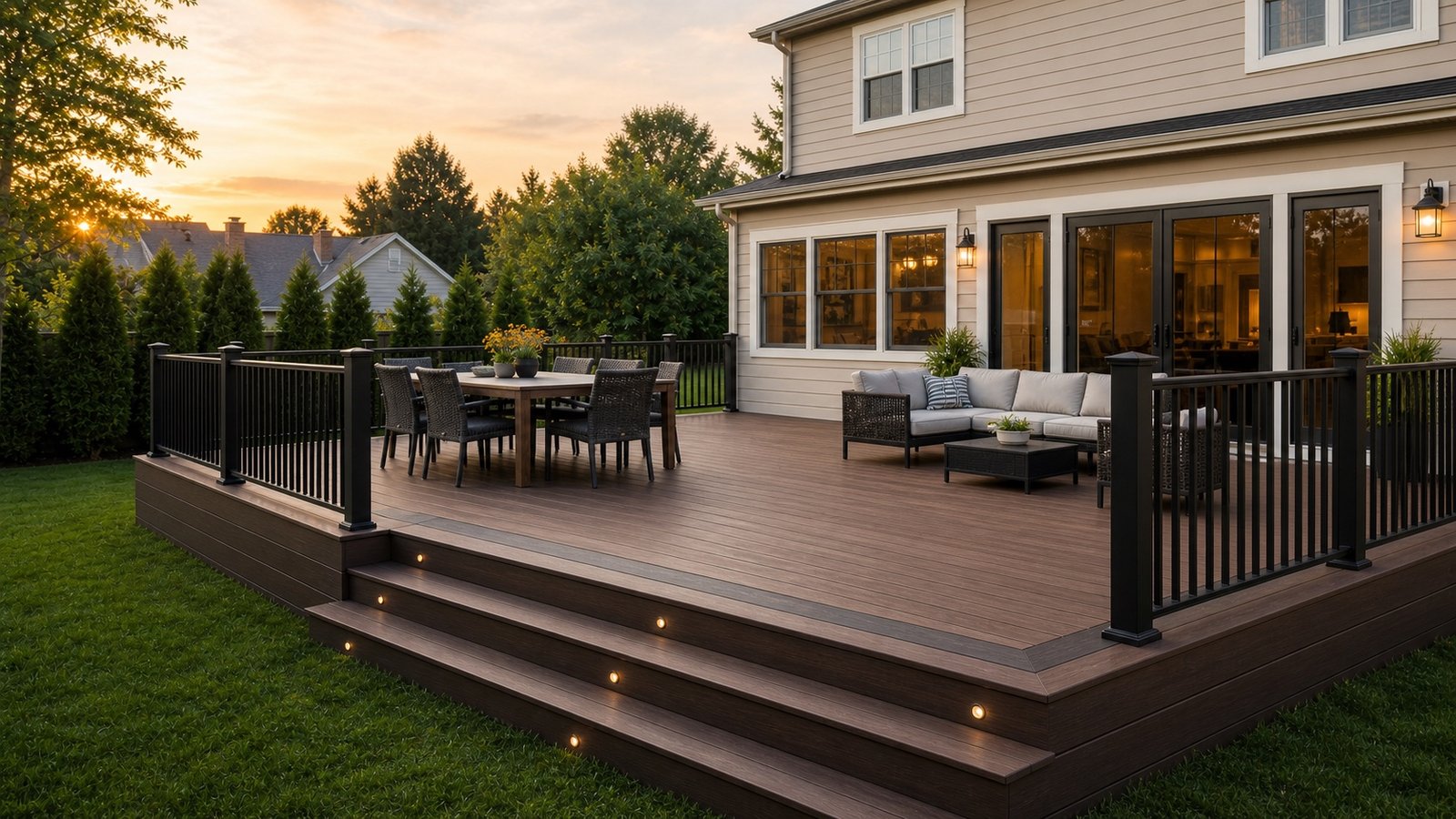
For many properties, a composite decking system is the smarter long-term choice because it is designed to reduce the sanding, staining, sealing, splintering, and rot concerns that often come with traditional wood decking. The best choice still depends on the home, the exposure, the substructure, the railing plan, the budget, and how the deck will actually be used.
BluRock Services helps homeowners and property owners compare decking materials, plan the layout, and install a finished system that looks polished and performs well in real outdoor conditions.
Why Composite Decking Has Become So Popular
Composite decking is built for owners who want the warmth of a finished outdoor space without the regular upkeep cycle of natural wood. Most composite boards are made with a mix of wood fibers and plastics, while PVC decking uses synthetic polymer materials with very low moisture absorption.
That matters in the New York market. Decks in Queens, Nassau County, and the NYC boroughs have to deal with summer heat, winter freeze-thaw cycles, rain, shade, foot traffic, tight yards, neighboring structures, and sometimes limited access during construction. A well-planned composite decking system can reduce maintenance while giving the property a cleaner, more finished outdoor living area.
Key Benefits Of A Composite Decking System
| Benefit | Why It Matters For Local Properties |
|---|---|
| Lower routine maintenance | Composite decking avoids the yearly sanding, painting, staining, or sealing many wood decks require. |
| Better moisture resistance | Composite and PVC boards are designed to resist common wood problems like rot, splintering, and insect damage. |
| More consistent appearance | Homeowners can choose coordinated colors, railings, fascia, borders, and stair details. |
| Strong curb appeal | A finished deck can make a backyard, rental property, or commercial outdoor area feel more usable and refined. |
| Long-term value | Premium boards cost more upfront than many wood options, but they can reduce maintenance labor and material upkeep over time. |
At-A-Glance Brand Comparison
The chart below uses a qualitative 1-5 scale for homeowner planning. It is not a warranty ranking or a price guarantee. Product lines vary within each brand, and availability can change by supplier.
| Brand | Best Fit | Design Range | Low Maintenance | Moisture Focus | Heat-Focused Options | Typical Budget Position |
|---|---|---|---|---|---|---|
| Trex | Broad selection and strong brand recognition | 5 | 5 | 4 | 4 | Good to premium |
| TimberTech / AZEK | Premium appearance, PVC options, heat-conscious boards | 5 | 5 | 5 | 5 | Mid to premium |
| Fiberon | Wide composite and PVC range with accessible options | 4 | 5 | 4 | 3 | Good to premium |
| MoistureShield | Wet-area performance, ground-contact applications, marine-adjacent use cases | 4 | 5 | 5 | 4 | Mid to premium |
Visual: Composite Decking Brand Strengths
Trex Decking: Pros And Cons
Trex is one of the best-known composite decking brands, and it is often a strong fit for homeowners who want a familiar name, many color options, and a range of good-better-best product lines. Trex notes that its composite decking is made with up to 95% recycled plastic film and reclaimed sawdust, and its product lines include limited residential warranties that vary by collection.
Pros Of Trex Decking
- Broad product range, including value-conscious and premium collections.
- Strong brand recognition for homeowner confidence.
- Low maintenance compared with wood.
- Many collections are designed to resist fading, scratching, staining, rot, splintering, and insect damage.
- Some lines include heat-mitigating technology.
Cons Of Trex Decking
- Darker boards can still get hot in direct sun.
- Premium collections can raise the material budget.
- Product lines have different warranties, profiles, and performance levels.
- Composite boards do not fix weak framing, poor footings, or drainage problems.
Best for: homeowners who want a reliable composite decking system with recognizable branding, a large style range, and options at different price points.
TimberTech And AZEK Decking: Pros And Cons
TimberTech and AZEK are often associated with premium decking, especially where homeowners want rich board textures, advanced PVC options, and strong moisture resistance. TimberTech’s Advanced PVC boards are positioned for moisture performance, heat-conscious design, and fire-zone considerations in certain collections.
Pros Of TimberTech/AZEK Decking
- Excellent design range, including realistic wood-look boards.
- Advanced PVC options absorb very little moisture compared with traditional wood.
- Certain lines feature Cool Touch Technology.
- Some collections are positioned for improved slip resistance and fire-zone performance.
- Strong option for a high-end finished look.
Cons Of TimberTech/AZEK Decking
- Premium lines can be more expensive than entry-level composite decking.
- PVC boards can feel different underfoot than wood-composite boards.
- Color selection should account for direct sun.
- Fasteners, spacing, fascia, borders, and expansion details matter.
Best for: homeowners who want a premium outdoor living feel, sophisticated colors, and strong moisture-resistant decking options.
Fiberon Decking: Pros And Cons
Fiberon offers both composite and PVC decking in a variety of price ranges, colors, and grain patterns. The brand positions its products around durability, low maintenance, and long-lasting outdoor spaces. Fiberon also notes that its composite and PVC decking will not warp, rot, or splinter like wood.
Pros Of Fiberon Decking
- Wide mix of composite and PVC collections.
- Strong color and grain-pattern variety.
- Lower-maintenance alternative to wood.
- PVC options can be useful around wet or damp areas.
- Multiple price ranges for different project goals.
Cons Of Fiberon Decking
- The broad catalog requires careful collection comparison.
- Premium looks and PVC options can increase material cost.
- Warranty coverage depends on product line and installation configuration.
- Local product availability may influence color and collection choices.
Best for: homeowners who want a flexible brand with both composite and PVC choices, multiple price tiers, and a polished finished appearance.
MoistureShield Decking: Pros And Cons
MoistureShield is especially interesting for projects where moisture exposure is a major concern. The brand promotes its Solid Core technology and says its boards can be installed on the ground, in the ground, or underwater without structural performance issues. MoistureShield also offers CoolDeck technology on select products and highlights applications such as pools, docks, marinas, commercial spaces, and other demanding environments.
Pros Of MoistureShield Decking
- Strong moisture-performance story for wet or low-clearance applications.
- Solid Core boards are designed to resist moisture, rot, insects, and other outdoor elements.
- Some product lines include CoolDeck technology.
- Useful for pools, docks, marinas, restaurants, and other high-exposure environments.
- Strong fit when moisture is a top design concern.
Cons Of MoistureShield Decking
- May have less casual homeowner brand recognition than Trex or TimberTech.
- Local availability and installer familiarity should be confirmed.
- Certain performance-focused lines can carry premium pricing.
- The frame, fasteners, flashing, drainage, and installation details still determine long-term results.
Best for: wet, shaded, commercial, poolside, or site-challenged deck projects where moisture resistance is a top priority.
Composite Decking Vs. Wood: Practical Pros And Cons
Wood decking still has a place. It can be beautiful, familiar, and more affordable at the start of a project. But it also asks more from the owner over time.
| Material | Pros | Cons |
|---|---|---|
| Pressure-treated wood | Lower upfront material cost, widely available, traditional look | Requires staining or sealing, can splinter, may warp, higher upkeep |
| Cedar or redwood | Natural beauty, warm appearance, stainable | Higher maintenance, weathering, availability and cost concerns |
| Hardwood decking | Premium natural look, dense boards | Higher cost, more specialized installation, maintenance still matters |
| Composite decking | Low maintenance, coordinated colors, resists rot and splintering | Higher upfront cost than many wood options, can get hot in sun |
| PVC decking | Very low moisture absorption, strong option for wet areas | Premium cost, different feel than wood, installation details matter |
How To Choose The Right Composite Decking Brand
1. Start With Exposure
Is the deck in direct sun most of the day? Is it shaded by trees or nearby buildings? Does water collect near the house? Is the deck close to a pool, driveway, side yard, or commercial patio area? Heat, moisture, and foot traffic should guide brand and color selection.
2. Choose The Right Board Color
Dark boards can look dramatic and high-end, but they may feel hotter in full sun. Lighter grays, warm neutrals, and mixed-tone boards are often more comfortable and forgiving for busy outdoor spaces.
3. Match The Railing And Trim
A composite deck looks most finished when the railing, fascia, stair risers, picture-frame border, and fasteners are designed together. This is where a professional installer can help the final deck feel intentional instead of assembled one product at a time.
4. Do Not Ignore The Substructure
Composite boards are only the visible surface. A long-lasting deck still depends on proper footings, beams, joists, ledger attachment, flashing, drainage, fastening, and stair construction. If the existing frame is aging, it should be inspected before resurfacing.
5. Compare Warranty Details Before Ordering
Decking warranties vary by brand, collection, use type, installation method, and care requirements. Homeowners should review the current warranty documents for the exact collection being installed.
Planning A Deck Replacement Or New Outdoor Living Space?
Talk through product selection, layout, railing, stairs, framing, and installation details with BluRock Services. We serve homeowners, landlords, property managers, real estate investors, and commercial clients across Queens, Nassau County, Long Island, and the NYC boroughs.
Visual: Composite Decking Value Over Time
The values below are qualitative planning scores. They show why composite decking often wins for owners who care about reduced upkeep and long-term usability.
| Planning Factor | Traditional Wood | Composite Decking | PVC Decking |
|---|---|---|---|
| Lower upfront material cost | 95% | 65% | 55% |
| Lower routine maintenance | 35% | 90% | 95% |
| Moisture resistance | 45% | 85% | 95% |
| Splinter resistance | 40% | 95% | 95% |
| Design consistency | 60% | 90% | 90% |
| Long-term convenience | 50% | 90% | 92% |
Recommended BluRock Decking Planning Checklist
- Is this a new deck, replacement deck, or resurfacing project?
- What is the approximate deck size and shape?
- Will the deck include stairs, railings, lighting, privacy screens, or built-in seating?
- Is the existing frame staying or being rebuilt?
- Is the area sunny, shaded, wet, or close to a pool?
- Is the priority lowest maintenance, premium appearance, budget control, or moisture performance?
- Are permits, filings, or design drawings needed for the scope?
- Should related work such as concrete or masonry be coordinated with the deck?
Final Recommendation
For most homeowners, composite decking is worth considering because it offers a strong blend of durability, appearance, and reduced maintenance. Trex is a strong all-around brand with broad recognition. TimberTech/AZEK is compelling for premium looks and advanced PVC performance. Fiberon offers a flexible mix of composite and PVC collections across price ranges. MoistureShield deserves attention for wet, shaded, poolside, and demanding environments.
The right choice comes down to the property and the details. BluRock Services can help compare samples, plan the layout, inspect the existing structure, coordinate railings and stairs, and install a polished decking system designed for real local conditions.
Schedule A Decking Consultation With BluRock Services
Ready to compare composite decking brands for your property? Start with a practical conversation about your site, budget, and design goals.
FAQ
Is composite decking better than wood?
Composite decking is often better for owners who want lower routine maintenance, better resistance to rot and splintering, and a more consistent finished look. Wood can still be a good fit for lower upfront budgets or homeowners who prefer a natural material and are comfortable with regular maintenance.
Which composite decking brand is best?
There is no single best brand for every project. Trex is a strong all-around choice, TimberTech/AZEK is often preferred for premium finishes and PVC options, Fiberon offers a broad range of composite and PVC products, and MoistureShield is strong for moisture-focused applications.
Does composite decking get hot?
Yes, composite and PVC decking can get hot in direct sun, especially darker colors. Some brands offer heat-conscious technologies, but color selection, exposure, shade, and use pattern still matter.
Can composite decking be installed over an old deck frame?
Sometimes, but the existing frame must be inspected first. The joists, beams, ledger, posts, footings, flashing, and drainage should be sound before installing new boards.
Is PVC decking the same as composite decking?
Not exactly. Composite decking commonly blends wood fibers and plastic, while PVC decking is made from synthetic polymer material. PVC typically absorbs very little moisture, which can make it useful for wet or damp environments.
How do I get a decking quote in Queens or Nassau County?
Contact BluRock Services or call (516) 368-4533 to discuss your deck size, layout, material preferences, railing needs, and installation details.
Sources checked July 9, 2026: BluRock decking service page, BluRock homepage, Trex decking, TimberTech decking, Fiberon composite decking, and MoistureShield composite decking.