
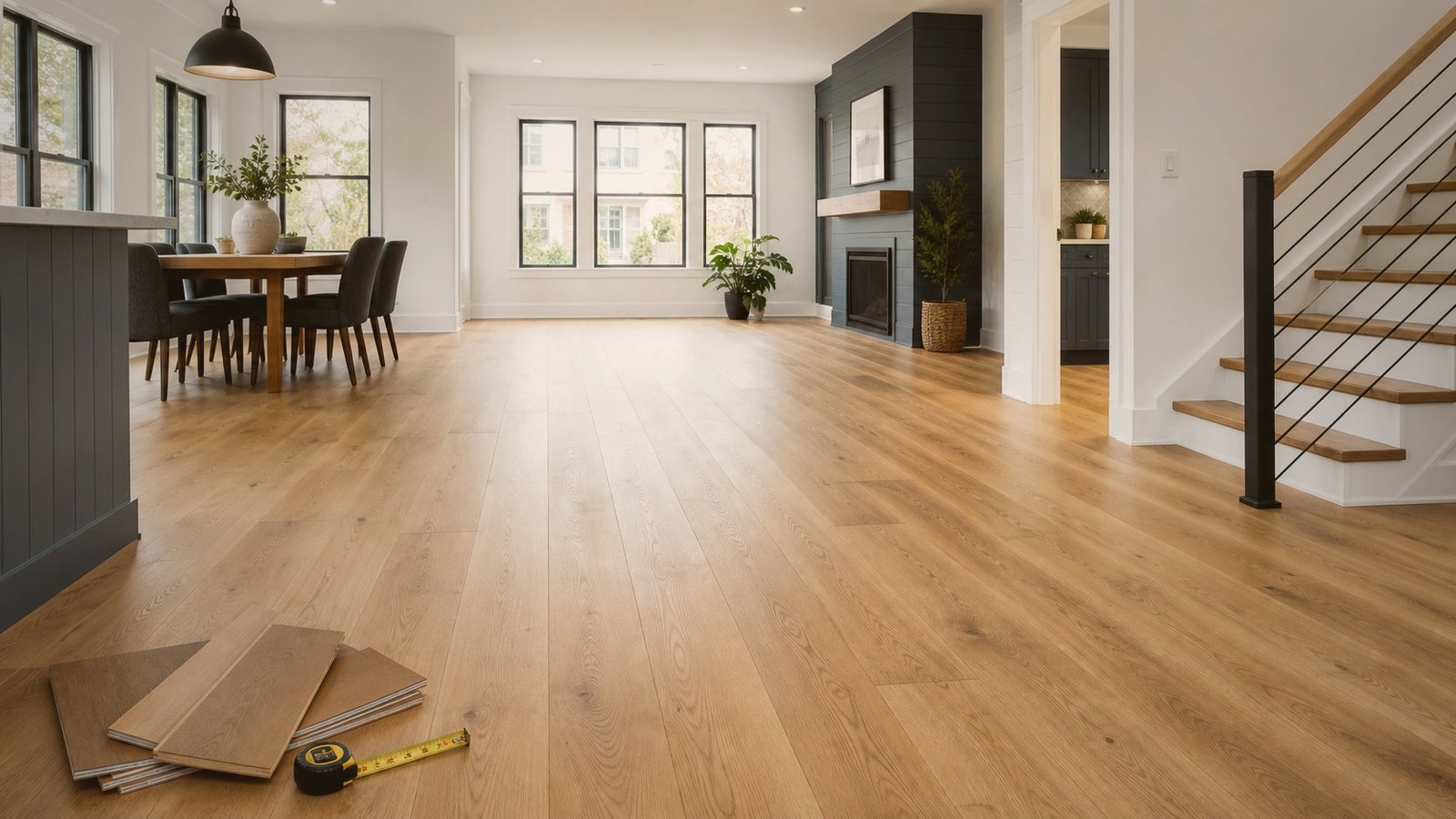
 Warm oak
Wood character, living rooms, and whole-home continuity.
Warm oak
Wood character, living rooms, and whole-home continuity.
Residential Flooring Contractors in Queens NY
BluRock Flooring Services
Residential Flooring Contractors in Queens NY
Compare hardwood, engineered wood, luxury vinyl plank, laminate, tile, carpet, stair runners, and refinishing with a contractor-led plan built around moisture, durability, comfort, budget, and clean installation details.
7material paths compared
50point planning score
6hue-coded project visuals
1room-by-room floor plan
Warm oak
Wood character, living rooms, and whole-home continuity.
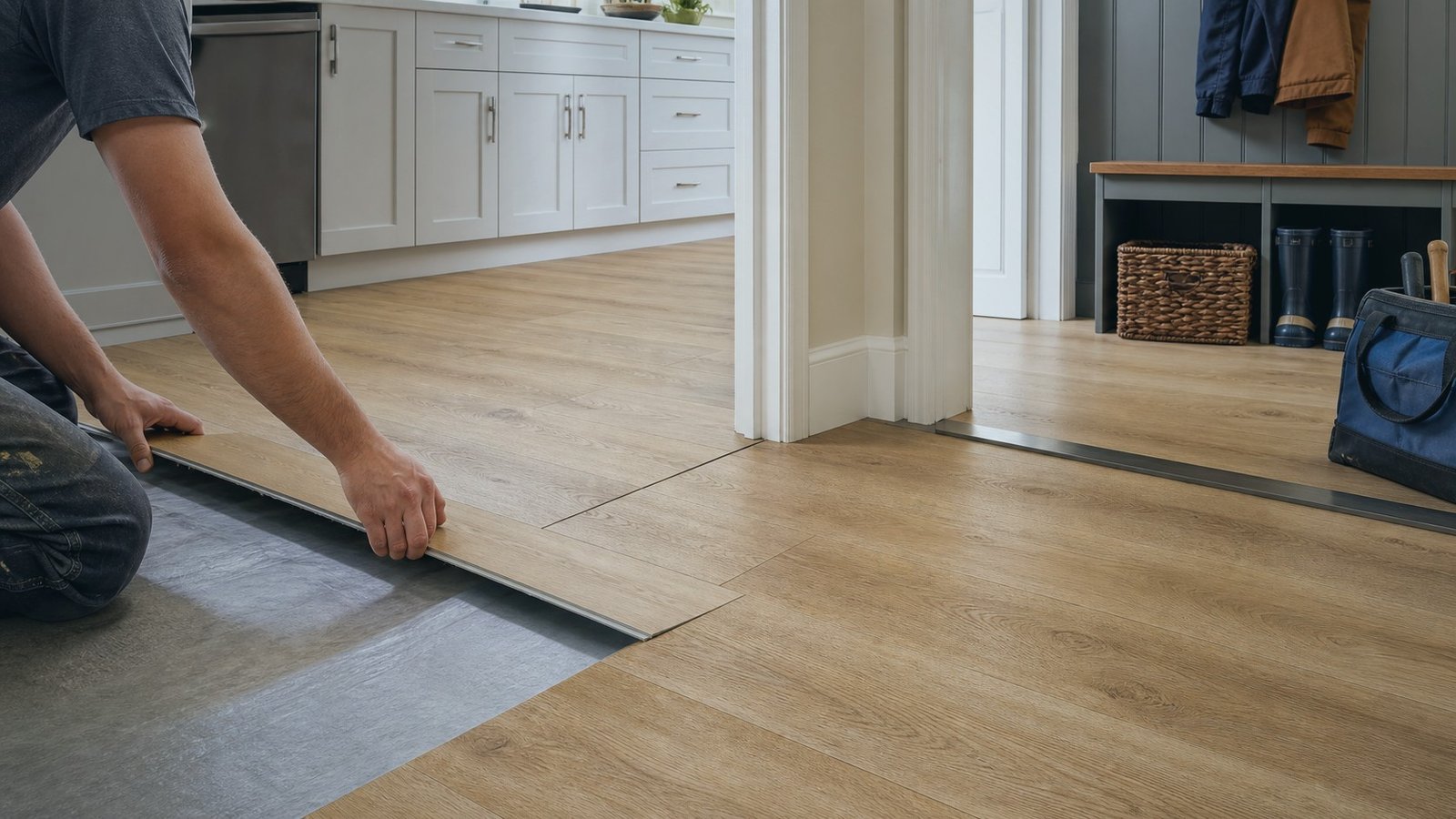 Cool waterproof
LVP and LVT for kitchens, basements, entries, and daily spills.
Cool waterproof
LVP and LVT for kitchens, basements, entries, and daily spills.
 Slate durability
Porcelain and ceramic tile for wet rooms and heavy wear.
Slate durability
Porcelain and ceramic tile for wet rooms and heavy wear.
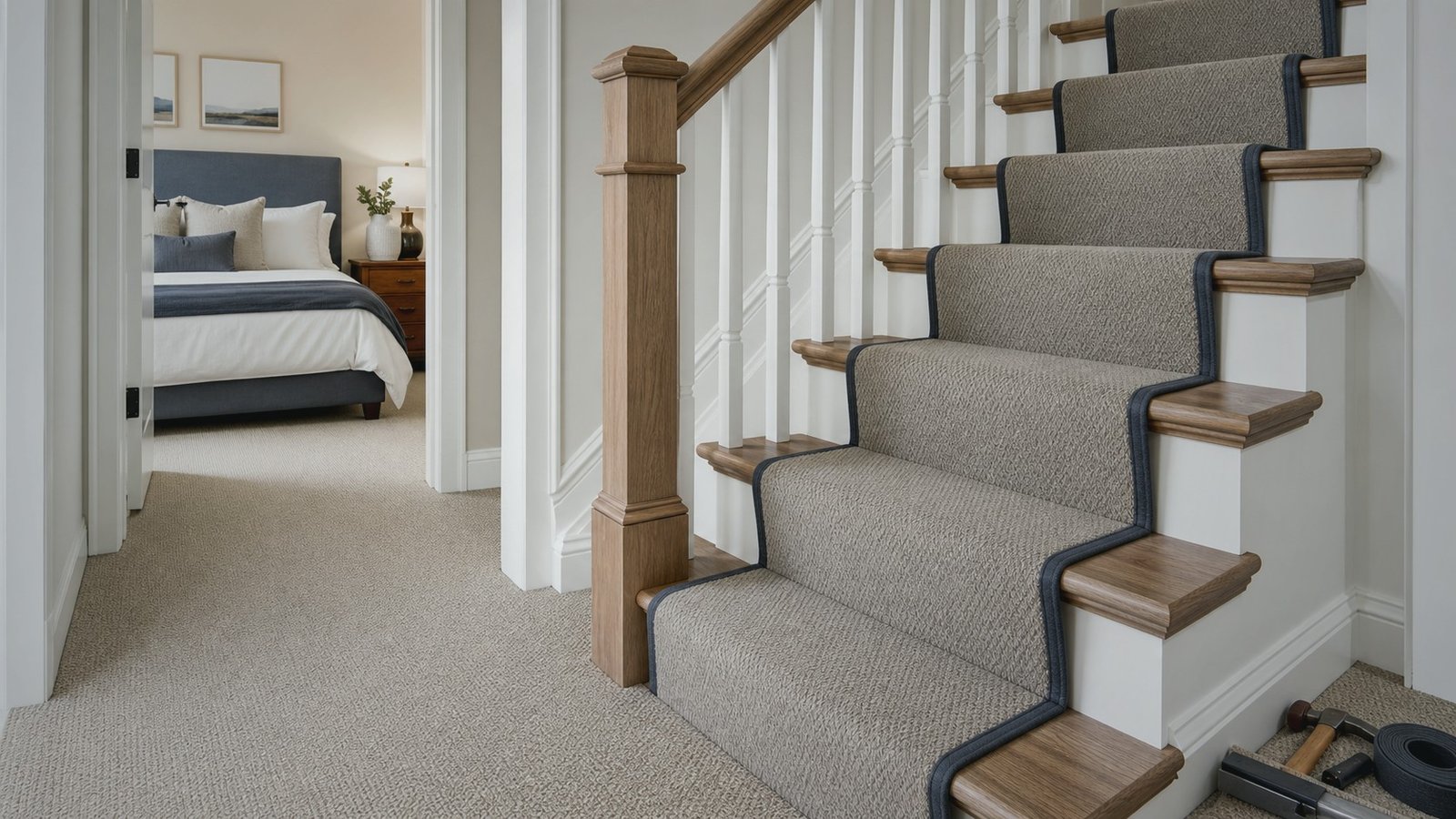 Soft comfort
Carpet, padding, and stair runners for quiet, warmer rooms.
Soft comfort
Carpet, padding, and stair runners for quiet, warmer rooms.
New Flooring Pros And Cons
Better floors start with the right material, not just the best-looking sample.
New flooring can make a home feel cleaner, brighter, quieter, and more cohesive. It can also solve cracked tile, damaged carpet, dated finishes, uneven transitions, pet wear, squeaks, old adhesive, and rooms that no longer match after renovations.
- Improves room appearance, resale presentation, and daily cleanability.
- Can address moisture, sound, comfort, and durability by room.
- May require demo, leveling, underlayment, trim, doors, or stair details.
- Product warranties depend on installation method and subfloor prep.
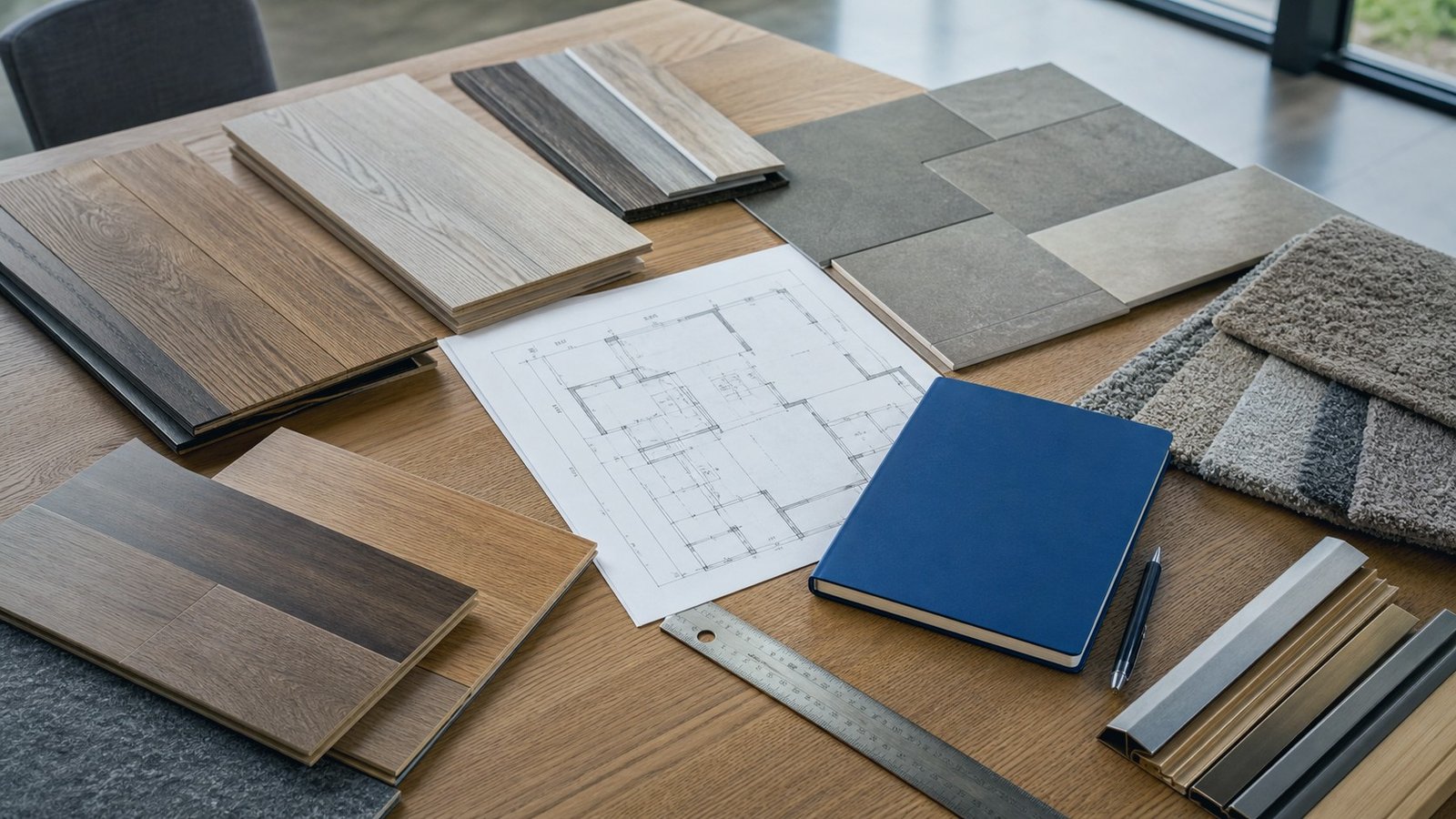
Material Options
Flooring types with the practical pros and cons homeowners should know.
Every flooring material can work beautifully in the right room. The risk comes from using the wrong floor over the wrong subfloor or in the wrong moisture condition.
Solid Hardwood
Natural wood with long-term character and the possibility of future sanding and refinishing.
Pros- Warm, premium look that ages well.
- Can often be refinished more than once.
- Strong choice for dry living rooms, dining rooms, and bedrooms.
- Sensitive to moisture, leaks, humidity swings, and basements.
- Needs acclimation, careful fastening, and subfloor control.
- Higher installed cost than many alternatives.
Engineered Wood
A real wood top layer over a stable core, often used when solid hardwood is not the best fit.
Pros- Better dimensional stability than solid wood.
- Good visual match for natural wood design goals.
- May suit condos and concrete-ready assemblies depending on product.
- Refinishing depth depends on veneer thickness.
- Water rating varies widely by collection.
- Premium lines can approach solid hardwood pricing.
Luxury Vinyl Plank and Tile
Waterproof or water-resistant resilient flooring in wood-look planks and stone-look tiles.
Pros- Strong for kitchens, entries, basements, laundry rooms, and rentals.
- Lower maintenance than natural wood or stone.
- Many click, glue-down, rigid core, and loose-lay options.
- Cannot be sanded or re-stained like hardwood.
- Telegraphs uneven subfloors if prep is skipped.
- Sun exposure and product quality can affect long-term look.
Laminate Flooring
A budget-conscious floating floor with a realistic print layer and durable wear surface.
Pros- Good value for dry rooms and fast visual updates.
- Scratch-resistant surfaces are common in better lines.
- Click-lock installation can reduce disruption.
- Water performance depends heavily on the product line.
- Damaged boards usually need replacement, not refinishing.
- Edges, transitions, and cuts matter in spill-prone rooms.
Porcelain and Ceramic Tile
Durable hard-surface flooring for bathrooms, entries, kitchens, and commercial wear.
Pros- Excellent water resistance and long service life.
- Strong for radiant heat, bathrooms, and high-traffic entries.
- Large-format, stone-look, and patterned options are available.
- Hard and colder underfoot without heat or rugs.
- Substrate, layout, waterproofing, and grout quality matter.
- Labor cost can be higher than floating floors.
Carpet and Stair Runners
Soft flooring for bedrooms, stairs, playrooms, and quieter living spaces.
Pros- Comfortable, warmer, and quieter underfoot.
- Stair runners improve grip and create a tailored finish.
- Many textures, fibers, pads, and binding styles are available.
- More vulnerable to stains and wear paths.
- Not ideal for wet basements or bathrooms.
- Fiber, pad, and installation quality control the final feel.
Data Analysis
Material scorecard for water, durability, maintenance, comfort, and budget control.
Scores are planning guidance on a 50-point scale. Final product selection should be checked against the exact manufacturer specification sheet, warranty, and room condition.
Overall Planning Fit
LVP / LVT45/50
Porcelain tile42/50
Laminate37/50
Engineered wood36/50
Solid hardwood31/50
Carpet31/50
Analysis weighting favors practical residential performance. A dry formal room may still favor hardwood; a wet entry may favor tile or LVP.
Best-Fit Summary
| Need | Best Starting Point |
|---|---|
| Water resistance | LVP/LVT or porcelain tile |
| Natural character | Hardwood or engineered wood |
| Budget control | LVP, laminate, or carpet |
| Comfort and sound | Carpet, runner, or padded resilient floor |
| Existing wood refresh | Hardwood refinishing if the wear layer allows |
Budget Planning Chart
Installed price bands help set expectations before material selection.
These ranges are planning-level bands, not quotes. Demo, stairs, furniture, leveling, moisture mitigation, underlayment, trim, freight, and selected product line can shift pricing.
LVP / LVT$4-$12 / sf
Laminate$4-$14 / sf
Carpet / runner$5-$13 / sf
Hardwood refinishing$5-$10 / sf
Engineered wood$8-$18 / sf
Porcelain tile$10-$25 / sf
Brand Comparison
Flooring brands and product families worth comparing before you buy.
BluRock can help compare brand options against your actual room conditions. The best pick is the product line whose construction, rating, trim system, and installation method fit the job.
92LVP Range
COREtec
Known for waterproof luxury vinyl plank and tile with wood and stone looks, comfort, easy cleaning, and broad style availability.
- Pros
- Strong waterproof positioning, family-friendly durability, authentic looks.
- Cons
- Premium collections can cost more, and floating floors still need flat subfloors.
90LVP / Carpet
Shaw Floors
Broad vinyl, carpet, hardwood, laminate, and tile catalog with many colors, shades, looks, and installation methods.
- Pros
- Large selection, useful filters, wide price spread, many design directions.
- Cons
- Material pricing excludes installation and local retailer availability varies.
89Tile / LVP
MSI Everlife
Waterproof LVP and LVT lines with rigid core, dryback, loose lay, CrystaLux wear layers, and matching trim options.
- Pros
- Many wear-layer choices, strong waterproof story, useful wood and stone looks.
- Cons
- Collection specs vary, so thickness, wear layer, and trim should be checked before ordering.
86Laminate
Pergo
A familiar laminate and vinyl brand with durability-focused product filters such as scratch resistant and waterproof options.
- Pros
- Trusted name, sample-friendly shopping path, good fit for active homes.
- Cons
- Water protection depends on the exact product and edge/transition installation.
84Laminate / LVP
Mohawk
A major flooring manufacturer commonly compared for laminate, resilient, carpet, and wood-look product families.
- Pros
- Broad distribution, realistic wood looks, many residential performance tiers.
- Cons
- Exact RevWood, SolidTech, or carpet specs should be verified by collection and retailer.
83Tile
Daltile, Marazzi, and Tile Lines
Porcelain and ceramic brands are strong candidates for bathrooms, entries, kitchens, and commercial-grade wear areas.
- Pros
- Long service life, many formats, strong water and scratch resistance.
- Cons
- Installation quality, substrate prep, grout, and layout drive the final result.
Visual Flooring Guide
Six project visuals, each hue-coded by flooring function.
The page image set uses warm, cool, slate, golden, sage, and balanced blue hues so visitors can quickly understand which flooring category each visual supports.
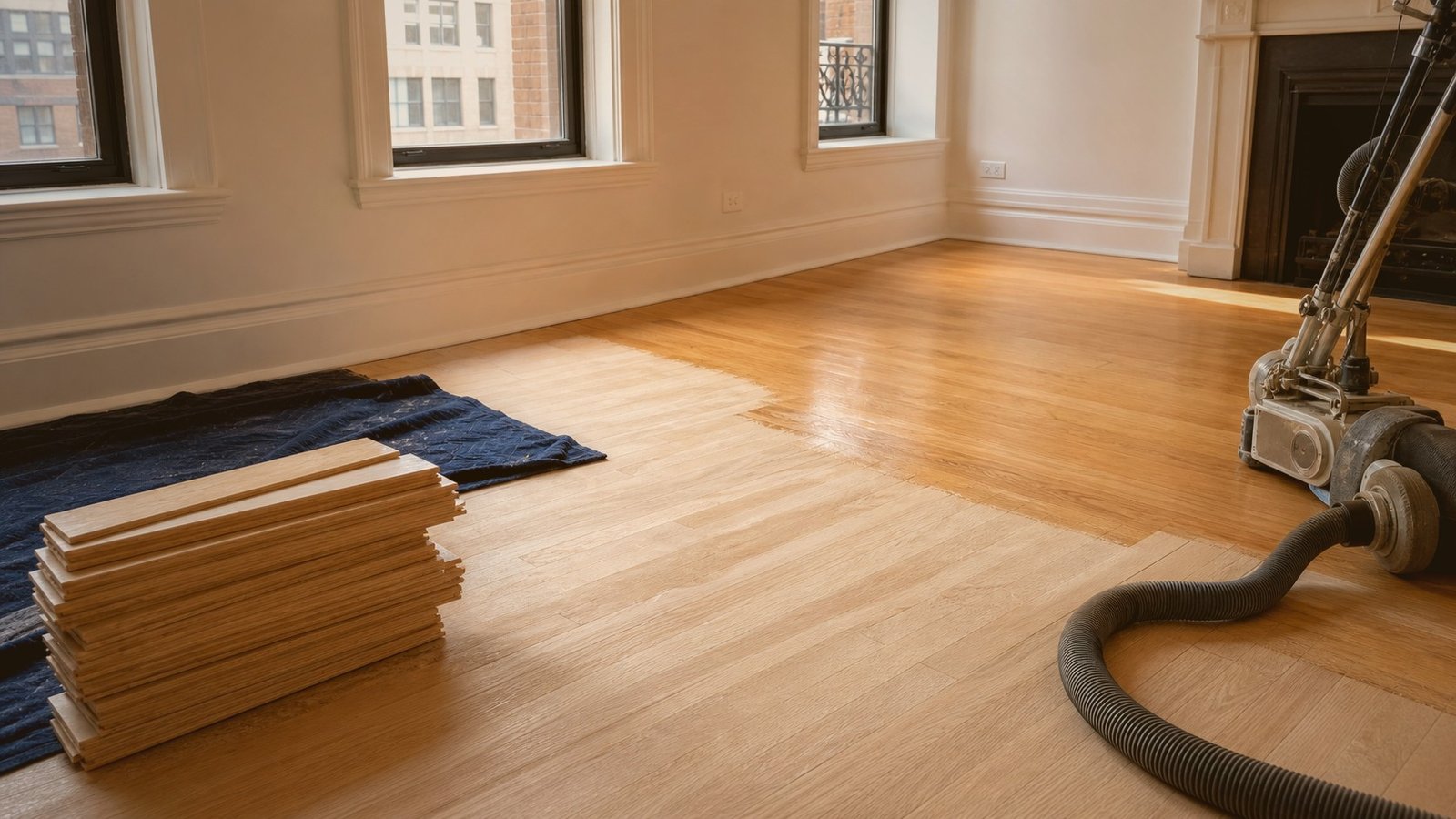
Installation Process
A cleaner flooring project depends on planning the parts people usually miss.
Flooring is not just the finish material. Subfloor flatness, moisture, transitions, trim, door clearances, and stair details shape the final result.
Consult
Review rooms, use patterns, moisture concerns, pets, stairs, and budget.
Compare
Evaluate samples, brands, water ratings, wear layers, color, and trim availability.
Prepare
Handle demo, subfloor review, leveling, underlayment, layout, and delivery timing.
Install
Install flooring, transitions, base details, stair edges, cuts, and clean field lines.
Finish
Complete touchups, walkthrough, care guidance, and remaining project notes.
Flooring FAQ
Common questions before replacing floors.
These answers help narrow the decision before an on-site review confirms product compatibility and installation details.
What is the best flooring for kitchens, bathrooms, and basements?
Luxury vinyl plank, luxury vinyl tile, porcelain tile, and ceramic tile are usually the first materials to compare for moisture-prone rooms. The best choice depends on subfloor condition, desired feel underfoot, layout, and budget.
Is hardwood still worth considering?
Yes, especially in dry living areas where natural wood character matters. Solid hardwood and some engineered wood floors can be excellent choices, but they need proper acclimation, moisture control, and installation planning.
Should I refinish existing hardwood or replace it?
Refinishing can be a smart option when the boards are stable and have enough usable wear layer. Replacement may be better when there is severe water damage, thin veneer, structural movement, or a layout change that requires new material.
Which brands should I compare?
Commonly compared options include Shaw Floors, COREtec, MSI Everlife, Pergo, Mohawk, Daltile, Marazzi, and other supplier-available lines. Compare exact product specs rather than brand names alone.
What affects flooring price most?
Product choice, square footage, demolition, disposal, subfloor flattening, underlayment, moisture mitigation, stairs, trim, transitions, furniture handling, and jobsite access all affect the final price.
Plan The Whole Renovation
Related BluRock services for rooms getting new floors.
Flooring often works best when demolition, cabinetry, waterproofing, trim, and finish transitions are coordinated with the rest of the room.
Schedule A Flooring Consultation
Ready to compare flooring options for your home or property?
Contact BluRock Services to plan hardwood, engineered wood, luxury vinyl plank, laminate, tile, carpet, stair runner, or refinishing work with a practical room-by-room approach.
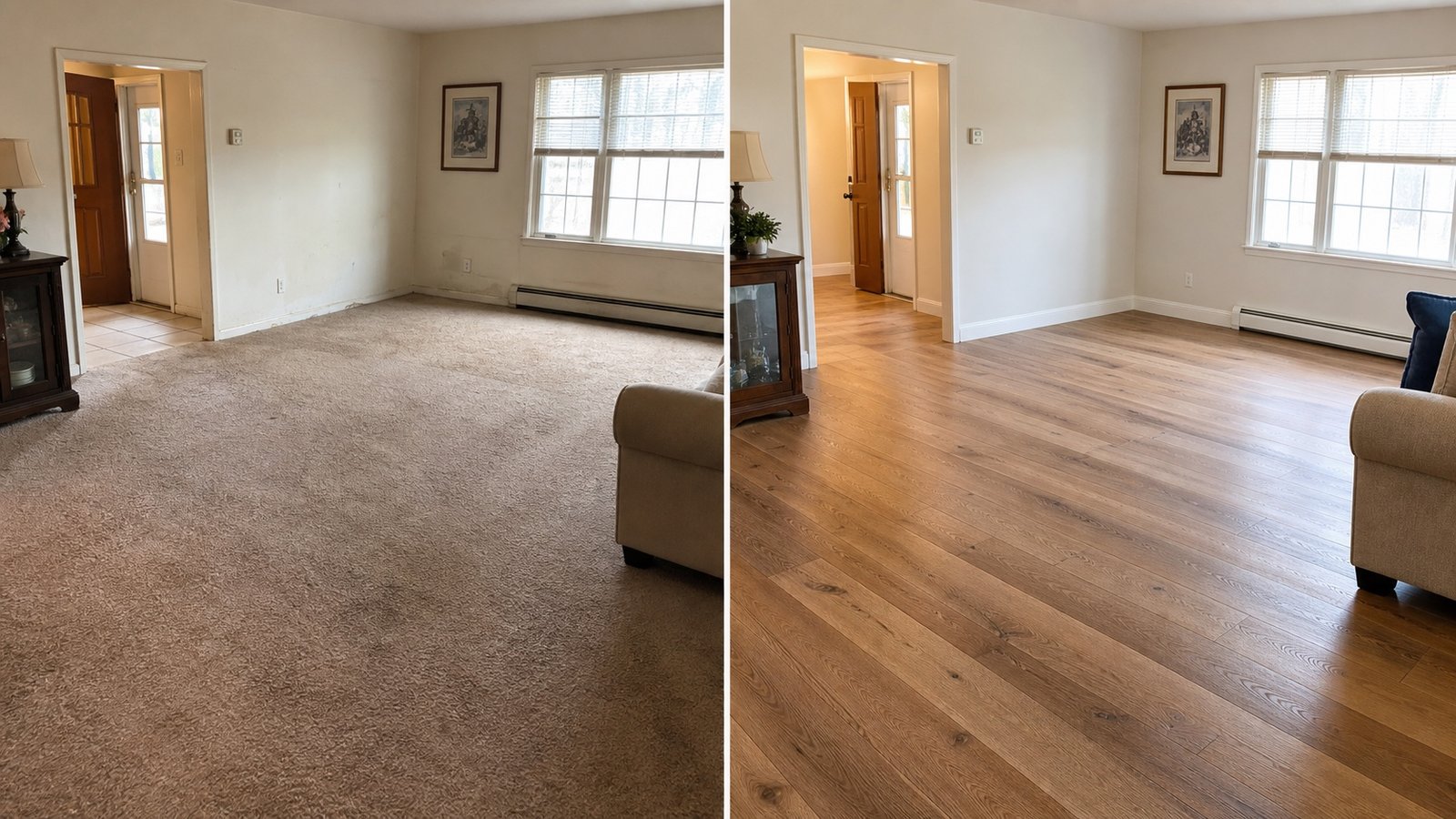
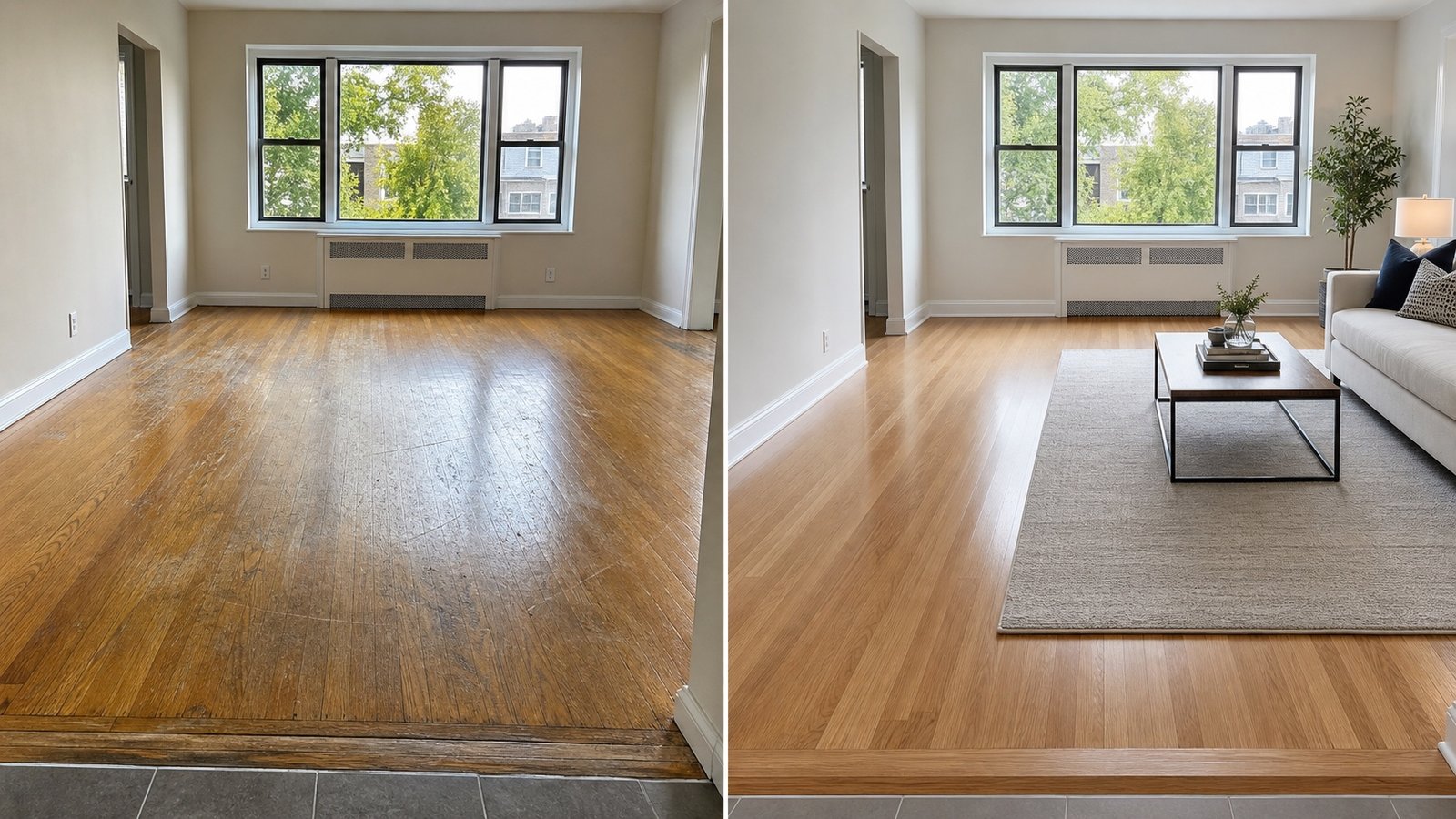
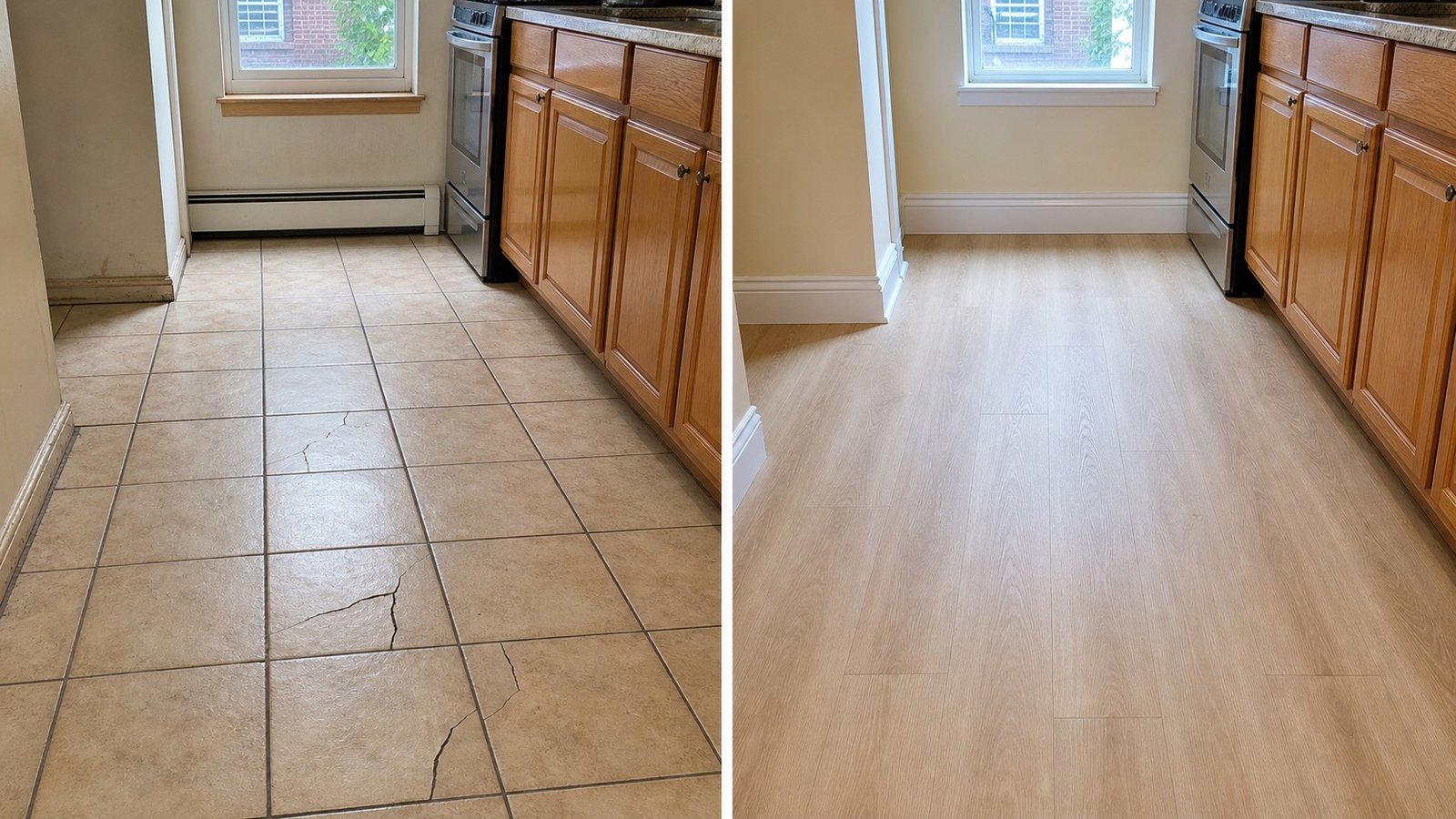
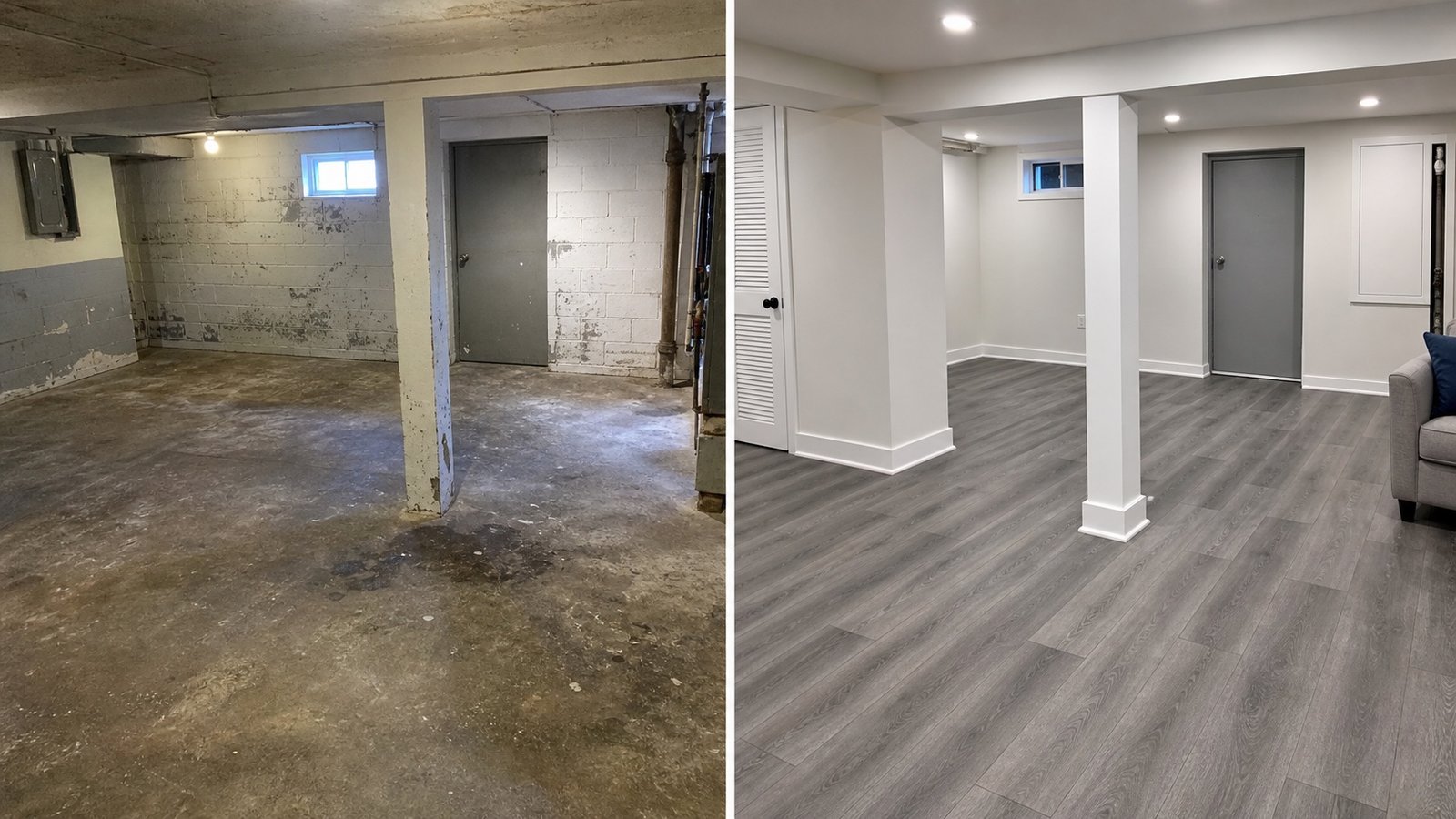
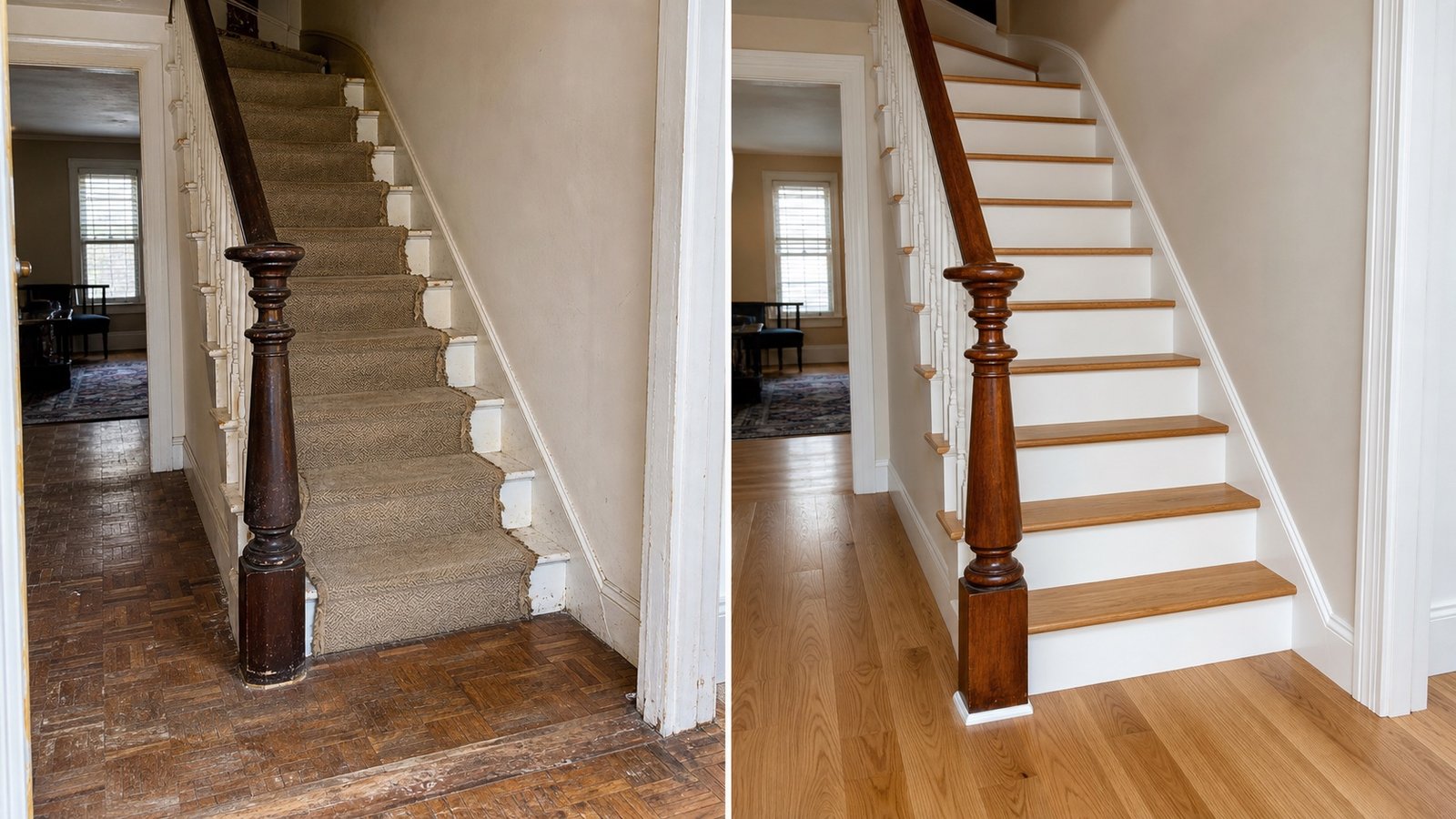
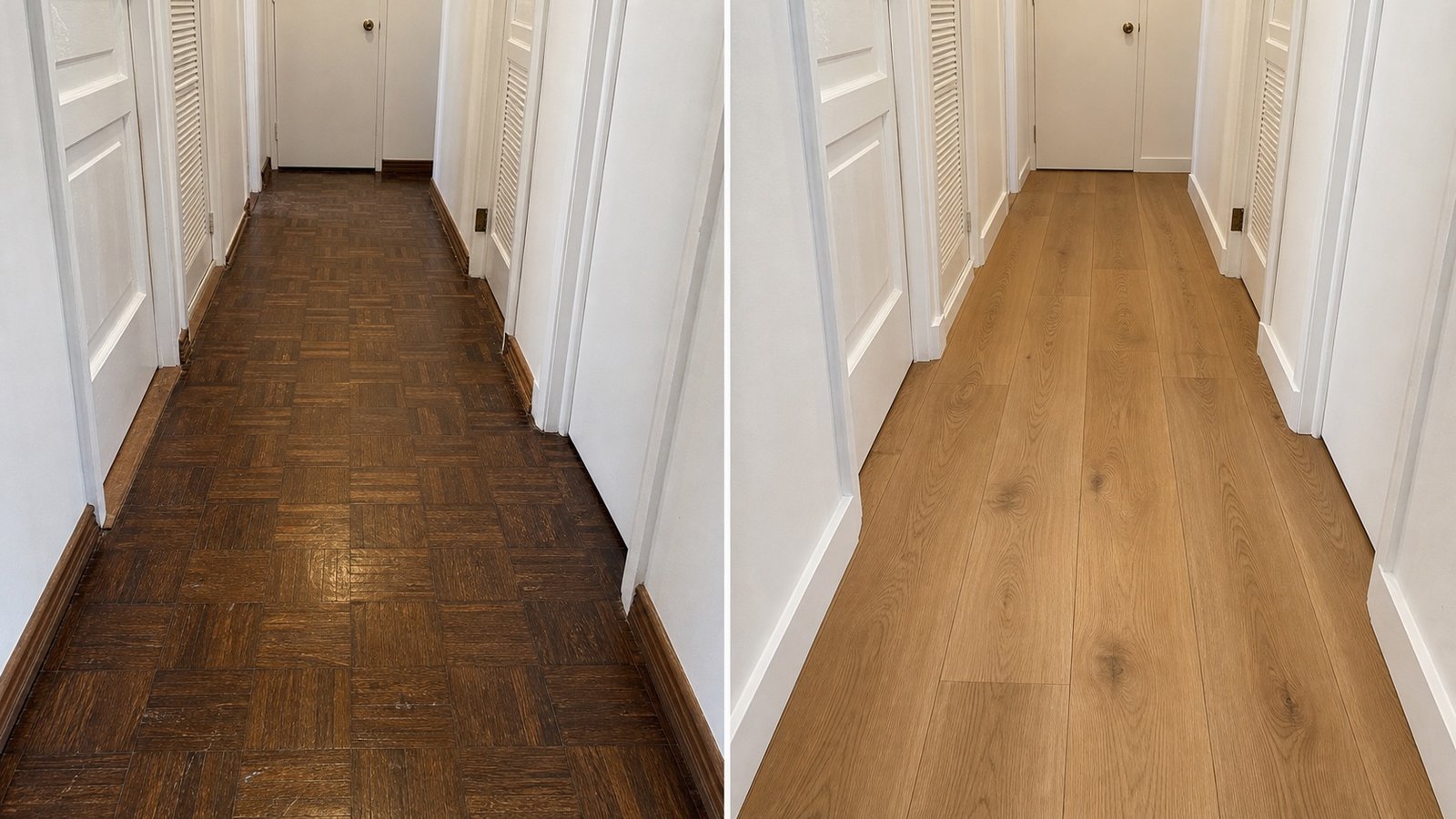
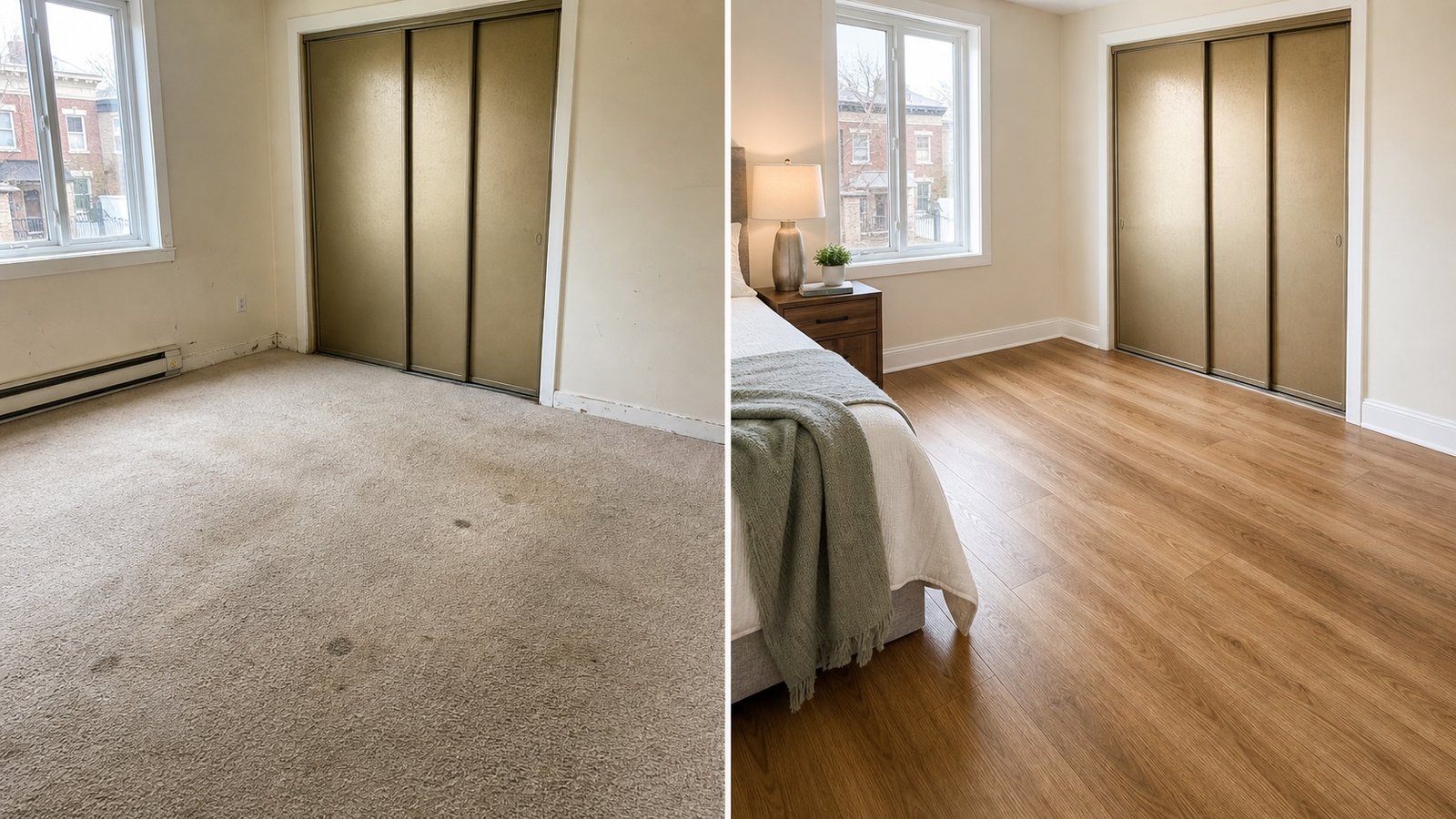
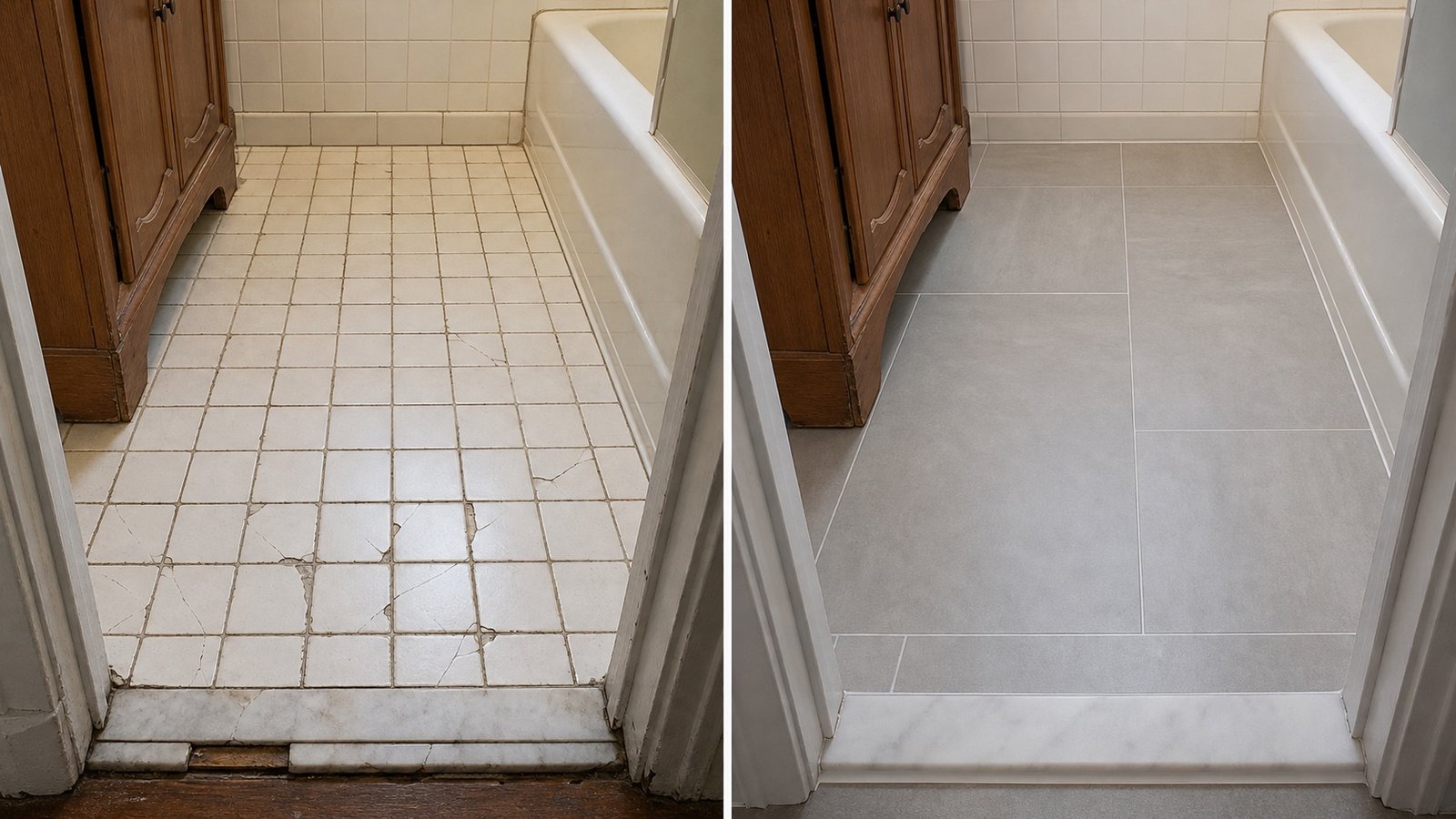
Before & After Projects
Flooring Before and After Projects
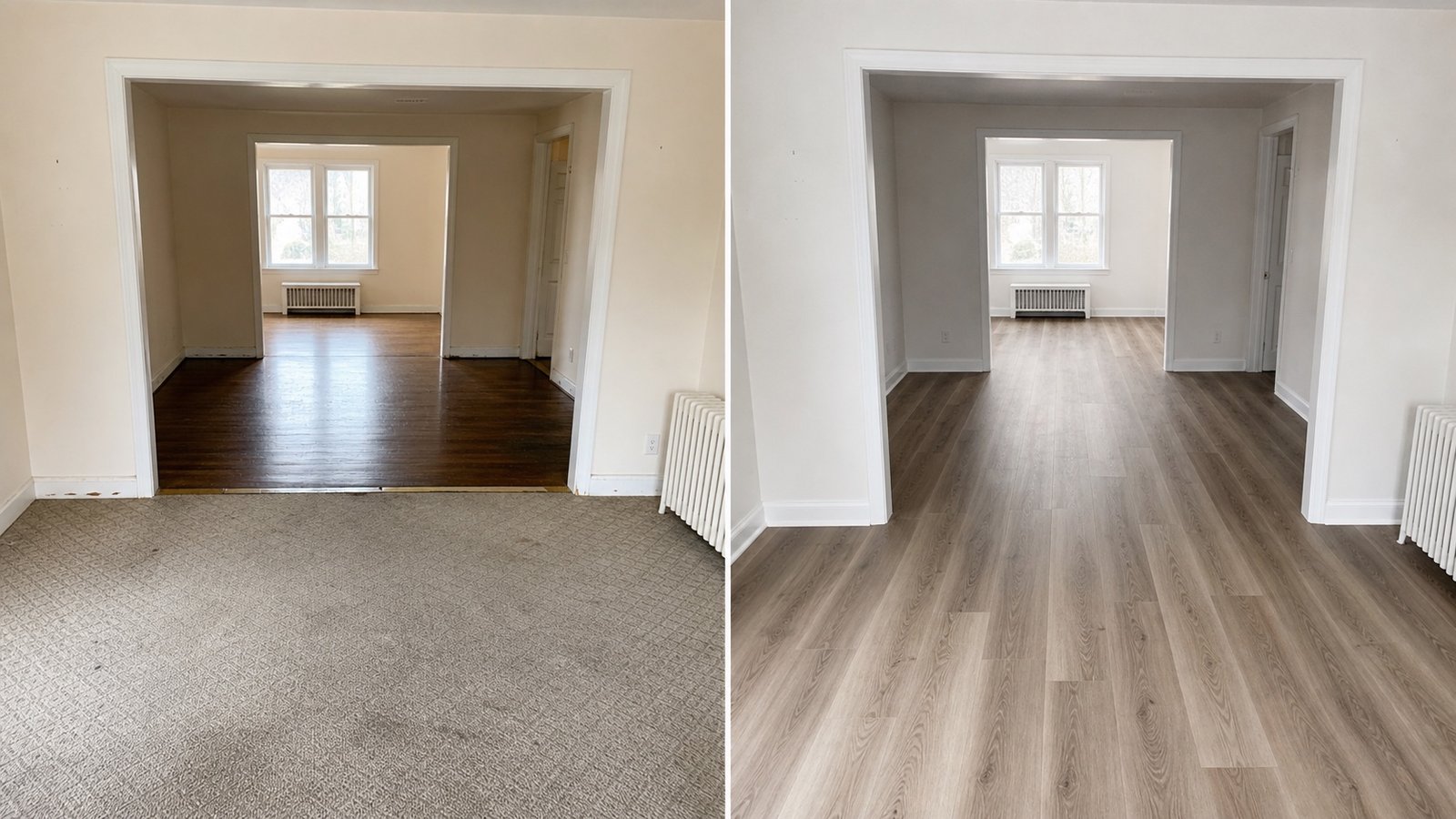
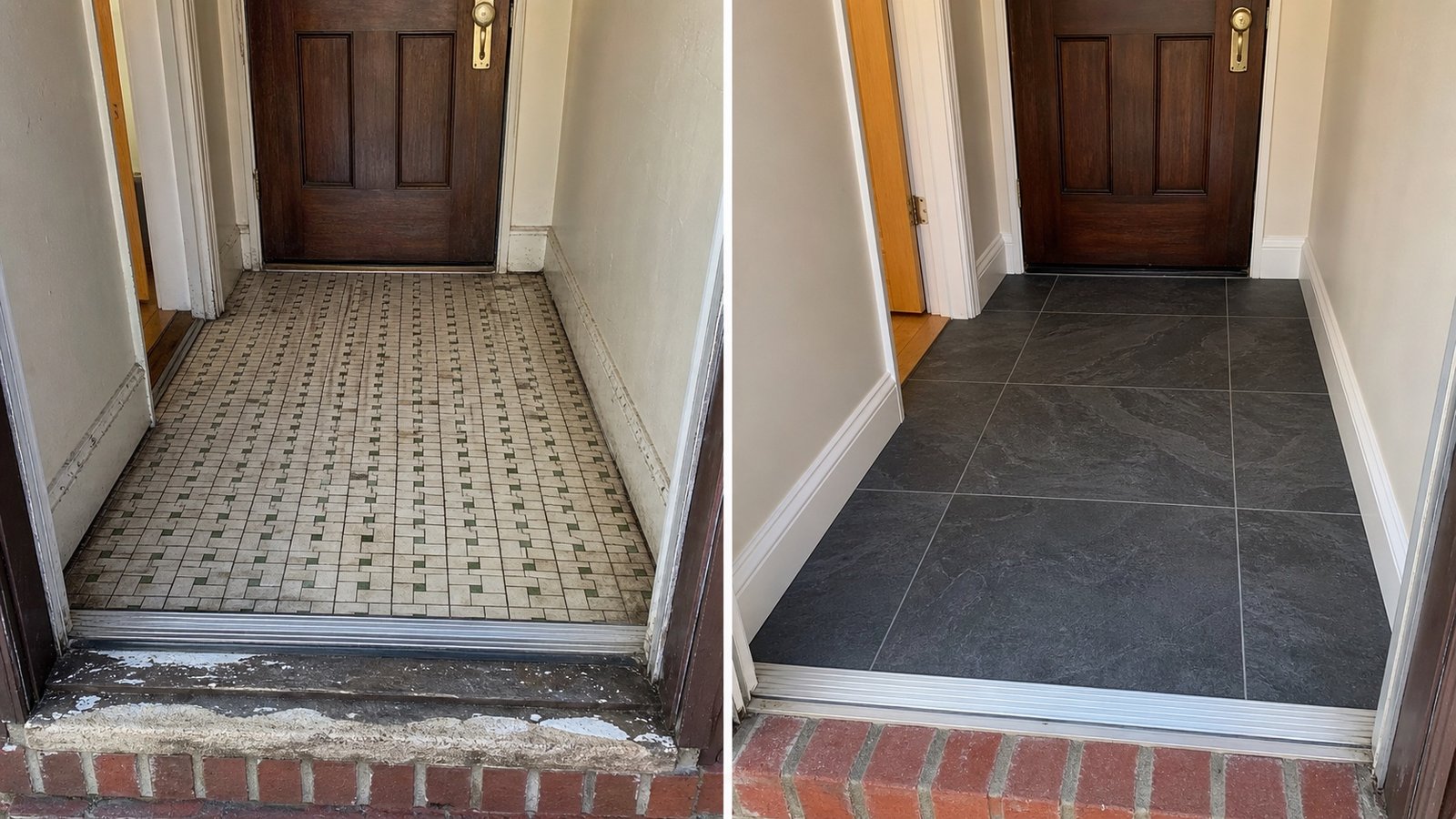
Browse flooring transformations including plank flooring, hardwood refinishing, tile, stairs, and entryway upgrades.