

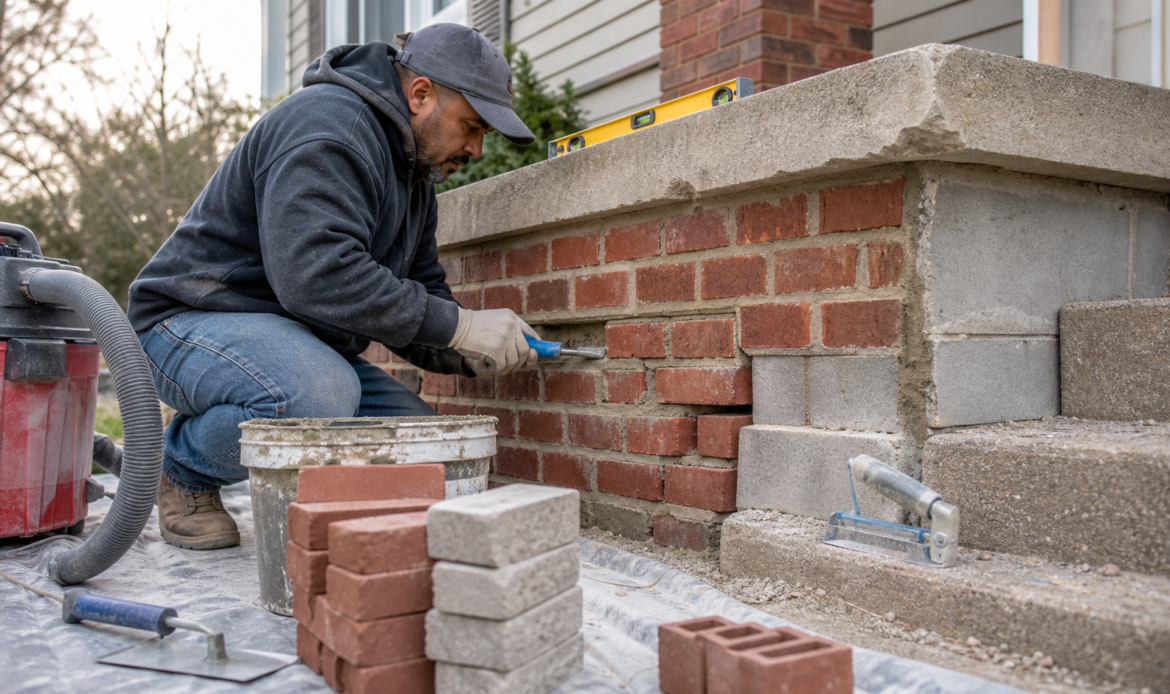
Masonry problems often begin quietly. A little mortar loss, a step that feels uneven, a concrete edge that flakes, or a water stain near a wall may not seem urgent at first. Over time, those signs can point to larger maintenance, drainage, or structural questions.
This guide helps Queens property owners know what to document before contacting concrete and masonry contractors. It is not a structural diagnosis. Site-specific conditions need professional review.
Start by documenting visible masonry changes
Take clear photos of brick, concrete, mortar joints, steps, retaining walls, patios, driveways, foundation areas, drainage paths, and nearby interior stains. Record when the issue appeared and whether it worsens after rain, freezing weather, heavy use, or nearby exterior work.
A pattern is often more useful than one close-up. Include wide photos that show grade, gutters, downspouts, walkways, and adjacent surfaces.
Brick and mortar signs that need attention
Brick repair Queens conversations often begin with loose mortar, stair-step cracking, bulging, leaning, staining, missing bricks, spalled brick faces, or prior patching that has separated from the wall.
These signs do not all mean the same thing. Some may be surface maintenance; others may require closer review of movement, moisture, support, or drainage. Ask the contractor to explain what is visible and what cannot be confirmed from the surface alone.
Planning notes
- Mortar joints that are recessed, cracked, loose, or missing
- Brick faces that flake, break, or crumble
- Cracks that travel through brick, mortar, corners, steps, or openings
- Bulging, leaning, separation, or recurring patched areas
Concrete symptoms to review before they spread
A concrete contractor Queens review may be needed when steps, walks, patios, driveways, curbs, slabs, or foundation-adjacent areas show cracking, settlement, trip hazards, scaling, spalling, exposed aggregate, or ponding water.
Not every crack has the same meaning. Width, movement, location, drainage, base conditions, freeze-thaw exposure, and load all matter. A written scope should say whether the work is a repair, replacement, patch, coating, drainage correction, or another approach.
Drainage is often part of the masonry conversation
Water can turn a small masonry concern into a recurring one. Downspouts that discharge at steps, grade that slopes toward the building, clogged drains, ponding patios, missing splash blocks, and poorly directed runoff can all contribute to deterioration.
Before requesting masonry repair, note where water collects and how it leaves the property. Ask whether the visible repair should be paired with drainage adjustments so the same issue does not return immediately.
What to ask masonry contractors in Queens NY
Ask what conditions were observed, what work is included, what is excluded, how matching materials will be handled, whether drainage is part of the scope, what access or protection is needed, and what concealed conditions could change the work.
For walls, foundations, retaining walls, or movement concerns, ask whether additional professional review is needed before repair work is defined.
Compare masonry proposals by repair logic
A good proposal should connect the visible condition to the proposed repair. It should also make clear whether the contractor is repointing, patching, rebuilding, replacing concrete, correcting drainage, protecting adjacent surfaces, or coordinating a deeper review.
If you are seeing brick, concrete, or drainage concerns in Queens, contact BluRock Services to discuss the property conditions and request a quote conversation.
Related BluRock planning links
Frequently asked questions
What are early signs masonry repair may be needed?
Loose mortar, cracking, spalling, bulging, uneven steps, staining, recurring patches, ponding water, and drainage toward the building are common signs to document before requesting a professional review.
Does cracked brick always mean a structural problem?
No. Cracking can have different causes and levels of concern. A site-specific review is needed before deciding whether the issue is surface repair, movement, drainage, support, or something else.
Why does drainage matter for masonry repair?
Water can weaken mortar, damage concrete surfaces, increase freeze-thaw stress, and make repairs fail sooner. Downspouts, grading, drains, and ponding areas should be part of the conversation.
How should I compare masonry contractors Queens NY proposals?
Compare observed conditions, repair method, material matching, drainage assumptions, access, protection, exclusions, concealed-condition procedures, and whether additional professional review is recommended.
Can BluRock discuss brick repair Queens and concrete repair together?
BluRock Services lists concrete and masonry services, so related brick, concrete, drainage, steps, walls, and foundation-adjacent concerns can be discussed together during scope planning.