

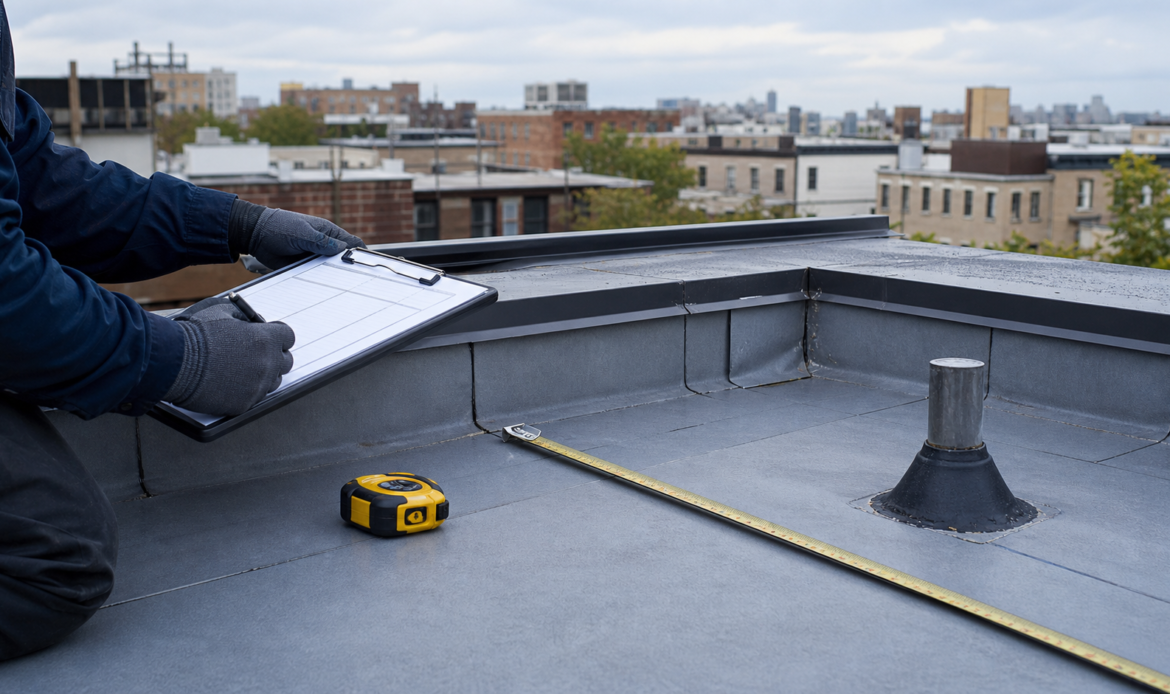
A roof concern can show up as a leak, stain, lifted shingle, soft area, ponding water, or a repair that keeps returning. The useful next step is not to choose a repair or replacement from the ground. It is to document what changed and prepare for an inspection that connects the visible symptom to the roof system, access, drainage, flashing, and the conditions that need field review.
BluRock Services coordinates residential roofing work for Queens homeowners. Review BluRock roofing services for repair, replacement, flashing, ventilation, gutters, and related roofline work.
Start with the symptom, not the assumed fix
The place where water appears inside is not always the place where it enters the roof. Record the room location, date, weather conditions, and any visible exterior change. If it is safe to do so, take photos from accessible areas without walking on the roof or disturbing materials.
- Interior stains or drips and when they first appeared
- Visible loose, cracked, missing, blistered, or lifted materials
- Conditions near chimneys, skylights, vents, gutters, parapets, or roof edges
- Ponding water and known prior repairs
- Access limits, occupied spaces, or building rules
When a roof repair may be the right conversation
A targeted repair may be worth evaluating when the concern appears limited and the surrounding roof remains serviceable. The inspection should still consider roof age, previous work, adjacent materials, drainage, and whether moisture or other conditions extend beyond what is visible.
Ask the contractor to explain the work area, the observed condition, what the repair is intended to address, and what it cannot confirm without opening materials.
When roof replacement deserves a closer look
Replacement can become the more practical path when failures are widespread, repeat across multiple areas, or reflect a roof system that no longer has a reliable repair boundary. Repeated patches, broad surface deterioration, chronic drainage concerns, deteriorated flashings, or deck-related questions can all change the conversation. A field review should compare current condition, access, roof geometry, drainage, and the risks of another limited repair.
Why Queens roof planning needs a property-specific review
Queens roofs vary widely. A detached shingle roof, an attached home with a low-slope section, a rowhouse parapet, and a property with restricted access all need different planning. Access, protection, shared walls, drainage, gutters, skylights, ventilation, and the work below the roof can affect the practical sequence.
Where exterior interfaces are involved, coordinate related work such as siding or concrete and masonry instead of treating water-shedding details as unrelated trades.
What to compare in roofing proposals
- Work area and observed condition: which sections or details are included?
- Preparation and protection: how are access, occupied spaces, and debris handled?
- Roof-system details: what assumptions apply to underlayment, flashing, penetrations, ventilation, drainage, edges, and gutters?
- Removal and substrate review: how are existing layers, deck conditions, and disposal addressed?
- Unknown conditions: what happens if tear-off exposes wet or damaged materials?
- Approvals and closeout: which project-specific filing, permit, inspection, cleanup, and turnover responsibilities are included?
Permit needs depend on the exact scope and address. Do not assume a small-looking repair is permit-free. Review BluRock’s permits and filings service for project-specific planning questions.
FAQ
Can a roof leak be repaired without replacing the entire roof?
Sometimes. A localized issue may support a focused repair when the surrounding roof remains serviceable, but the system, drainage, prior repairs, adjacent materials, and concealed conditions need review first.
What should I photograph before a roofing consultation?
Photograph accessible interior stains, exterior areas visible from the ground, gutters, roof edges, flashing concerns, ponding water, and prior repair records. Do not climb onto the roof to collect photos.
Does a flat roof leak always mean the whole roof needs replacement?
No. Seams, drainage, edges, penetrations, prior patching, and concealed conditions determine whether a focused repair is sensible. An on-site review is needed to compare options.
Do roof repairs in Queens need a permit?
Requirements depend on the work and address. Confirm the current project-specific path before work begins.
What should a roof replacement proposal explain?
It should identify the roof area, removal assumptions, deck-review approach, water-shedding layers, flashing and penetration details, ventilation or drainage considerations, access, disposal, exclusions, and how discovered conditions will be handled.