

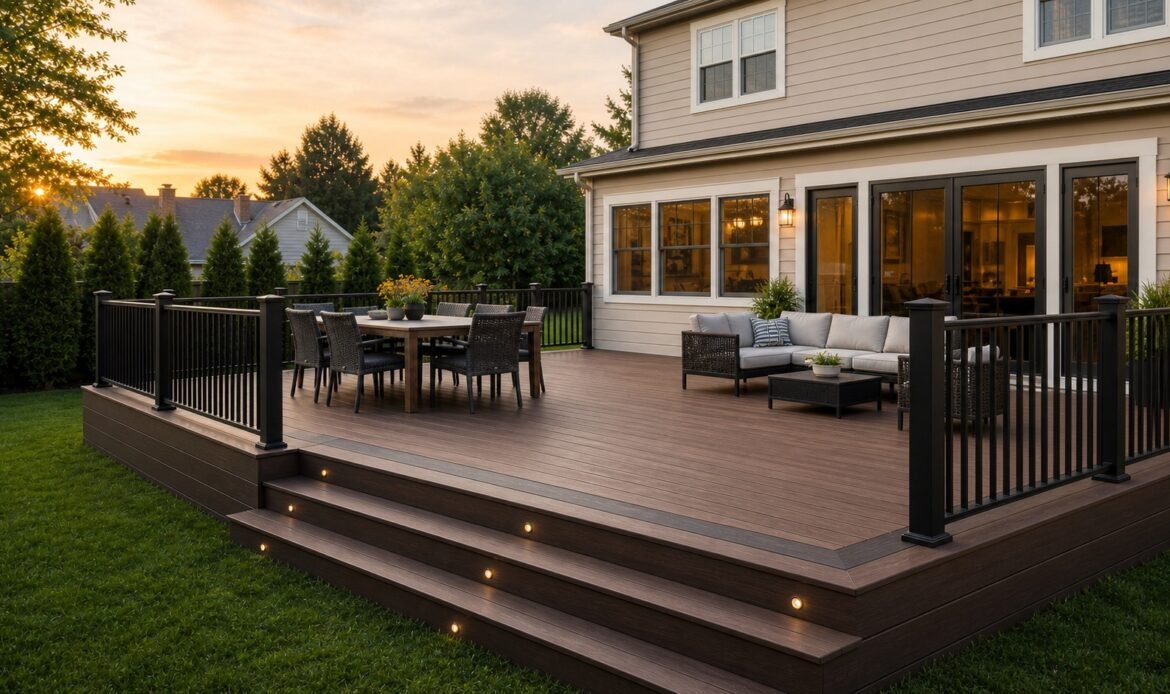
Queens Deck Planning Guide
Compare material categories, then review the complete deck system before a final product or quote is chosen.
Choosing a deck board is not only a color decision. The material affects how the surface looks and feels, how it is cleaned, how details are built, and what a contractor needs to review before preparing a useful quote.
For Queens homeowners, landlords, and property managers, the right choice depends on the property and the way the deck will be used. This guide compares wood, composite, and PVC as planning categories. Product lines vary, so samples, manufacturer instructions, and an on-site review should guide the final selection.
Start With the Deck’s Use and Exposure
Before comparing materials, write down what the finished deck needs to do. Is it mainly for dining, grilling, quiet seating, entertaining, pool access, or a path between the home and yard? Will children, pets, tenants, or frequent guests use it? Do you expect furniture, planters, privacy screens, lighting, or built-in features?
Exposure matters too. Note direct sun, rainwater movement, debris, and snow collection. Every deck surface can become hot in direct sun, and color, exposure, airflow, and the exact product can affect comfort. Ask to see physical samples and product-specific information instead of relying on a blanket material claim.
Queens properties can include narrow side yards, attached homes, rooftops, multifamily buildings, and managed properties with delivery or work-hour rules. Identify those access constraints early.
Wood
Natural grain and refinishing flexibility, paired with a product-appropriate cleaning and finish plan.
Composite
Consistent colors and less recurring finish work, with product-line-specific fastening and framing details.
PVC
A distinct low-maintenance category worth comparing for moisture exposure, appearance, and system requirements.
Wood Decking: Natural Character and Ongoing Care
Wood remains a practical choice for owners who value natural grain and the ability to change the finish over time. Pressure-treated lumber, cedar, hardwoods, and other options differ in appearance, availability, installation requirements, and care.
The tradeoff is maintenance. Wood may need periodic cleaning and a product-appropriate finish, stain, or sealer. Moisture, shade, debris, fasteners, end cuts, and ventilation can influence how the surface ages.
Wood can be worth considering when natural variation is a priority, the owner accepts periodic care, refinishing flexibility matters, or individual-board repairability is important. Compare preparation, fastening, finishing, and future care—not only purchase price.
Composite Decking: Consistent Appearance With Less Finish Work
Composite decking is commonly made from a combination of wood fiber and plastic, often with a protective cap. It is available in many colors, grain patterns, and board profiles. Compared with many wood systems, it typically avoids recurring staining or painting, although it still needs cleaning and product-specific care.
Composite is not one uniform material. Product lines can differ in appearance, capping, slip characteristics, scratch visibility, heat response, span requirements, approved fasteners, and installation details. Bring shortlisted samples outside and view them beside the home’s siding, masonry, and trim.
Ask how the selected board line affects joist spacing, stair details, fascia, ventilation, and product documentation.
PVC Decking: A Distinct Low-Maintenance Category
PVC decking is made without the wood-fiber core used in conventional wood-plastic composite boards. That difference can make PVC worth considering in wet or moisture-prone settings, but it does not make every PVC product the right answer for every deck.
The exact product can affect heat, expansion and contraction, fastening, framing requirements, scratch visibility, and edge or stair finishing. Manufacturer instructions matter.
A PVC proposal should identify the manufacturer, product line, board profile, color, fastening method, and accessory pieces. Avoid treating “PVC” and “composite” as interchangeable quote descriptions.
Compare the Whole Deck System, Not Just the Boards
The surface is only one part of the project. Existing framing, ledger attachment, footings, flashing, drainage, joist spacing, stairs, railings, fascia, fasteners, and transitions all affect the build.
If an old surface is being replaced, do not assume the framing can be reused. A contractor should review visible condition, spacing, alignment, connections, corrosion, moisture exposure, and the requirements of the proposed board system. Concealed conditions may remain unknown until materials are removed.
For a new deck, board direction, picture-frame borders, stair locations, railing posts, grill zones, furniture placement, privacy elements, and lighting can all change framing or blocking needs.
Questions to Ask About Drainage, Flashing, and Adjacent Work
Water management deserves its own conversation. Ask how the design handles the connection to the building, flashing, gaps, drainage paths, runoff below or beside the deck, and areas where debris can collect. A board that resists moisture does not correct an underlying drainage or structural problem.
Deck projects can also touch doors, siding, masonry, steps, patios, and grading. If those areas are included, make sure the proposal explains where the deck work ends and adjacent work begins. BluRock’s concrete and masonry services may be relevant to landings, steps, footings, or adjoining hardscape, subject to a site-specific review.
Local Planning for Queens Properties
A detached home may have yard access that an attached property does not. A rooftop or multifamily setting can add building rules, delivery limits, protection requirements, and coordination with occupants. A managed building may require documentation or approvals before work begins.
Permit and code questions depend on the address, scope, structure, and applicable authority. Ask which details need review and whether BluRock’s permit and filing services are relevant.
How to Compare Deck Quotes Fairly
A low total is not useful if the proposals describe different systems. Ask each contractor to identify the same core details:
- deck dimensions, layout assumptions, demolition, disposal, and site protection;
- new or reused framing and the basis for that assumption;
- footings, ledger, flashing, drainage, and visible structural work;
- board manufacturer, product line, profile, color, fasteners, borders, fascia, and trim;
- stairs, railings, gates, lighting, and accessories;
- adjacent door, siding, masonry, or landscape work;
- permit, filing, building-rule, and inspection responsibilities when applicable;
- exclusions and the process for newly discovered conditions; and
- cleanup, turnover, product documents, and care information.
A Practical Material-Selection Checklist
- Collect photos and approximate dimensions.
- Note sun, shade, moisture, drainage, and nearby trees.
- List the main uses of the deck and likely furniture or equipment.
- Define maintenance preferences and acceptable finish work.
- View two or three physical material samples at the property.
- Identify railing, stair, fascia, privacy, and lighting ideas.
- Record access, parking, delivery, building, or work-hour constraints.
- Gather available drawings, surveys, records, or management requirements.
Frequently Asked Questions
Is composite decking always better than wood?
No. Composite can reduce recurring finish work and provide consistent colors, while wood offers natural grain and refinishing flexibility. The better fit depends on exposure, maintenance preferences, appearance, framing, product line, and project budget.
Is PVC decking the same as composite decking?
Not exactly. Conventional composite typically combines wood fiber and plastic, while PVC does not use the same wood-fiber core. Product construction and installation requirements vary.
Which deck material stays coolest in the sun?
No material category is automatically cool in direct summer sun. Color, exposure, airflow, product formulation, and surrounding conditions can affect surface temperature. Compare samples and product-specific information.
Can new deck boards go over existing framing?
Sometimes, but reuse should not be assumed. Framing, ledger, connections, spacing, flashing, moisture condition, and the selected board requirements need review.
Does a Queens deck project need a permit?
Requirements depend on the property, scope, structure, and applicable authority. Ask for a project-specific review and clarify responsibility for drawings, filings, approvals, and inspections.
What should I bring to a deck consultation?
Bring photos, measurements if available, exposure notes, access constraints, material samples or preferences, railing and stair ideas, and known building or management requirements.